
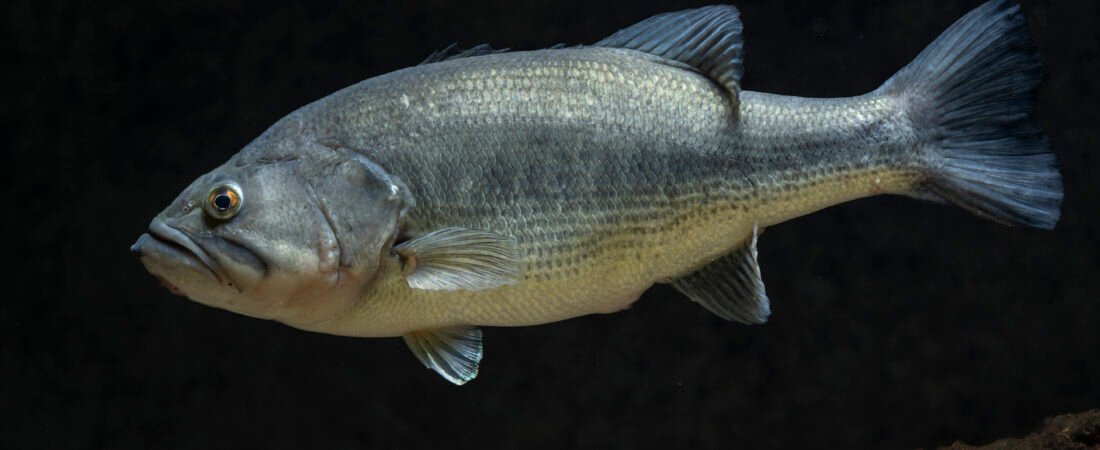
Largemouth bass are the single most popular gamefish in North America, and it is not close. From farm ponds in Texas to reservoirs in Minnesota to canals in South Florida, more anglers cast a line for Micropterus salmoides than for any other freshwater species on the continent. Part of that popularity comes from how forgiving the fish is: largemouth bass tolerate warm, murky, weedy water that would stress out trout or walleye, so they thrive in the kind of accessible lakes, ponds, and slow rivers found within a short drive of most American towns. Part of it comes from how the fish fights, with an explosive topwater strike, a head-shaking jump, and enough weight in a trophy specimen to make a five-pound bass a genuine bragging right. This guide covers what a serious angler or curious reader actually needs to know: how to identify one, where they live and what they eat, how big they really get, how they differ from smallmouth bass, how they spawn, and how regulations and table quality work in practice.
A largemouth bass is a freshwater gamefish native to eastern and central North America, identified by an upper jaw that extends past the eye, an olive green body with a dark, blotchy horizontal stripe, and a deeply notched dorsal fin. Adults average 12 to 15 inches and 1 to 3 pounds, with a world record of 22 pounds, 4 ounces.
Largemouth Bass Snapshot
What Does a Largemouth Bass Look Like?
The single most reliable way to identify a largemouth bass is its jaw: the upper jaw (maxilla) extends well past the rear edge of the eye when the mouth is closed, a trait no other black bass species shares to the same degree. The body is olive to dark green on the back, fading to lighter green or yellow on the sides, with a white to pale belly and a ragged, blotchy dark stripe running the length of the body, made up of connected diamond-shaped patches rather than a single clean line. The dorsal fin is deeply notched, almost separating into two fins, one spiny and one soft-rayed. Largemouth bass also lack a tooth patch on the tongue, a feature that distinguishes them from the similar-looking spotted bass. A 2022 genetic study proposed splitting the species: fish in Florida and introduced Florida-strain populations remain Micropterus salmoides, while the more widespread northern largemouth was reassigned to Micropterus nigricans, though most anglers and state agencies still use “largemouth bass” for both.

Where Do Largemouth Bass Live?
Largemouth bass are native to the Mississippi River basin, the Great Lakes region, and the Atlantic and Gulf coastal plains, from southern Canada down through the southeastern United States and into parts of Mexico. Because they are the most widely stocked sport fish in the world, they now live in all 50 U.S. states and have been introduced to more than 50 countries, including Japan, South Africa, Spain, and much of Southeast Asia, for recreational fishing. Within that range, they favor warm, nutrient-rich water with abundant vegetation: natural lakes, farm ponds, reservoirs, oxbows, and slow-moving rivers. They key in on submerged structure such as fallen timber, dock pilings, rock piles, and weed beds, using that cover to ambush prey rather than actively chasing it down in open water. Largemouth bass generally do best where water clarity allows visibility of at least 18 inches, and they tolerate warmer, lower-oxygen water far better than trout, salmon, or smallmouth bass, which is a large part of why they dominate so much of the country’s accessible freshwater fishing.
What Do Largemouth Bass Eat?
Largemouth bass are opportunistic ambush predators that will eat almost anything they can fit in their mouths. Fry and very young bass start on zooplankton and small insect larvae, then shift to insects, crayfish, and tiny fish as juveniles. Adults feed heavily on shad, sunfish, minnows, crayfish, frogs, and large aquatic insects, and will readily take small snakes, salamanders, and even ducklings or mice when the opportunity presents itself. They hunt primarily by sight, which is why murky water and low light push them toward vibration and scent to locate prey, backed up by an exceptionally sensitive lateral line that detects the pressure wave of a fleeing baitfish. Feeding activity typically peaks at dawn and dusk, and slows in the heat of midday, which is why bass tend to hold tight to shaded cover such as docks, overhanging trees, and thick weed mats when the sun is high.

How Big Do Largemouth Bass Get, and How Long Do They Live?
The all-tackle world record largemouth bass weighed 22 pounds, 4 ounces, caught by George Perry on June 2, 1932, in Montgomery Lake, a small oxbow off the Ocmulgee River in Georgia. That record stood alone for 77 years until Manabu Kurita caught a bass of the identical weight, 22 pounds 4 ounces, from Lake Biwa in Japan on July 2, 2009. Because IGFA rules require a new record to beat the old one by at least 2 ounces, Kurita’s fish was ruled a tie rather than an outright new record, and the two anglers now share the all-tackle world record. Most largemouth bass never get anywhere close to that size. A typical adult runs 12 to 15 inches and 1 to 3 pounds, with anything over 8 pounds considered a genuine trophy in most waters. Growth rate depends heavily on climate: in a healthy pond, bass reach roughly 7 inches by age one, 11 inches by age two, 14 inches by age three, and 16 to 17 inches by age four or five. Warmer southern waters produce faster growth but shorter lives, averaging 10 years with a maximum around 16, while colder northern waters slow growth but extend lifespan to an average of 15 years and a maximum of 23 to 24 years.
Largemouth Bass vs Smallmouth Bass: What Is the Difference?
Largemouth and smallmouth bass are frequently confused, but four features make identification straightforward once you know what to check.
| Feature | Largemouth Bass | Smallmouth Bass |
|---|---|---|
| Jaw position | Extends well past the rear of the eye | Ends at or before the rear of the eye |
| Dorsal fin | Deep notch, nearly two separate fins | Shallow notch, appears as one continuous fin |
| Color | Olive to dark green with a blotchy horizontal stripe | Bronze to brown (“bronzeback”) with thin vertical bars |
| Preferred water | Warm, vegetated lakes, ponds, and slow rivers | Cooler, clearer lakes and rivers with rock or gravel bottoms |
| Typical adult size | 1 to 3 lb, up to 22 lb 4 oz on record | Under 2 lb on average, up to roughly 12 lb on record |
A third look-alike, the spotted bass, splits the difference in appearance but has a distinct tooth patch on the tongue that neither largemouth nor smallmouth bass have, which is the fastest way to rule it out when the jaw and fin cues are not conclusive.

How Do Largemouth Bass Spawn?
Largemouth bass spawn in spring, beginning when water temperatures first climb into the 55 to 60 degree Fahrenheit range and peaking between 65 and 75 degrees. Males move out of deeper wintering areas into shallow, protected water, typically 1 to 4 feet deep, and use their tails to fan a circular nest into gravel, firm mud, or hard-packed sand near cover. A female visits the nest to lay eggs, which the male fertilizes, and then she leaves; the male stays behind to guard the nest, fanning silt off the eggs until they hatch two to four days later. He continues guarding the fry, defending them against bluegill, minnows, crayfish, and even other bass, until they reach about an inch in length and disperse, a process that can take up to two weeks. This nest-guarding window is also when male bass are most vulnerable to anglers, since a fish defending a nest will strike lures out of aggression rather than hunger; fisheries researchers have documented that heavy angling pressure on nesting males can reduce spawning success, which is why many anglers practice catch-and-release, or avoid targeting bedded fish altogether, during the spawn.

How to Catch Largemouth Bass
Largemouth bass are structure fish, so the fastest way to find them is to fish the edges: weed lines, dock pilings, laydown logs, rock piles, and any sharp transition between deep and shallow water. Classic largemouth presentations include soft plastic worms and creature baits fished slow along the bottom, spinnerbaits and chatterbaits worked through and along cover, crankbaits for covering open water, and topwater lures worked at dawn and dusk when bass are actively feeding near the surface. Live bait such as shiners, nightcrawlers, and crayfish remains effective everywhere largemouth bass are found. Seasonal location shifts matter as much as lure choice: bass move shallow to spawn in spring, retreat to deeper, cooler water or suspend near a thermocline during summer heat, push back into the shallows to feed heavily in fall, and slow down in deep, sluggish winter water where a slower presentation is required. Matching lure size and retrieve speed to the season and the size of available forage is usually more important than any specific brand or color of lure.
Are Largemouth Bass Good to Eat?
Largemouth bass are edible and, when properly prepared, have mild, firm, white flesh with relatively few bones. Eating quality depends heavily on the size of the fish and the water it came from: bass in the 8 to 15 inch range, roughly three-quarters of a pound to 2 pounds, taken from clean, cold, well-oxygenated water generally taste best. Larger, older bass accumulate more mercury over their lifetime and tend to have a stronger, muddier flavor, which is one reason many anglers release trophy-sized fish rather than keep them. Because mercury contamination in freshwater fish varies significantly by lake and region rather than by species alone, the safest approach is to check your state’s fish consumption advisory for the specific body of water you fished, particularly if you are pregnant, nursing, or feeding the catch to young children.
Largemouth Bass Regulations and Conservation
There is no single national bag limit or size limit for largemouth bass; regulations are set state by state and often lake by lake, so they must be checked locally before you fish. Florida’s statewide rule, for example, allows up to five black bass per angler per day, with only one of those fish permitted to be 16 inches or longer, and no statewide minimum length limit otherwise, though many individual lakes and Fish Management Areas carry stricter special regulations. Within its native range, the largemouth bass is a widely distributed, healthy sport fish and is not a species of conservation concern. Outside that native range, the picture is more complicated: because largemouth bass are aggressive predators, populations introduced into new countries and watersheds for sport fishing have, in some cases, reduced native fish populations, which is why several regions that once encouraged stocking now manage introduced largemouth bass as an invasive species rather than a resource to expand.
Frequently Asked Questions
Can you eat largemouth bass?
Yes. Largemouth bass have mild, firm, white flesh and are commonly eaten, especially fish in the 8 to 15 inch range taken from clean water. Larger, older fish carry more mercury and are often released instead of kept.
What is the world record largemouth bass?
The all-tackle world record is 22 pounds, 4 ounces, caught by George Perry in Montgomery Lake, Georgia, in 1932, and tied by Manabu Kurita in Lake Biwa, Japan, in 2009. Both catches are recognized as co-holders by the IGFA.
How can you tell a largemouth bass from a smallmouth bass?
Check the jaw and the dorsal fin. A largemouth’s upper jaw extends past the rear of its eye and its dorsal fin has a deep notch; a smallmouth’s jaw ends at or before the eye and its dorsal fin looks like one continuous fin.
Where do largemouth bass live?
They are native to central and eastern North America and favor warm, vegetated lakes, ponds, reservoirs, and slow-moving rivers. They have also been stocked in all 50 U.S. states and dozens of countries worldwide.
What is the best bait for largemouth bass?
Soft plastic worms, spinnerbaits, crankbaits, topwater lures at dawn and dusk, and live bait such as shiners, nightcrawlers, or crayfish are all proven producers, with the best choice depending on season and cover type.
How big do largemouth bass get?
The average adult is 12 to 15 inches and 1 to 3 pounds. Fish over 8 pounds are considered trophies in most waters, and the all-time record stands at 22 pounds, 4 ounces.