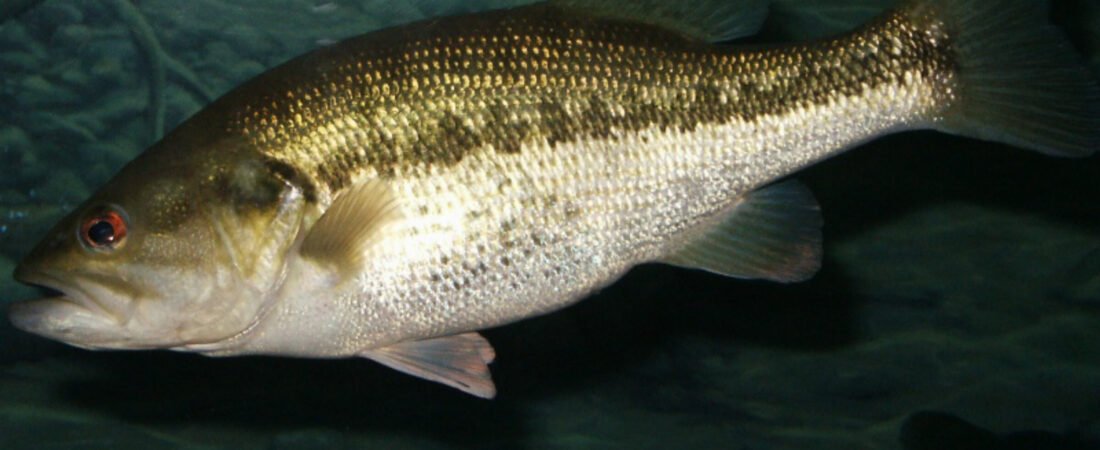
Florida’s state record largemouth bass weighs 17 pounds, 4 ounces (17.27 lb), caught by Billy O’Berry from a small lake in Polk County in 1986. It has stood for nearly four decades despite more fishing pressure and more trophy-bass documentation than almost anywhere else on earth, largely thanks to a citizen-science program that has logged thousands of giant bass without ever beating it.

Florida Record Snapshot
What Is the Official Florida Record Largemouth Bass?
Billy O’Berry’s 17 lb 4 oz largemouth, caught from an unnamed lake in Polk County in 1986, remains the heaviest largemouth bass ever certified by the state of Florida. It is smaller than the 22 lb 4 oz all-tackle world record held jointly by George Perry and Manabu Kurita, a detail that surprises many anglers given Florida’s reputation as the epicenter of trophy bass genetics. The record has outlasted decades of intense fishing pressure, improved tackle, and a dedicated statewide program built specifically to document giant bass, without a single verified catch coming close to unseating it.
How Close Has Any Fish Come to Breaking O’Berry’s Record?
The nearest challenger comes from Florida’s own record-tracking system rather than an independent catch. The Florida Fish and Wildlife Conservation Commission’s TrophyCatch program, which rewards anglers for documenting and releasing largemouth bass of 8 pounds or more, has approved over 100 Hall of Fame entries for bass weighing 13 pounds or heavier since the program began. The heaviest of those TrophyCatch submissions weighed 16.75 pounds, just ounces short of O’Berry’s record, and remains the closest verified approach to the state record in the modern era.
Why Hasn’t Florida’s Record Been Broken With So Much Fishing Pressure?
Several factors work against a new record rather than for one. Florida record-eligible fish must be weighed on a certified scale while still alive or shortly after death, a logistical hurdle that pushes many anglers toward catch-and-release through TrophyCatch instead of pursuing outright record certification, which typically requires killing the fish. Genuinely record-class bass are also exceptionally rare even in Florida’s ideal conditions. A 17-plus-pound largemouth represents the extreme upper tail of the species’ growth curve, a combination of a female fish, favorable genetics, and years of undisturbed growth in a productive lake that is difficult to replicate on demand no matter how many anglers are searching for it.
What Other Historically Large Bass Has Florida Produced?
Florida’s record books and outdoor media have documented a handful of other bass in the 15 to 17-pound range over the decades, most caught well before TrophyCatch existed to formally log them. Fritz Friebel’s 20 lb 2 oz claim from a Florida lake in 1923 is frequently cited as a pre-modern-record benchmark, though it predates today’s certification standards and is treated as an informally documented historical claim rather than an official record. Gene Smock’s TrophyCatch submission of 15 lb 8 oz is among the better-known modern entries, illustrating that fish approaching, but not matching, O’Berry’s weight surface with some regularity in Florida water even today.
| Fish / Angler | Weight | Year | Status |
|---|---|---|---|
| Fritz Friebel | 20 lb 2 oz | 1923 | Pre-modern historical claim |
| Billy O’Berry | 17 lb 4 oz | 1986 | Official Florida state record |
| TrophyCatch Hall of Fame leader | 16 lb 12 oz | Modern era | Catch-and-release, closest verified approach |
| Gene Smock (TrophyCatch) | 15 lb 8 oz | Modern era | Catch-and-release Hall of Fame entry |
What Is Florida’s TrophyCatch Program?
TrophyCatch is a free FWC citizen-science program that asks anglers to photograph, measure, and release largemouth bass of 8 pounds or heavier in exchange for prizes and official recognition, with a Hall of Fame tier for any fish documented at 13 pounds or more. Beyond the incentive for anglers, the program gives biologists a large, ongoing dataset on where and how often genuinely giant bass turn up across the state, data that simply did not exist in any systematic form before 2012. Clay and Putnam counties have accounted for roughly 30 percent of all Hall of Fame entries, making that stretch of north-central Florida the most productive documented trophy-bass water in the state today, even though it is not where the outright record itself was caught.
Frequently Asked Questions
What is the Florida record largemouth bass?
17 pounds, 4 ounces (17.27 lb), caught by Billy O’Berry from a small lake in Polk County in 1986. It remains the heaviest largemouth bass ever certified in Florida.
Has the Florida largemouth bass record ever been close to broken?
The closest verified approach is a 16.75 lb bass logged through the state’s TrophyCatch catch-and-release program, just ounces short of O’Berry’s weight, but no fish has officially beaten the 1986 record.
Why is the Florida record smaller than the world record?
The world record, 22 lb 4 oz, was caught in Georgia in 1932 and tied in Japan in 2009. Florida’s own record fish, while enormous, has simply never reached that weight, despite Florida’s reputation for producing the biggest bass genetics.
What is Florida’s TrophyCatch program?
A free FWC program that rewards anglers for documenting and releasing largemouth bass of 8 pounds or more, with a Hall of Fame tier for fish of 13 pounds or heavier, giving biologists an ongoing record of the state’s biggest bass.