
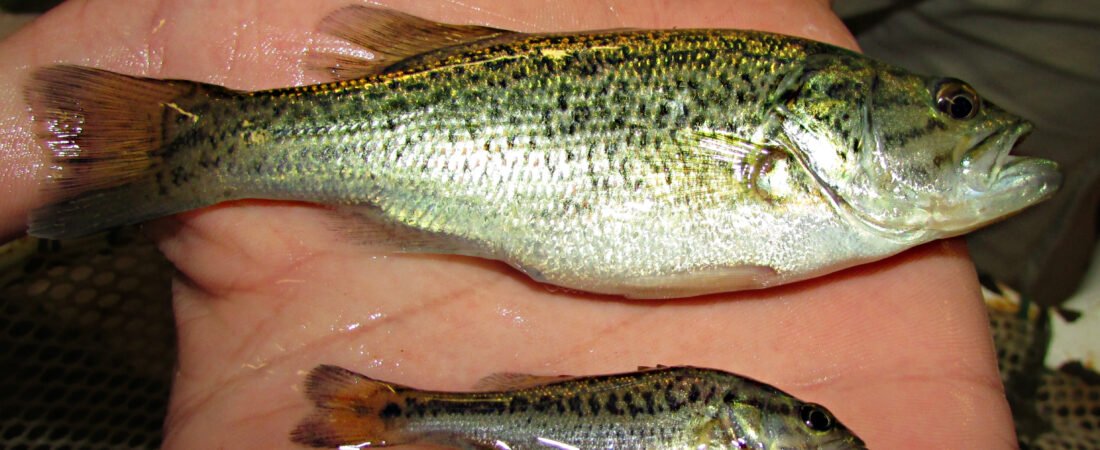
The official record largemouth bass is 22 lb 4 oz, but the biggest largemouth bass ever documented on a scale was heavier still: a California fish nicknamed Dottie weighed over 25 pounds in 2006. She never counted as a record because she was foul-hooked, one of several near-misses that make the record’s real history messier than the official book suggests.

What Was the Record Before George Perry’s 1932 Catch?
Before organized record-keeping existed in any formal sense, the largest widely cited largemouth bass claim belonged to Fritz Friebel, who reportedly caught a 20 lb 2 oz bass from a Florida lake known locally as Big Fish Lake in 1923, nearly a decade before Perry’s fish. Record-keeping in this era was informal and inconsistently verified compared to modern IGFA standards, so earlier claims exist in scattered historical accounts rather than a single authoritative ledger, but Friebel’s catch is the most consistently cited pre-Perry benchmark and helps illustrate that serious trophy bass were already being caught and talked about in Florida and Georgia years before Perry’s fish became the official record.
Who Is “Dottie,” and Why Doesn’t Her Catch Count?
Dottie was a giant largemouth bass repeatedly caught and released from Dixon Lake, a 72-acre reservoir in Escondido, California, identified across multiple catches by a distinctive black dot on her chin. She was first landed by Mike Long in 2001 at roughly 20 lb 12 oz, then by Jed Dickerson in 2003 at 21 lb 11 oz, both already among the largest largemouth bass ever verified on a scale. In 2006, angler Mac Weakley hooked her a third time, and she weighed exactly 25 pounds on a dock scale, nearly 3 pounds heavier than the official world record. She was disqualified from any record consideration because Weakley’s hook had caught her outside the mouth rather than inside it; IGFA rules require a fish to be fairly hooked in the mouth to qualify, a “fair chase” standard meant to rule out fish snagged incidentally rather than genuinely caught. Weakley released her uncounted rather than risk her health with an extended weigh-in process. Dottie was found dead, floating in Dixon Lake in 2008, weighing an estimated 19 pounds at the time of her death, well past what would have been her prime trophy years.
Have Other Bass Come Close to Breaking the Record?
Southern California’s Dixon Lake, Lake Casitas, and a handful of similar reservoirs stocked heavily with Florida-strain largemouth became the epicenter of an organized “record chase” community through the 1990s and 2000s, producing multiple bass in the 20 to 21-pound range, several of which rank among the largest verified largemouth bass ever weighed even though none officially broke Perry’s record. Manabu Kurita’s 2009 Lake Biwa catch, covered in detail in a companion article on this site, remains the only catch to officially match the record weight since Perry’s 1932 fish, tying rather than breaking it.
How Have IGFA Record Categories Changed Over Time?
The all-tackle record most anglers think of, one fish, any legal gear, is only one of dozens of official largemouth bass records the IGFA now tracks. Over time the organization expanded its categories to include line-class records (separate records for different breaking-strength fishing line, split by gender), tippet-class records for fly-rod catches, and youth divisions for junior and “smallfry” anglers, creating roughly three dozen distinct largemouth bass world-record categories rather than a single number. This expansion means an angler can set a legitimate, IGFA-certified “world record” today without ever approaching Perry or Kurita’s all-tackle weight, simply by catching the largest fish yet recorded on a specific line strength or in a specific age division.
| Fish / Angler | Weight | Year | Status |
|---|---|---|---|
| Fritz Friebel | 20 lb 2 oz | 1923 | Pre-modern-record claim, Florida |
| George Perry | 22 lb 4 oz | 1932 | Official all-tackle world record |
| “Dottie” (Jed Dickerson) | 21 lb 11 oz | 2003 | Legally caught, second-heaviest verified |
| “Dottie” (Mac Weakley) | 25 lb 0 oz | 2006 | Heaviest ever weighed, disqualified (foul-hooked) |
| Manabu Kurita | 22 lb 4 oz | 2009 | Official co-record, tied Perry |
Will the Largemouth Bass World Record Ever Be Broken?
Opinion among fisheries biologists and dedicated record chasers is split. Genetics and growing conditions both matter enormously: Florida-strain largemouth in warm, long-growing-season water with abundant forage are the fish most capable of reaching record weight, and California’s stocked trophy lakes remain a focus of record-chasing precisely because they combine that genetic stock with ideal growth conditions. Dottie’s 25-pound weight is frequently cited as proof the ceiling is higher than 22 lb 4 oz, but she also illustrates how fragile a genuine record attempt is: a single foul-hooked cast, rather than a bad fish, was what kept the record from falling in 2006. Whether the record ever officially breaks likely depends less on whether a big enough fish exists somewhere and more on whether anyone manages to land one legally, weigh it on a certified scale, and complete IGFA’s verification process before releasing or losing the fish.
Frequently Asked Questions
What is the biggest largemouth bass ever caught, official or not?
The heaviest largemouth bass ever weighed on a scale was “Dottie,” a California bass that weighed 25 pounds when caught (and released) by Mac Weakley in 2006, though it was disqualified from any record because it was foul-hooked rather than caught fairly in the mouth.
Why didn’t Dottie’s 25-pound catch count as a world record?
IGFA rules require a fish to be hooked inside the mouth to qualify for any record. Dottie was hooked outside her mouth, so despite outweighing the official world record by nearly 3 pounds, the catch could not be certified.
What happened to Dottie the bass?
She was found dead, floating in Dixon Lake, California, in 2008, roughly two years after her record-breaking weigh-in, at an estimated weight of 19 pounds.
Are there other types of largemouth bass world records besides the all-tackle record?
Yes. The IGFA maintains roughly three dozen largemouth bass record categories, including line-class, fly-tippet, and junior divisions, in addition to the single all-tackle record most anglers recognize.