
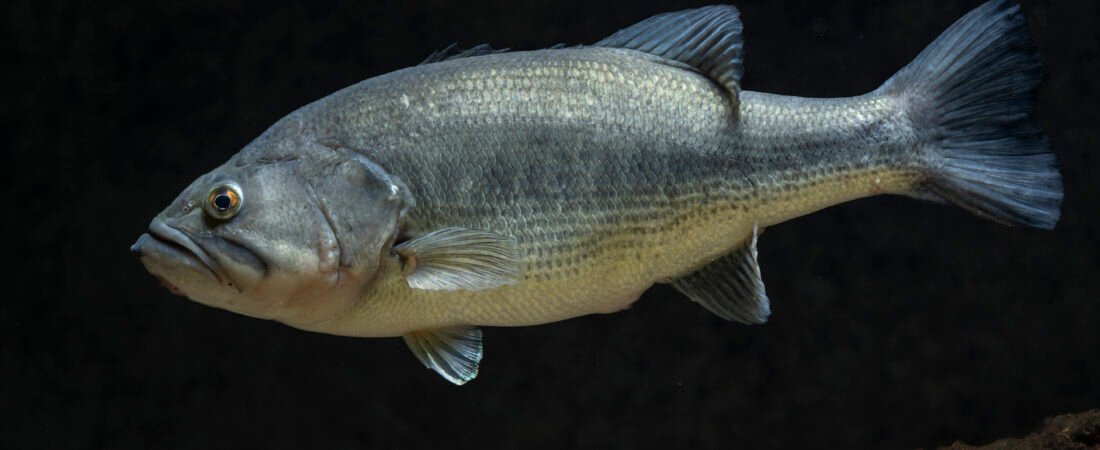
Largemouth bass are near the top of the food chain as adults, but eggs, fry, and juveniles face heavy predation from sunfish, wading birds, and larger fish, including bigger bass. Even adults are not entirely safe, facing otters, birds of prey, and, in the South, alligators, though by far their most consistent adult predator is the angler holding the rod.

What Eats Largemouth Bass Eggs?
A guarding male is present specifically because unattended eggs disappear fast. Sunfish such as bluegill, along with minnows and crayfish, are persistent egg raiders that will move in on a nest the moment the guarding male’s attention lapses, which is exactly why male largemouth stay on the nest fanning silt and chasing off intruders continuously until the eggs hatch. Even with active guarding, nest predation is a normal and expected part of the spawning cycle, one reason females lay far more eggs than will ever survive to become adult fish.
What Preys on Largemouth Bass Fry and Juveniles?
This is the most dangerous stretch of a largemouth bass’s life. Newly hatched fry and small fingerlings are heavily targeted by aquatic insect predators, sunfish, and even slightly larger juvenile bass, including their own siblings. Once young bass reach roughly 2 to 3 inches, predation pressure shifts to include wading and diving birds like herons, kingfishers, and bitterns, along with a wider range of larger fish, northern pike, bigger bass, crappie, walleye, yellow perch, carp, channel catfish, eels, and muskellunge have all been documented preying on juvenile largemouth where their ranges overlap. The sheer number of species willing to eat a small bass is a major reason juveniles rely so heavily on dense cover to survive this stage at all.
| Life Stage | Main Predators |
|---|---|
| Eggs | Bluegill and other sunfish, minnows, crayfish |
| Fry / small fingerlings | Aquatic insects, sunfish, larger juvenile bass (including siblings) |
| Juveniles (2-3+ in) | Herons, kingfishers, pike, larger bass, walleye, catfish, muskellunge |
| Adults | Otters, alligators (South), large birds of prey, humans |
What Preys on Adult Largemouth Bass?
Far fewer species can take on a full-grown bass, but adults are not entirely without predators. Otters are capable, opportunistic predators of adult bass in many parts of the species’ range, and in southern waters, alligators add another genuine threat that does not exist further north. Large birds of prey capable of taking sizable fish from the water’s surface can also target adult bass under the right conditions, though this is less common than predation on smaller juveniles. By a wide margin, however, humans are the single most significant predator of adult largemouth bass across the species’ entire range, whether through harvest or, increasingly, catch-and-release angling that still involves handling stress even when the fish survives.
Does Predation Pressure Explain Why Bass Lay So Many Eggs?
Largely, yes. Females can produce roughly 2,000 to 7,000 eggs per pound of body weight in a season, an enormous number relative to how many fry ultimately survive to adulthood. That reproductive strategy, producing far more offspring than the environment can support, is a direct evolutionary response to exactly the predation gauntlet described above: with so many predators willing to eat eggs, fry, and small juveniles, a strategy of laying only a modest number of eggs would leave a population extremely vulnerable to a single bad year of heavy predation or poor conditions.
Frequently Asked Questions
What animals eat largemouth bass eggs?
Sunfish like bluegill, along with minnows and crayfish, are the main egg predators, which is why a male largemouth guards the nest continuously until the eggs hatch.
What is the biggest threat to juvenile largemouth bass?
A wide range of predators, including wading birds like herons, larger fish such as pike and walleye, and even larger juvenile or adult bass, including their own siblings.
Do alligators eat largemouth bass?
Yes, in southern waters where the two species overlap, alligators are a genuine predator of adult largemouth bass, a threat that does not exist in northern parts of the range.
What is the biggest predator of adult largemouth bass?
Humans, by a wide margin, whether through harvest or catch-and-release angling, though otters, alligators in the South, and some birds of prey also take adult bass.