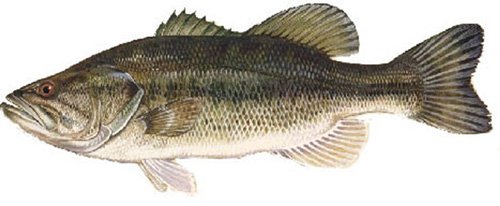
A largemouth bass’s diet changes completely as it grows, from microscopic zooplankton as newly hatched fry to a mostly fish-and-crayfish diet as an adult capable of swallowing prey nearly a third of its own body length. Understanding that progression explains far more about bass behavior than a single generic answer like “they eat baitfish” ever could.

What Do Largemouth Bass Fry Eat?
Newly hatched fry, under about an inch long, feed almost exclusively on zooplankton, microscopic organisms like copepods and cladocerans suspended in the water column, along with rotifers and other single-celled prey. At this stage bass are essentially filter-feeding constantly rather than actively hunting, since their bodies are not yet developed enough for the ambush-predator behavior adults are known for, and they need to feed almost continuously just to sustain their rapid early metabolism.
What Do Juvenile Largemouth Bass Eat?
Around 2 inches in length, the diet broadens to include small insects, aquatic insect larvae, and small crustaceans like water fleas and copepods, and juveniles begin actively pursuing prey rather than simply filtering it from the water. A key transition happens once a bass reaches roughly 25 to 35 millimeters, at which point true piscivorous behavior begins: the fish starts eating other small fish, including the young of other species and, notably, its own siblings, a form of cannibalism that is common and biologically normal in dense fry populations rather than unusual behavior.
What Do Adult Largemouth Bass Eat?
Adult largemouth bass, generally 12 inches and up, are opportunistic predators whose diet is dominated by other fish, with the majority of their caloric intake coming from a piscivorous diet built around gizzard shad, shiners, sunfish like bluegill, and even smaller members of their own species. Crayfish are the other major food source, often making up a significant share of an adult bass’s diet thanks to their high protein and calcium content, and adults will also readily take frogs, salamanders, large aquatic insects, and occasionally small snakes, ducklings, or mice when the opportunity presents itself.
| Life Stage | Size | Primary Diet |
|---|---|---|
| Fry | Under 1 in | Zooplankton, rotifers, copepods |
| Juvenile (early) | 1-2 in | Insects, insect larvae, small crustaceans |
| Juvenile (late) | 2-4 in | Small fish (including siblings), larger insects |
| Adult | 12+ in | Shad, sunfish, crayfish, frogs, other bass |
Does Diet Change Seasonally?
Yes, tracking both water temperature and forage availability. Feeding activity slows in cold water and peaks as temperatures rise into a bass’s optimal range, and prey availability shifts across the year too: crayfish become more accessible and more heavily targeted during their molting periods, young-of-the-year baitfish become abundant and vulnerable in late summer and fall as they reach a size bass can easily handle, and bass often key in heavily on whatever forage species happens to be most abundant and easiest to catch in a given lake at a given time of year rather than sticking rigidly to one prey type.
Do Largemouth Bass Eat Their Own Species?
Yes, and it happens at multiple life stages. Cannibalism among juveniles is well documented once young bass reach a size capable of eating smaller fry, often their own siblings from the same nest or nearby nests. Adult bass will also eat smaller bass when the opportunity arises, treating other largemouth no differently from any other appropriately sized fish prey. This is a normal part of the species’ population dynamics rather than an aberration, and it is one reason stocking density matters so much in managed ponds, since overcrowding can increase cannibalism rates among juveniles competing for limited food.
Frequently Asked Questions
What do baby largemouth bass eat?
Newly hatched fry eat zooplankton almost exclusively, then shift to insects and small crustaceans as juveniles, before beginning to eat small fish, including siblings, once they reach roughly 25 to 35 millimeters long.
What is the main food source for adult largemouth bass?
Other fish, particularly shad, shiners, and sunfish like bluegill, make up the majority of an adult bass’s diet by calories, with crayfish as the other major food source.
Do largemouth bass eat other largemouth bass?
Yes. Cannibalism is common among juveniles, particularly siblings from the same or nearby nests, and adult bass will eat smaller bass whenever the size and opportunity are right.
Does a largemouth bass’s diet change with the seasons?
Yes. Feeding activity and prey selection shift with water temperature and forage availability, with bass often keying in on whatever prey, such as molting crayfish or young-of-the-year baitfish, is most abundant at a given time of year.