
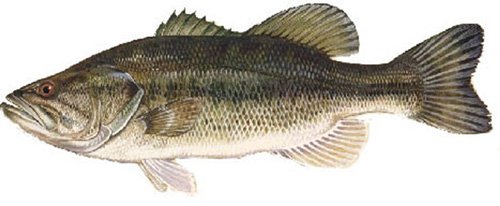
“Freshwater bass” covers two entirely unrelated groups of fish that anglers lump together under one word: the black bass genus Micropterus (largemouth, smallmouth, spotted), the temperate bass family Morone (white bass, striped bass), and the rock bass genus Ambloplites, a sunfish relative of largemouth despite the name. Telling them apart takes about ten seconds once you know what to check.

What Counts as a “Freshwater Bass” in North America?
Anglers use “bass” loosely to cover at least three unrelated fish families that happen to share the name. The black bass genus Micropterus, in the sunfish family Centrarchidae, includes largemouth, smallmouth, and spotted bass, the species most anglers mean by default when they say “bass fishing.” The temperate bass family Moronidae includes white bass and striped bass, predatory schooling fish unrelated to Micropterus despite sharing lakes and rivers with them. Rock bass, genus Ambloplites, is technically a sunfish too, in the same broad family as largemouth, but a different genus entirely, more closely related to bluegill and crappie in body shape and behavior than to any true black bass. None of these are closely related to saltwater “sea bass,” which belong to yet another set of unrelated families.
How Do You Tell Largemouth Bass From White Bass?
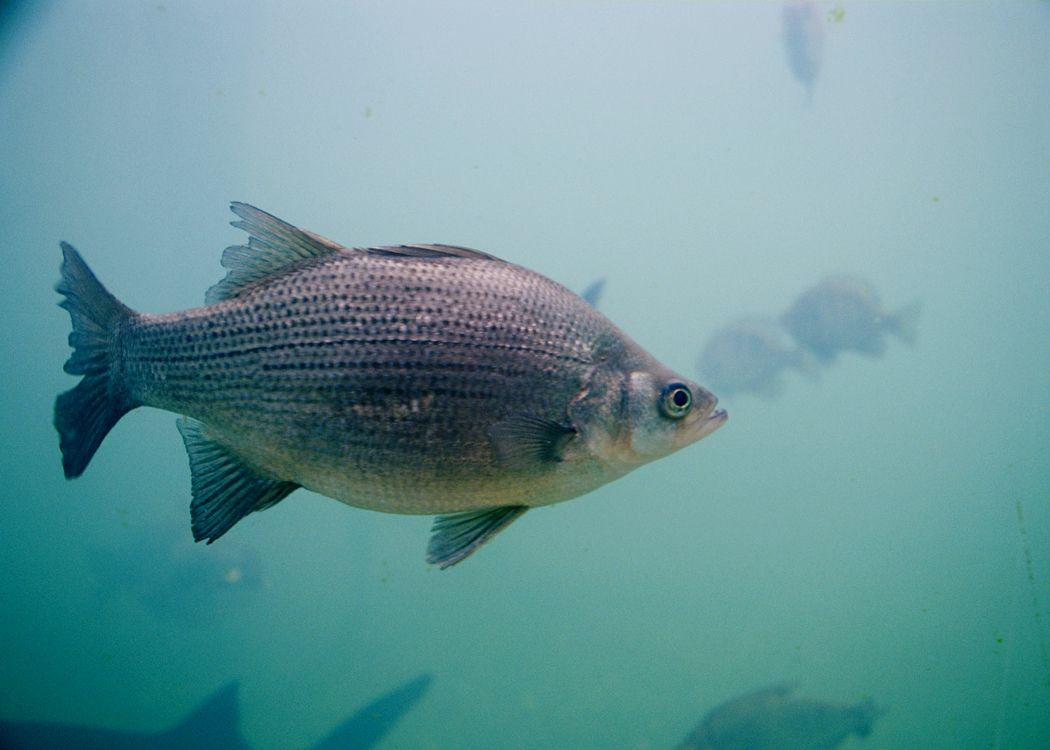
White bass (Morone chrysops) belong to a completely different family than largemouth and have a distinctly different body: silvery overall with 4 to 7 dark, continuous horizontal stripes running the length of the body, a noticeably arched back just behind the head, and a much smaller mouth that does not extend past the eye. White bass also have two dorsal fins that are clearly separated rather than the largemouth’s single, deeply notched fin. Behaviorally, white bass are open-water schooling fish that chase baitfish in the middle of lakes and reservoirs, often visible as surface-feeding “jumps,” while largemouth bass are solitary ambush predators that hold near cover.
How Do You Tell Largemouth Bass From Striped Bass?
Striped bass (Morone saxatilis) are the largest of the temperate basses, with an elongated, thinner body than a largemouth, a silvery body with 7 to 8 bold, unbroken horizontal stripes running from gill to tail, and a small mouth that does not reach the eye. Striped bass are anadromous in their native range, meaning they move between saltwater and freshwater to spawn, and landlocked freshwater populations exist in many large reservoirs specifically because they were stocked there, unlike largemouth bass which live their entire lives in freshwater. A hybrid striped bass, a common stocked cross between striped and white bass, splits the difference: broken or interrupted stripes rather than the striped bass’s unbroken lines.

How Do You Tell Largemouth Bass From Rock Bass?
Rock bass are much smaller than largemouth, typically under a pound and rarely over 2 pounds, with a stockier, deeper body, large red eyes, and a mottled brownish-bronze to olive coloration with dark speckling rather than a continuous lateral stripe. The mouth is noticeably smaller than a largemouth’s and does not extend past the eye. Rock bass favor clear, rocky streams and lake shorelines with cobble or boulder bottoms, closer to smallmouth bass habitat than to the weedy, soft-bottom water largemouth prefer, and they are far more tolerant of cooler water than largemouth bass.

Where Does Each Type of Freshwater Bass Live?
Range and habitat are often the fastest way to rule a species in or out before ever looking at markings. Largemouth bass tolerate the widest range of conditions of any bass on this list and are now established in all 50 states. White bass are native to the Mississippi, Great Lakes, and Gulf Coast drainages and prefer large lakes and rivers with open water to roam. Striped bass are native to the Atlantic and Gulf coasts but have been stocked into landlocked reservoirs nationwide, particularly large, deep impoundments in the South and West. Rock bass are native to the eastern and central United States and southern Canada, concentrated in clear, rocky streams and the rocky margins of northern lakes.
| Species | Family | Body / Markings | Typical Water |
|---|---|---|---|
| Largemouth bass | Sunfish (Centrarchidae) | Olive green, blotchy broken stripe, huge mouth past the eye | Warm, weedy lakes and ponds |
| Smallmouth bass | Sunfish (Centrarchidae) | Bronze, vertical bars, mouth ends at the eye | Cool, rocky lakes and rivers |
| White bass | Temperate bass (Moronidae) | Silvery, 4-7 unbroken horizontal stripes, arched back | Open water in large lakes and rivers |
| Striped bass | Temperate bass (Moronidae) | Silvery, 7-8 bold unbroken stripes, elongated body | Large reservoirs, coastal and anadromous rivers |
| Rock bass | Sunfish (Centrarchidae) | Mottled bronze/olive, red eyes, small mouth | Clear, rocky streams and lake margins |
Frequently Asked Questions
Is a striped bass a type of largemouth bass?
No. Striped bass belong to the temperate bass family Moronidae, an entirely different family from the largemouth’s sunfish family Centrarchidae. They share the common name “bass” but are not closely related.
What is the easiest way to tell a white bass from a largemouth bass?
Check the stripes and the mouth. White bass have clean, unbroken horizontal stripes on a silvery body and a small mouth, while largemouth bass have a blotchy, broken stripe on an olive-green body and a mouth that extends well past the eye.
Is a rock bass related to a largemouth bass?
Distantly. Both belong to the sunfish family Centrarchidae, but rock bass are in the genus Ambloplites while largemouth are in genus Micropterus, making them family cousins rather than close relatives.
Which freshwater bass grows the biggest?
Striped bass grow the largest of any freshwater “bass,” with landlocked freshwater fish exceeding 60 pounds in some reservoirs, well beyond the largemouth’s roughly 22-pound ceiling.