
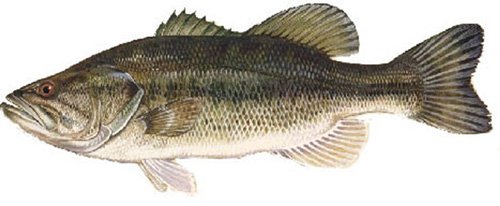
A largemouth bass is a freshwater gamefish in the sunfish family, genus Micropterus, prized across North America for its aggressive strike, hard fight, and willingness to live in almost any warm lake or pond. It is the single most targeted freshwater species in the United States, with roughly 43 percent of freshwater anglers fishing for bass in a given year.
Before diving into taxonomy charts or naming trivia, it helps to answer the basic question: what actually is this fish, biologically and culturally? The largemouth bass sits at an unusual intersection. It is scientifically unremarkable in some ways (a mid-sized predatory sunfish, not a rare or exotic species) yet it has become the center of a multi-billion dollar recreational industry, a fixture of American pop culture, and the most widely stocked freshwater sport fish on the planet.
What Family and Genus Does the Largemouth Bass Belong To?
The largemouth bass (Micropterus salmoides) belongs to the family Centrarchidae, commonly known as the sunfish family, within the order Perciformes (perch-like fishes). Centrarchidae is a North American family that also includes bluegill, crappie, and rock bass, meaning largemouth bass are technically more closely related to farm-pond bluegill than to unrelated saltwater “bass” like striped bass or sea bass, which belong to entirely different families despite the shared common name. Within Centrarchidae, largemouth bass sit in the genus Micropterus, the black bass genus, alongside smallmouth bass, spotted bass, and several more range-restricted cousins like Suwannee and shoal bass.

What Kind of Fish Is a Largemouth Bass, Exactly?
Functionally, a largemouth bass is a sight-and-vibration hunting ambush predator. It is not a schooling, open-water fish like shad or herring, and it is not a slow bottom-feeder like a catfish. It holds near cover such as weed beds, docks, and submerged wood, then explodes outward to grab prey that strays too close. That hunting style, combined with a mouth large enough to swallow prey up to a third of its own body length, is what gives the species both its name and its reputation as an outsized fighter relative to its actual weight.
Why Is the Largemouth Bass America’s Most Popular Freshwater Gamefish?
Three factors explain the largemouth’s dominance. First, accessibility: the species tolerates warm, murky, weedy water that would stress trout or walleye, so it thrives in the kind of farm ponds, reservoirs, and slow rivers within a short drive of most American towns, requiring no boat, guide, or remote wilderness trip to catch one. Second, the fight: an explosive topwater strike followed by a head-shaking jump makes even a modest bass feel like a genuine contest on light tackle. Third, the industry built around it: professional bass tournament fishing, launched by Ray Scott’s Bass Anglers Sportsman Society (B.A.S.S.) in 1967 to 1968, turned bass fishing into a spectator sport and created a feedback loop of media coverage, tackle innovation, and boat technology that kept the species in the cultural spotlight for more than half a century. Today, competitive and recreational bass fishing combined support an economic footprint estimated in the tens of billions of dollars annually.
How Many Kinds of Black Bass Are There, and Where Does Largemouth Fit In?
The genus Micropterus currently contains more than a dozen recognized species and subspecies, most of them narrow-range fish found only in a handful of southeastern U.S. river systems. The two most widely distributed and commercially significant are the largemouth bass, the largest-growing and most widespread member of the genus, and the smallmouth bass, which prefers cooler, rockier water. Spotted bass, Alabama bass, and a handful of recently described species round out the genus. All of them are colloquially grouped under the older common name “black bass,” a naming quirk with its own history worth a closer look on its own.
Where Does the Largemouth Bass Live, and How Does That Tie Back to Its Classification?
Largemouth bass are native to the Mississippi River basin, the Great Lakes region, and the Atlantic and Gulf coastal plains of the central and eastern United States, and have since been stocked in all 50 states and dozens of countries worldwide. That tolerance for a wide range of freshwater conditions is itself a product of its sunfish-family biology: Centrarchidae species are exclusively freshwater fish, unlike many other North American sport fish families that include both freshwater and saltwater members, and largemouth bass in particular have a broader temperature and turbidity tolerance than most of their Centrarchid relatives.
Frequently Asked Questions
Is a largemouth bass a type of sunfish?
Yes. Largemouth bass belong to the family Centrarchidae, the sunfish family, which also includes bluegill and crappie. They are placed in their own genus, Micropterus, within that family.
Is a largemouth bass related to striped bass or sea bass?
No. Despite sharing the common name “bass,” largemouth bass belong to the sunfish family while striped bass and most saltwater “sea bass” belong to entirely different, unrelated fish families.
What makes largemouth bass the most popular freshwater gamefish in America?
Their tolerance for warm, accessible water, their explosive fighting style on light tackle, and a professional tournament industry dating to the late 1960s all combined to make them the most frequently targeted freshwater species in the country.
How many species of black bass exist?
The genus Micropterus includes more than a dozen recognized species and subspecies, though largemouth and smallmouth bass are by far the most widely distributed and commonly targeted.