
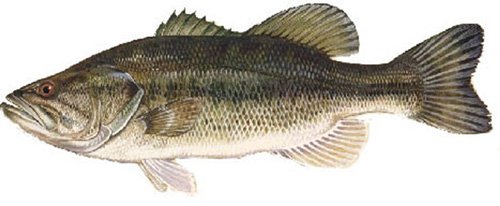
A properly released largemouth bass swims away with a wet, bare-handed grip, minimal time out of water, and a gentle revival before it’s let go. Each of those three details, handling, air exposure, and revival, has a real, measurable effect on whether a released fish actually survives.

What Is the Correct Way to Hold a Largemouth Bass?
For smaller bass, gripping the lower lip firmly between thumb and forefinger and letting the fish hang vertically is the standard, safe hold, since it distributes the fish’s weight naturally along its spine without twisting the jaw joint. For bass over roughly five pounds, that lip grip alone is not enough support; add a second hand under the belly, near the anal fin, to keep the spine straight and prevent internal organs from being stressed by the fish’s own weight hanging unsupported. Hands should always be wet before touching a bass, since a dry hand or towel strips away the fish’s protective slime coat, a biological barrier against infection and parasites that takes time to regenerate once damaged.
Wet hands, always. Touching a bass with dry hands or a dry towel removes its protective slime layer, leaving the fish more vulnerable to infection and disease after release.
Support the weight of bigger fish with two hands. A single lip grip on a large bass, without belly support, can strain the jaw and misalign the spine, particularly for fish held out horizontally for photos.
Air exposure time is the single biggest survival factor. Every extra second out of water adds physiological stress; keeping a fish’s total time out of the water as brief as possible, ideally well under a minute, meaningfully improves survival odds.
Never force out a deep-set hook. If a hook is lodged near the throat or gills rather than the mouth, cutting the line as close to the hook as possible and letting it dissolve or work free naturally causes far less damage than forcing removal.
Revive the fish before letting go. A bass that fought hard needs time in the water, moving gently forward or holding it upright, to recover before it can swim off under its own power.
Warm, low-oxygen water raises the stakes. Summer heat reduces how much oxygen water holds, meaning a fish caught in hot conditions needs more careful, patient revival than the same fish caught in cool spring water.
How Do You Safely Remove a Hook From a Largemouth Bass?
Speed and the right tool matter most. A hook set in the lip or the front of the mouth typically backs out cleanly with a firm, quick pull using needle-nose pliers, minimizing handling time. A hook set deeper, in the throat or near the gills, is a different situation entirely: attempting to dig it out risks tearing tissue and causing fatal bleeding, so cutting the line as close to the hook as safely possible and releasing the fish with the hook still in place gives it a far better survival chance than a forced extraction, since fish are documented to shed hooks or encapsulate them over time far more often than anglers expect.
How Should You Revive a Tired Largemouth Bass Before Release?
A fish that fought hard, particularly a bigger bass on a long fight, often needs active help recovering rather than simply being dropped back in the water. Holding the fish upright in the water and gently moving it in a figure-eight or forward-and-back motion pushes oxygenated water across its gills, helping it recover from the lactic acid buildup and oxygen debt a hard fight creates. A bass that rolls onto its side or struggles to stay upright is not ready for release, and rushing that fish back into deep or current-heavy water before it can swim on its own is one of the more common ways an otherwise well-handled catch still ends badly. Only release a fish once it can hold itself upright and swim off with real power under its own effort.
Do Photos Have to Compromise a Fish’s Survival Odds?
No, not if taken quickly and correctly. Having the camera ready and settings pre-set before lifting the fish out of the water avoids fumbling that extends air exposure unnecessarily. Supporting the fish properly with both hands, avoiding squeezing the body or gill area, and keeping the photo session to a few seconds rather than a prolonged posed shot all keep a photo largely risk-free. Some anglers keep the fish partially in the water, lifting only briefly for the actual photo, as an added safety margin, particularly with larger or more exhausted fish.
Frequently Asked Questions
Should you use a wet or dry hand to hold a bass?
Always wet hands. Dry hands or towels strip away the fish’s protective slime coat, which is a biological barrier against infection that the fish needs after release.
What should you do if a bass swallows the hook deeply?
Cut the line as close to the hook as safely possible rather than forcing it out. Forcing removal of a deeply set hook risks fatal bleeding, while a cut line often works free or gets encapsulated naturally over time.
How do you know when a released bass is ready to swim away?
Only release a fish once it can hold itself upright in the water and swim off with real power under its own effort. A fish that rolls onto its side or struggles to stay upright needs more revival time first.
Does hot weather affect catch and release survival for bass?
Yes. Warmer water holds less dissolved oxygen, so a bass caught in summer heat needs a longer, more careful revival period than the same fish caught in cooler conditions.