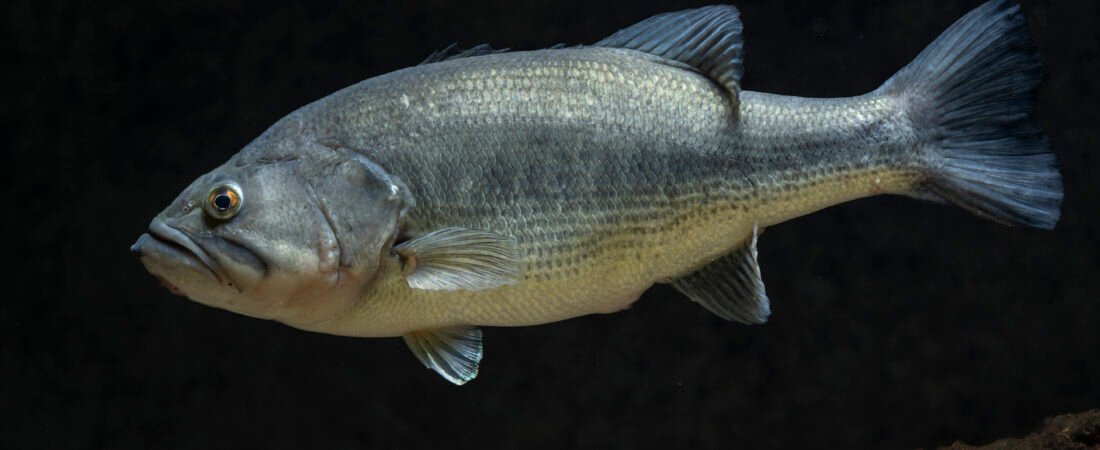
Outside North America, the same largemouth bass prized as a sportfish at home is often managed as a destructive invasive predator, blamed for measurable declines in native fish, frogs, and aquatic insects. Japan, South Africa, and the European Union each treat the species as a genuine ecological threat, backed by active removal and regulatory programs rather than just informal concern.

How Does Largemouth Bass Cause Ecological Harm Outside Its Native Range?
The mechanism is straightforward predation pressure combined with a lack of evolutionary history between the invader and the local prey base. As an aggressive, adaptable ambush predator with morphological traits specialized for hunting fish, largemouth bass introduced into ecosystems that evolved without a comparable top predator can rapidly reduce populations of native fish, frogs, and aquatic insects that never developed effective defenses against this kind of hunter. Competition for food and habitat compounds the direct predation effect, since largemouth bass often out-compete native predatory fish for the same prey base, shifting the entire structure of a lake or river’s food web over time rather than simply adding one more predator to an existing balance.
What Has Happened in Japan’s Lake Biwa?
Japan offers one of the most closely studied and contentious cases anywhere. Largemouth bass, introduced to Japan in the early 20th century, are now formally classified as invasive, and the government of Shiga Prefecture, home to Lake Biwa, Japan’s largest lake, set an explicit target of completely eliminating alien fish including largemouth bass and bluegill from the lake. The concern centers heavily on ayu, a native food fish central to both traditional Japanese cuisine and commercial fishing on the lake, alongside other native species bass are documented to prey on heavily. The removal effort has proven genuinely complicated rather than simply successful: research has found that removing largemouth bass can itself trigger unintended negative effects on some native species that had adjusted to the bass’s presence in the ecosystem, meaning even well-funded eradication programs face real ecological complexity rather than a straightforward fix.
How Is Largemouth Bass Regulated in the European Union?
Largemouth bass is recognized as one of the more established invasive alien fish species in European freshwater systems and falls under the framework of the EU’s Invasive Alien Species Regulation (EU 1143/2014), which governs prevention and management of invasive species across member states through a coordinated Union list. That regulatory framework restricts the import, keeping, breeding, transport, and release of listed species, reflecting a more formal, continent-wide approach to managing the species than exists in most other introduced regions, where control efforts tend to happen at a more local or national level instead.
What Has Happened in South Africa and Southern Africa More Broadly?
Largemouth bass were introduced to South Africa early in the twentieth century specifically to establish a recreational fishery, and subsequent translocations have since spread the species across much of southern Africa. Research on South African populations has found that invasive largemouth bass show hunting and feeding traits even more specialized toward preying on fish than native predator species in the same ecosystems, making them a significant threat to native fish, frogs, and aquatic insects, particularly in river systems rather than the stocked reservoirs where recreational fisheries are concentrated. South Africa’s management response reflects a genuine tension rather than a simple ban: permits for new largemouth bass stocking are still granted in many cases, since existing recreational fisheries carry real economic and cultural value, while biodiversity concerns are managed more strictly in river systems where wild populations pose the greatest documented risk to native species.
| Region | Primary Concern | Management Approach |
|---|---|---|
| Japan (Lake Biwa) | Predation on native ayu and other fish | Government-led elimination target, active removal |
| European Union | Broad freshwater ecosystem impact | EU-wide regulation restricting trade, release, breeding |
| South Africa | Predation on native fish, frogs, insects in rivers | Permitted in reservoirs, restricted in river systems |
Are There Any Efforts to Balance Sport Fishing Value Against Ecological Harm?
Yes, and this tension defines much of the policy debate around introduced largemouth bass populations. In South Africa, permitting decisions increasingly separate stocked, contained reservoir fisheries, which carry real recreational and economic value, from wild river populations, where ecological risk to native species is judged to outweigh sport-fishing benefit. In Japan, the value of bass to a domestic sport-fishing community exists alongside the government’s elimination target for Lake Biwa specifically, reflecting an ongoing, sometimes contentious balancing act rather than a settled consensus. No introduced region has found a solution that fully satisfies both conservation and recreational-fishing interests, and the management approach in each place reflects a somewhat different compromise between the two.
Frequently Asked Questions
Is largemouth bass invasive everywhere outside North America?
In most places it has been introduced, yes, largemouth bass is formally classified as invasive, including in Japan, the European Union, and parts of southern Africa, though the specific management response varies significantly by region.
Why is Japan trying to eliminate largemouth bass from Lake Biwa?
Largemouth bass prey heavily on ayu and other native fish important to Japanese cuisine and commercial fishing, prompting Shiga Prefecture to set an explicit target for eliminating the species from the lake, though removal has proven ecologically complicated.
Does the European Union regulate largemouth bass as invasive?
Yes. Largemouth bass falls under the EU’s Invasive Alien Species Regulation, which restricts the import, keeping, breeding, transport, and release of species on its Union list.
Why does South Africa still allow largemouth bass stocking if it’s invasive?
South Africa separates stocked reservoir fisheries, which carry real recreational value, from wild river populations, where ecological risk to native fish, frogs, and insects is considered more severe, resulting in a more permissive approach in reservoirs and stricter limits in rivers.