
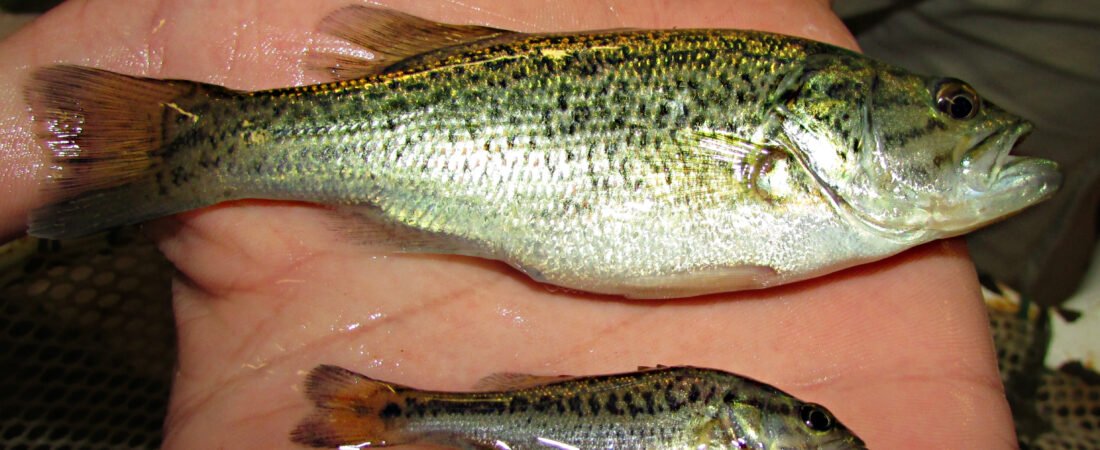
A largemouth bass typically lives 10 to 16 years in warm southern waters and 15 to 24 years in cold northern waters, a gap driven almost entirely by water temperature rather than genetics. The oldest scientifically documented largemouth bass, aged by counting growth rings on its otolith, reached 23 years.

Lifespan Snapshot
Why Do Northern Largemouth Bass Live Longer Than Southern Ones?
The gap comes down to metabolism and water temperature, not a genetic difference in life expectancy. Colder northern water slows a bass’s metabolic rate for a large part of the year, which reduces the physiological wear of constant growth and activity and extends the fish’s overall lifespan, though at the cost of a much shorter active growing season each year. Warmer southern water does the opposite: bass feed and grow for close to the entire calendar year, reaching a larger size faster, but that accelerated metabolism and near-continuous growth appear to shorten the fish’s maximum potential lifespan. In practical terms, a southern bass tends to live a shorter, faster life, while a northern bass lives a longer, slower one, a genuine biological tradeoff rather than one region’s fish simply being hardier than the other’s.
What Is the Oldest Largemouth Bass Ever Documented?
A peer-reviewed longevity study used otolith aging, counting the annual growth rings on a bass’s inner-ear bone the way a biologist would count tree rings, to confirm a largemouth bass at 23 years old, the oldest scientifically verified age recorded for the species at the time of that study. Otolith aging is considered far more reliable than scale-based aging methods, which tend to underestimate age in older fish as growth slows and annual rings become harder to distinguish on scales. Some regional accounts and hatchery records reference northern fish reaching 23 to 24 years, broadly consistent with that otolith-based ceiling, though a confirmed age that old remains genuinely rare in wild populations.
How Does Predation and Mortality Risk Change as a Bass Ages?
Risk is not evenly spread across a largemouth bass’s life. The first year is by far the most dangerous, with the vast majority of a given year class dying before reaching one year old, victims of egg and fry predation, competition, and simple environmental chance. Predation pressure remains meaningful through the juvenile years, roughly the first two to three years while a bass grows to 10 to 14 inches and reaches sexual maturity, since a fish that size is still vulnerable to larger bass, pike, and wading birds. Once a bass reaches adult size, predation from other fish and wildlife drops off sharply, and from that point on, fishing pressure, whether harvest or the cumulative stress of repeated catch-and-release, becomes the dominant source of mortality for most populations rather than natural predation.
| Life Stage | Primary Mortality Risk |
|---|---|
| Eggs / fry (first weeks) | Predation by sunfish, minnows, insects; extremely high loss rate |
| Juveniles (year 1-2) | Predation by larger fish and birds, environmental stress |
| Sub-adults (year 2-4) | Declining predation risk as size increases |
| Adults (4+ years) | Fishing pressure (harvest and catch-and-release stress) dominates |
Does Catch-and-Release Fishing Affect How Long Bass Live?
It can, though usually indirectly rather than through the immediate catch itself. A properly handled catch-and-release fish generally survives the encounter with no lasting harm, but repeated catches over a season add cumulative physiological stress, and poor handling, extended air exposure, or being caught during the vulnerable nest-guarding period can meaningfully affect survival odds. At the population level, widespread catch-and-release practices and stricter length or slot limits tend to shift a lake’s age structure older, since more fish survive multiple seasons of angling pressure to reach the ages where they would otherwise have been harvested, which is part of why heavily catch-and-release-managed lakes often develop reputations for producing older, larger fish over time.
Frequently Asked Questions
How long do largemouth bass live on average?
Roughly 10 years in warm southern waters and 15 years in cooler northern waters on average, with documented maximums of about 16 years in the south and 23 to 24 years in the north.
What is the oldest largemouth bass ever recorded?
A scientifically otolith-aged largemouth bass reached 23 years old in a peer-reviewed longevity study, the oldest confirmed age for the species using reliable aging methods.
Why do largemouth bass in the north live longer than those in the south?
Colder water slows their metabolism and reduces the physiological wear of near-constant growth, extending lifespan, while warmer southern water speeds up growth and shortens overall life expectancy.
What is the biggest threat to an adult largemouth bass’s survival?
Once a bass reaches adult size, natural predation drops sharply and fishing pressure, through harvest or the cumulative stress of catch-and-release, becomes the leading cause of mortality in most populations.