
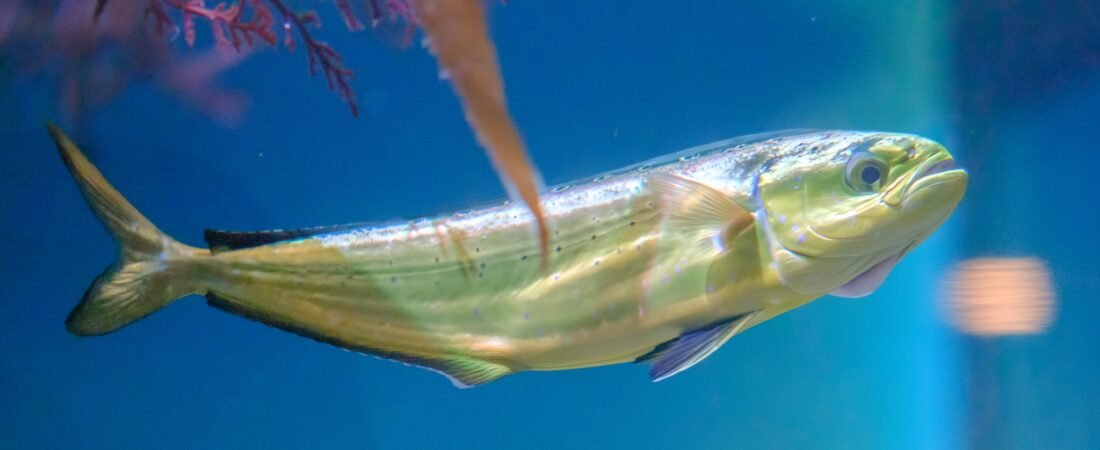
Quick answer: Mahi mahi live in the upper layer of warm, open ocean water worldwide, generally within the top 100 feet where sunlight penetrates and surface temperatures stay between 70°F and 85°F. They’re found across the Atlantic, Pacific, and Indian Oceans, plus the Mediterranean Sea, in tropical and subtropical zones, and they avoid reefs, the seafloor, and colder water entirely.
Mahi mahi’s range is enormous by most fish standards, but it’s also narrowly defined by two things: water temperature and depth. Get either one wrong and mahi mahi simply aren’t there, no matter how promising the water looks otherwise.
Which Oceans Do Mahi Mahi Live In?
Mahi mahi occupy tropical and subtropical waters in every major ocean basin. Genetic research analyzing millions of DNA markers has identified four distinct population groups tied to specific basins: the Atlantic, the Pacific, the Indian Ocean, and the Mediterranean Sea. That’s an unusually wide distribution for a single species, and it reflects just how tolerant mahi mahi are of open, warm water as long as the temperature range holds.
How Deep Do Mahi Mahi Actually Swim?
Despite their open-ocean range, mahi mahi are shallow-water fish by behavior. Satellite tagging studies show they spend roughly 40 percent of their time within the top few feet of the surface, and their typical working depth sits around 100 to 120 feet. They’re classified as epipelagic, meaning they live in the sunlit surface layer of the open ocean rather than diving into darker water.
Range At A Glance
That said, mahi mahi aren’t strictly confined to shallow water. Tagged fish have occasionally been recorded diving to depths approaching 1,000 feet, likely chasing prey or avoiding a predator, but these deep excursions are brief and rare rather than part of their normal routine.
Why Temperature Sets the Boundary
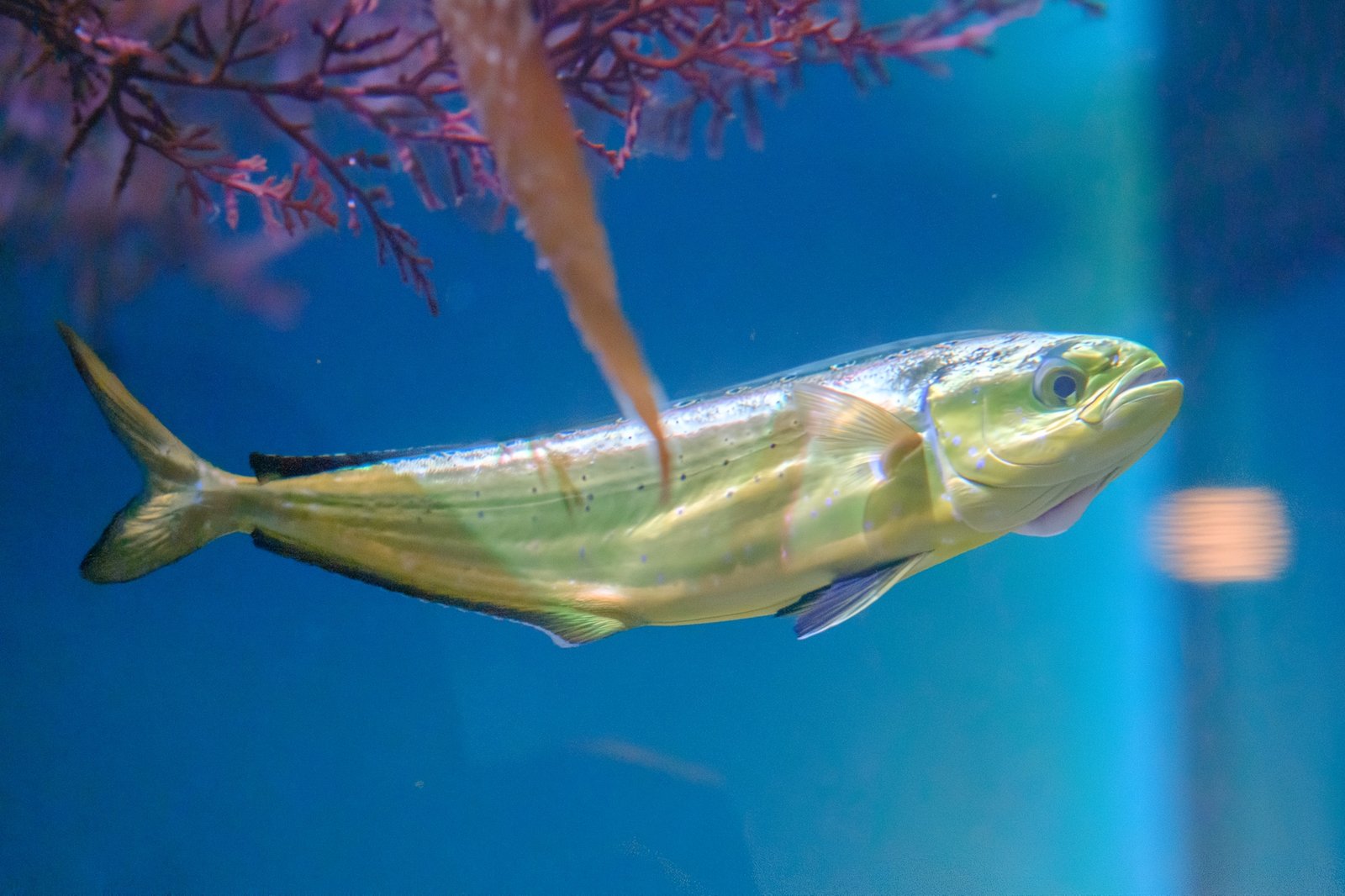
Water temperature is the single biggest factor determining where mahi mahi will and won’t be found on any given day. Surface temperatures between 70°F and 85°F support their metabolism and the baitfish populations they depend on; step outside that range and both the fish and their food source thin out fast. That sensitivity is also why mahi mahi distribution shifts seasonally, following warm currents rather than staying fixed to any one location year-round, a pattern covered in full in a dedicated migration guide.
Open Water, Not Reef or Bottom
It’s worth being explicit about what mahi mahi avoid as much as what they prefer. They aren’t reef fish and don’t associate with coral structure the way snapper or grouper do, and they don’t hold near the seafloor. They live and hunt in open water, which is exactly why floating structure like sargassum weed lines and debris matters so much to them: in an otherwise featureless environment, floating cover is one of the only places baitfish concentrate.
Do mahi mahi live in the Mediterranean Sea?
Yes. Genetic studies confirm a distinct Mediterranean population alongside the Atlantic, Pacific, and Indian Ocean groups, all the same species but genetically separated by ocean basin.
How deep do mahi mahi normally swim?
Most of the time, within the top 100 to 120 feet of water. Satellite tags show they spend about 40 percent of their time very close to the surface.
Can mahi mahi survive in cold water?
No. They need surface temperatures of roughly 70°F to 85°F, and their range contracts or shifts seasonally to stay within that band.
Explore the rest of the Mahi Mahi series
Biology & Identification
- Mahi Mahi: Full Species Overview
- Why Male Mahi Mahi Have That Distinctive Flat Forehead
- Bull vs Cow Mahi Mahi: How to Tell the Male and Female Apart
- Why Mahi Mahi Changes Colour: The Blue, Gold, and Green Explained
- Why Is Mahi Mahi Called Dolphinfish? The Name Confusion Explained
- Other Names for Mahi Mahi: Dorado, Dolphinfish, and Why It Has So Many
- Mahi Mahi Scientific Name: Coryphaena Hippurus and Its Taxonomy Explained
- What Kind of Fish Is Mahi Mahi? Classification, Family, and Biology
- Mahi Mahi Facts: 10 Things Most People Do Not Know
Habitat & Behavior
- Mahi Mahi Spawning and Reproduction: How They Breed and How Fast They Grow
- How Long Do Mahi Mahi Live? Lifespan, Growth Rate, and Maturity
- What Eats Mahi Mahi? Natural Predators in the Ocean
- How Fast Can Mahi Mahi Swim? Speed, Agility, and Why They Are Hard to Land
- What Do Mahi Mahi Eat? Diet, Prey, and Feeding Habits in the Wild
- Mahi Mahi in the Atlantic vs Pacific: Are They the Same Fish?
- Mahi Mahi Migration: How They Follow Warm Currents Around the World
- Mahi Mahi Habitat: Why They Hang Around Sargassum and Floating Debris
- Baby Mahi Mahi: Should You Release Juvenile Mahi and How to Identify Them
Size & Records
- How Big Do Mahi Mahi Get? Size, Weight, and World Record
- Mahi Mahi World Record: Biggest Ever Caught and Where
Food & Health
- Fresh vs Frozen Mahi Mahi: Does It Make a Difference?
- Wild-Caught vs Farmed Mahi Mahi: What Is the Difference?
- Is Mahi Mahi a Sustainable Seafood Choice?
- Fish Similar to Mahi Mahi: What to Buy When It Is Not Available
- Mahi Mahi vs Tuna, Salmon, and Grouper: How Does It Compare?
- Can Dogs Eat Mahi Mahi? What Is Safe and What to Watch Out For
- Is Mahi Mahi Safe to Eat During Pregnancy? Mercury and Safety Explained
- Mahi Mahi Mercury Levels: Is It Safe and How Often Can You Eat It?
- Is Mahi Mahi Good to Eat? What Makes It One of the Most Popular Fish
- Mahi Mahi Nutrition Facts: Protein, Omega-3, Calories, and Vitamins
- Is Mahi Mahi a White Fish? Flesh Colour, Texture, and How It Compares
- What Does Mahi Mahi Taste Like? Flavour, Texture, and Is It Fishy?
- Mahi Mahi Population: Are Numbers Healthy and Is Overfishing a Risk?
- Mahi Mahi and Bycatch: What Gets Caught Alongside It and Why It Matters
Fishing
- Mahi Fishing Tips: Rigs, Trolling Speeds, and What Actually Works
- How to Catch Mahi Mahi: Techniques, Tackle, and Where to Find Them
- Mahi Mahi Fishing: Everything You Need to Know to Find and Catch Them
- Mahi Mahi Fishing in Florida: Season, Hotspots, and How to Catch Them
- Where to Catch Mahi Mahi: Best Locations Around the World
- Mahi Mahi Fishing Charters: What to Expect and How to Choose One
- Mahi Mahi Season: When and Where to Fish for Peak Action
- Best Lures for Mahi Mahi: What They Strike and Why
- Trolling for Mahi Mahi: Speed, Spread, and Setup Explained
- Finding Mahi Mahi on Sargassum Lines: Why Weed Lines Are the Key
- Mahi Mahi Fishing in Hawaii: When to Go and What to Expect