Quick answer: Male mahi mahi develop a steep, near-vertical forehead as they mature because of sexual selection. The trait signals size, age, and dominance to rivals and potential mates, the same evolutionary pattern seen in several other fish species with pronounced head crests. Females never develop it, which is why the forehead is the fastest way to tell a bull from a cow at a glance.
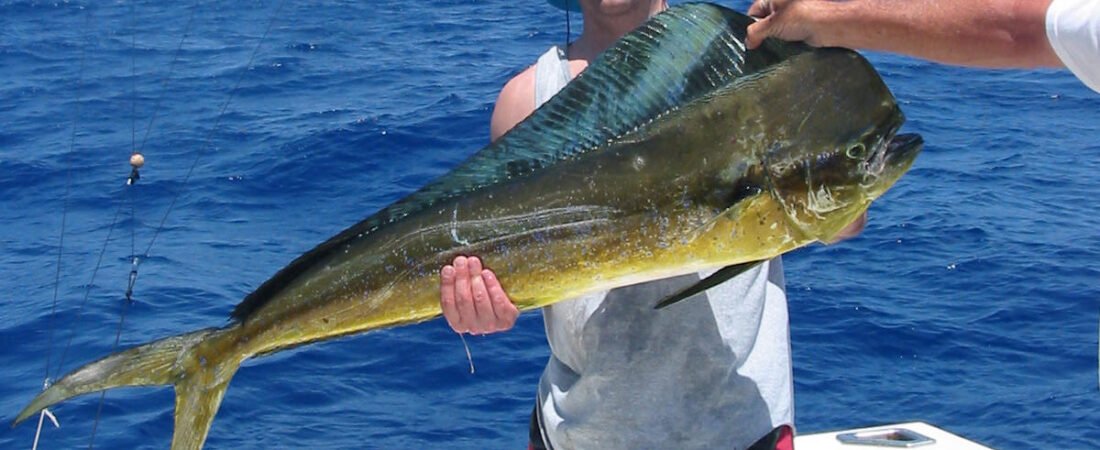
Anyone who has looked a mature bull mahi mahi in the face has noticed it: a blunt, almost squared-off forehead that drops nearly straight down from the top of the head. Cows never grow one. Here’s why that specific shape exists, when it develops, and what the biology behind it actually explains.
What Causes the Forehead Shape?
The forehead, technically a bony crest formed by the shape of the skull, is a textbook example of what biologists call a sexually dimorphic trait: a physical feature that differs sharply between males and females of the same species and serves a social or reproductive purpose rather than a survival one. It isn’t required for swimming, feeding, or breathing. It exists because, over generations, mahi mahi that displayed it more prominently had a reproductive advantage.
When Does It Develop?
Young mahi mahi of both sexes start out with the same rounded head shape. The crest begins to appear in males as they approach sexual maturity, which happens remarkably early, often by 4 to 6 months of age, and it becomes more pronounced as a bull continues to grow. Larger, older bulls tend to carry the most exaggerated, steepest foreheads, which is part of why the trait is often read as a rough visual indicator of a fish’s size and maturity from a distance.
The Sexual Selection Theory
Across the animal kingdom, and specifically among other fish species with similar head crests, like cichlids and the humphead wrasse, researchers have found the same underlying pattern repeatedly: females tend to favor males with more prominent head structures, treating the trait as a signal of genetic fitness, while the same structure also functions as a visual warning during confrontations between rival males, reducing the need for actual physical fights over territory or mates. Larger crests are consistently linked to social dominance in these species.
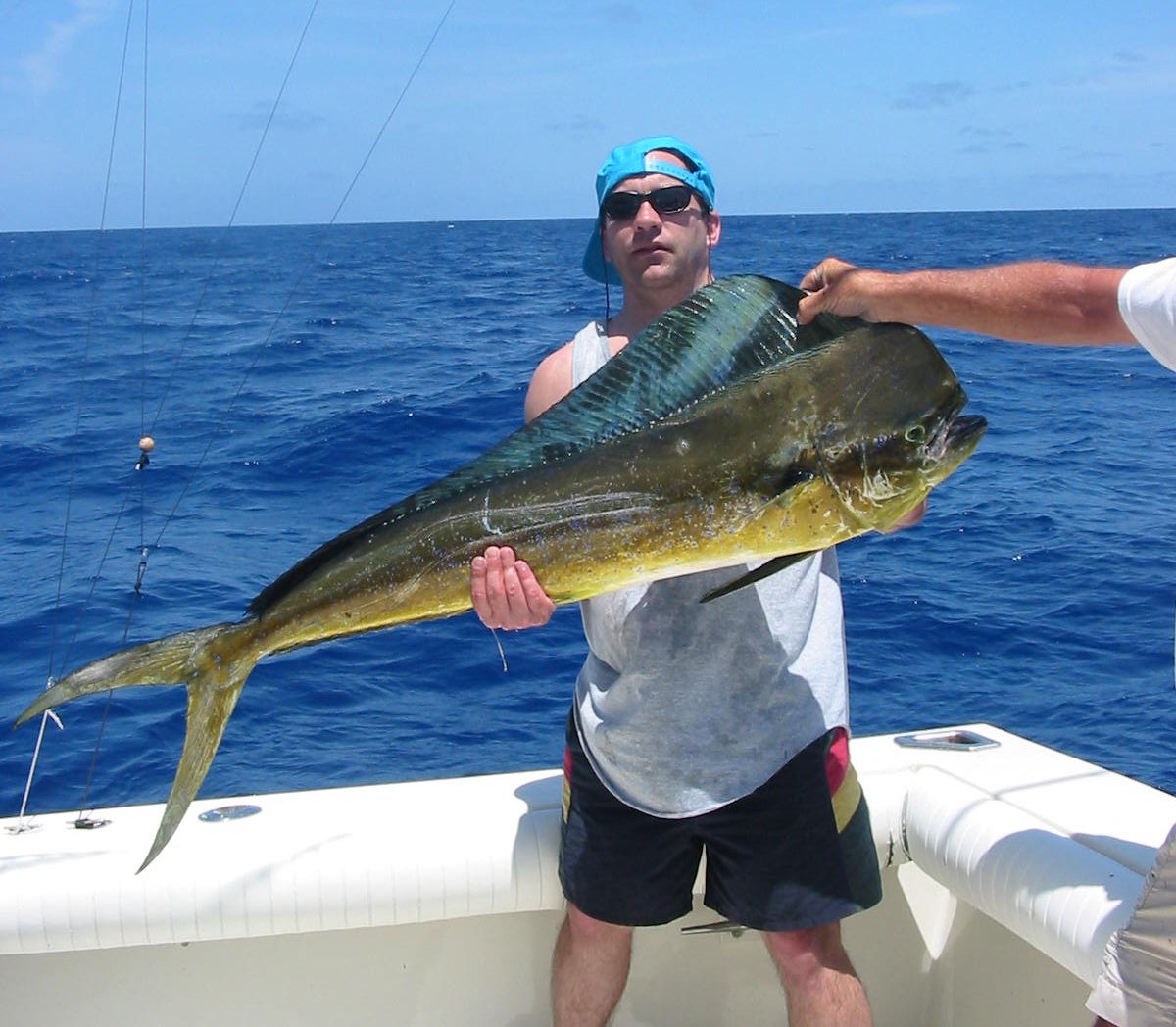
Mahi mahi fit that same pattern closely. Large, mature bulls are more often observed alone or paired with a single cow rather than in groups, and they’re described by experienced captains as noticeably more territorial around weed lines and floating structure than smaller fish or cows of any size, behavior consistent with a trait that functions partly as a dominance display. While no single study has isolated the exact mechanism in mahi mahi specifically, the trait’s timing, its exclusivity to mature males, and its correlation with dominant behavior all point toward the same sexual selection pressure documented in other head-crested fish.
Is There a Cost to Carrying It?
In several fish species studied for this same trait, researchers have found that an exaggerated head crest isn’t free. It adds drag and mass that can measurably reduce swimming endurance, meaning the largest, most dominant-looking males are trading some raw swimming efficiency for the reproductive and social advantages the crest provides. It’s a classic evolutionary trade-off: a trait costly enough that only the fittest individuals can afford to carry an extreme version of it, which is exactly what makes it a reliable signal in the first place.
Do female mahi mahi ever get a forehead crest?
No. Cows keep a smoothly rounded, tapered head shape their entire lives, regardless of size or age. The crest is exclusive to mature males.
At what age does the forehead start showing?
It begins developing as males approach sexual maturity, often by 4 to 6 months old, and becomes more pronounced as the fish continues to grow.
Does a bigger forehead mean a bigger fish?
Generally, yes. The most exaggerated, steepest foreheads tend to appear on the largest, oldest bulls, making the trait a rough visual cue for size from a distance.
The forehead isn’t decorative in the way its shape suggests. It’s a costly, honest signal shaped by generations of mate competition, the same evolutionary force behind head crests in several other fish species entirely unrelated to mahi mahi.
Explore the rest of the Mahi Mahi series
Biology & Identification
- Mahi Mahi: Full Species Overview
- Bull vs Cow Mahi Mahi: How to Tell the Male and Female Apart
- Why Mahi Mahi Changes Colour: The Blue, Gold, and Green Explained
- Why Is Mahi Mahi Called Dolphinfish? The Name Confusion Explained
- Other Names for Mahi Mahi: Dorado, Dolphinfish, and Why It Has So Many
- Mahi Mahi Scientific Name: Coryphaena Hippurus and Its Taxonomy Explained
- What Kind of Fish Is Mahi Mahi? Classification, Family, and Biology
- Mahi Mahi Facts: 10 Things Most People Do Not Know
Habitat & Behavior
- Mahi Mahi Spawning and Reproduction: How They Breed and How Fast They Grow
- How Long Do Mahi Mahi Live? Lifespan, Growth Rate, and Maturity
- What Eats Mahi Mahi? Natural Predators in the Ocean
- How Fast Can Mahi Mahi Swim? Speed, Agility, and Why They Are Hard to Land
- What Do Mahi Mahi Eat? Diet, Prey, and Feeding Habits in the Wild
- Mahi Mahi in the Atlantic vs Pacific: Are They the Same Fish?
- Mahi Mahi Migration: How They Follow Warm Currents Around the World
- Mahi Mahi Habitat: Why They Hang Around Sargassum and Floating Debris
- Where Do Mahi Mahi Live? Ocean, Depth, and Temperature Preferences
- Baby Mahi Mahi: Should You Release Juvenile Mahi and How to Identify Them
Size & Records
- How Big Do Mahi Mahi Get? Size, Weight, and World Record
- Mahi Mahi World Record: Biggest Ever Caught and Where
Food & Health
- Fresh vs Frozen Mahi Mahi: Does It Make a Difference?
- Wild-Caught vs Farmed Mahi Mahi: What Is the Difference?
- Is Mahi Mahi a Sustainable Seafood Choice?
- Fish Similar to Mahi Mahi: What to Buy When It Is Not Available
- Mahi Mahi vs Tuna, Salmon, and Grouper: How Does It Compare?
- Can Dogs Eat Mahi Mahi? What Is Safe and What to Watch Out For
- Is Mahi Mahi Safe to Eat During Pregnancy? Mercury and Safety Explained
- Mahi Mahi Mercury Levels: Is It Safe and How Often Can You Eat It?
- Is Mahi Mahi Good to Eat? What Makes It One of the Most Popular Fish
- Mahi Mahi Nutrition Facts: Protein, Omega-3, Calories, and Vitamins
- Is Mahi Mahi a White Fish? Flesh Colour, Texture, and How It Compares
- What Does Mahi Mahi Taste Like? Flavour, Texture, and Is It Fishy?
- Mahi Mahi Population: Are Numbers Healthy and Is Overfishing a Risk?
- Mahi Mahi and Bycatch: What Gets Caught Alongside It and Why It Matters
Fishing
- Mahi Fishing Tips: Rigs, Trolling Speeds, and What Actually Works
- How to Catch Mahi Mahi: Techniques, Tackle, and Where to Find Them
- Mahi Mahi Fishing: Everything You Need to Know to Find and Catch Them
- Mahi Mahi Fishing in Florida: Season, Hotspots, and How to Catch Them
- Where to Catch Mahi Mahi: Best Locations Around the World
- Mahi Mahi Fishing Charters: What to Expect and How to Choose One
- Mahi Mahi Season: When and Where to Fish for Peak Action
- Best Lures for Mahi Mahi: What They Strike and Why
- Trolling for Mahi Mahi: Speed, Spread, and Setup Explained
- Finding Mahi Mahi on Sargassum Lines: Why Weed Lines Are the Key
- Mahi Mahi Fishing in Hawaii: When to Go and What to Expect