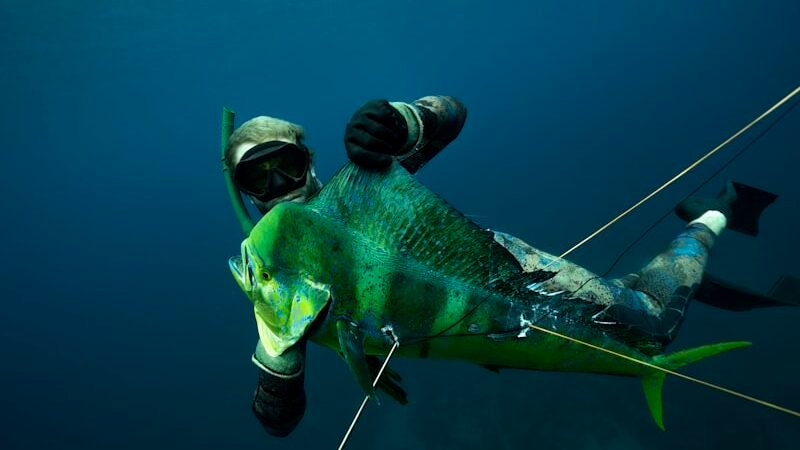
Mahi mahi fish well in Hawaii nearly year-round but peak September through May, with the strongest run in spring, when fish grow from an average 10 to 15 pounds in March to 40 to 50 pounds by April and May. Kona, Oahu’s leeward coast, and the channels between islands are the standard grounds, with boats working state-maintained FADs alongside natural weed lines and debris.
Here’s what an actual trip in Hawaii looks like, when to time it, and what’s changed recently for anglers fishing without a local captain.
Hawaii’s Season Runs Longer Than Most Mainland Fisheries
Because the islands sit in consistently warm Pacific water for most of the year, Hawaii doesn’t have the sharply compressed peak season that current-dependent fisheries like Florida’s Gulf Stream do. Fish are present in some numbers essentially year-round, with a genuine lull heading into winter before numbers build again and peak in spring. That extended window makes Hawaii a more forgiving destination to plan around than fisheries tied tightly to a single seasonal current push.
Hawaii Mahi Mahi At A Glance
Size Grows Substantially as the Season Progresses
One of the more distinctive traits of Hawaii’s mahi mahi fishery is how much average size shifts within a single season. Early in the year, fish average a modest 10 to 15 pounds, but that average climbs steadily as spring progresses, with fish in the 40 to 50 pound range becoming realistic by April and May. That growth curve means the same species, fished off the same islands, can produce a genuinely different trip depending on whether it’s booked in January or May: more numbers early, fewer but noticeably larger fish later in the season.
Where Around the Islands to Fish
Kona, on the Big Island’s leeward side, is one of the most consistently productive grounds in the state, benefiting from deep water close to shore and a well-developed charter fleet built around big-game species including mahi mahi. Oahu’s leeward coast and the channels running between islands also produce reliably, and boats across the state routinely target the FADs, fish aggregating devices Hawaii’s Division of Aquatic Resources maintains specifically to concentrate pelagic species for both commercial and recreational fishing. Working a known FAD is often more efficient than searching blind for natural weed lines, since FAD locations are fixed and well documented, unlike drifting sargassum.
FADs are public infrastructure, not private spots
Hawaii’s FAD buoys are maintained by the state and published for public use, which means courtesy matters when multiple boats want to work the same buoy. Sharing space respectfully at a popular FAD is standard etiquette in the local fleet.
How the Islands Compare to Each Other
Kona’s reputation as Hawaii’s premier big-game fishing hub is well earned, with deep water often reachable within a short run and a charter fleet built specifically around targeting large pelagics. Oahu offers strong access too, with a much larger overall charter fleet given the island’s population and tourism volume, and its leeward coast produces mahi mahi reliably alongside other pelagic species. Maui and Kauai see somewhat less dedicated mahi mahi effort than Kona or Oahu, largely a function of fleet size rather than fish availability, the same warm, FAD-supported waters surround every island, and productive fishing is realistically available from any of them.
What Else Typically Shows Up on the Same Trip
Hawaii’s offshore waters rarely produce a single-species day, and a mahi mahi-focused trip commonly also puts anglers on ono (wahoo), ahi (yellowfin or bigeye tuna), and occasionally billfish like striped marlin or spearfish on the same grounds. This mixed-bag reality is worth knowing before booking, since a captain focused specifically on mahi mahi will fish somewhat differently, favoring known FADs and slower speeds, than one running a broader open spread built to intercept whatever’s biting that day. Anglers with a strong preference for mahi mahi specifically should say so clearly when booking, since Hawaii crews can and do adjust spread and location choices based on stated priorities.
The License Requirement That Changed in 2024
As of May 2024, Hawaii requires all non-resident anglers age 15 and older to hold a recreational marine fishing license before fishing, including while aboard a charter boat. This was a meaningful change from the state’s previous policy, and anglers planning a trip should confirm directly with their charter operator whether the license is included in the trip cost or needs to be purchased separately in advance, since policies vary by operator and the requirement is still relatively new enough that not every visiting angler is aware of it.
No State Size or Bag Limit, But Check Federal Rules
Hawaii does not impose a state-level size or bag limit on mahi mahi for recreational anglers, unlike Florida’s Atlantic waters, which enforce a 20-inch minimum and a 5-fish daily bag limit. That said, taking only what will actually be used is standard practice among Hawaii’s charter fleet and considered good etiquette even without a hard regulatory cap, and federal rules covering the broader Western Pacific region can still apply depending on exactly where a trip fishes, so confirming current rules with a charter captain before the trip remains worthwhile.
| Month | Typical Size | Notes |
|---|---|---|
| December-February | Smaller, lower numbers | Winter lull, still fishable |
| March | ~10-15 lb | Numbers begin building |
| April-May | Up to 40-50 lb | Peak season, largest average fish |
| Summer-Fall | Moderate | Steady action, less extreme than spring peak |
What a Typical Hawaii Charter Trip Looks Like
Because deep, warm water sits close to most Hawaii harbors thanks to the islands’ steep volcanic dropoffs, half-day charters are common and practical in a way they aren’t in regions with a longer run to blue water. A typical trip runs offshore to a known FAD or productive current line, trolls a standard spread similar to what’s used across most Pacific and Atlantic mahi mahi fisheries, and often mixes in other pelagic species like ono (wahoo) or ahi (tuna) on the same grounds, since Hawaii’s offshore waters rarely produce just one species on a given day.
Hawaii’s mahi mahi fishery stands out for its length and consistency rather than a single dramatic peak. Spring offers the biggest fish, but the islands’ warm, stable water keeps the species catchable across most of the calendar.
What to Prepare Before a Hawaii Trip
Beyond confirming license requirements, a few practical steps make a Hawaii mahi mahi trip go more smoothly. Sun protection matters more here than in many mainland fisheries simply because trips often run in more consistently direct tropical sun with little cloud cover, so reef-safe sunscreen, sun-protective clothing, and a hat are worth packing regardless of season. Confirming what the operator provides versus what anglers should bring, particularly around meals, water, and seasickness remedies on longer full-day trips, avoids surprises at the dock. Anglers flying in from the mainland should also build in a buffer day before the trip in case of flight delays, since Hawaii’s charter fleet generally can’t offer flexible rescheduling on short notice during the busy spring season.
Booking Considerations for Peak Season
Because spring is both the peak mahi mahi window and one of the more popular overall travel seasons in Hawaii, charter availability tightens noticeably in April and May, and the most reputable operators can book up weeks or even months in advance. Anglers with flexible dates who mainly want a reliable trip rather than the absolute largest fish can find easier availability, and often better rates, by targeting the edges of the season, late February into March, or June, when fish are still present in solid numbers even though the very largest bulls of peak spring haven’t necessarily arrived yet or have already thinned out.
Shore and Nearshore Options Versus Offshore Charters
Most serious mahi mahi fishing in Hawaii happens from a boat working genuine blue water, but the islands’ steep dropoffs mean that water isn’t always far from shore. Some nearshore and even shore-based opportunities exist in specific locations where deep water sits unusually close to accessible coastline, though these are far less consistent than a proper offshore trip and depend heavily on local knowledge of exactly where and when fish push in close. For most visiting anglers without that local knowledge, a half-day or full-day charter out of a harbor with an experienced captain remains the far more reliable way to actually connect with fish, particularly during the spring window when the biggest fish are most likely to be around.
Frequently Asked Questions
When is the best time to fish for mahi mahi in Hawaii?
September through May is the broader season, with spring, particularly April and May, producing the largest average fish as size builds through the season.
Do I need a fishing license to fish for mahi mahi in Hawaii?
Yes, as of May 2024, non-resident anglers age 15 and older need a recreational marine fishing license, including when fishing aboard a charter boat. Confirm with your operator whether it’s included in the trip cost.
Is there a size or bag limit for mahi mahi in Hawaii?
Hawaii does not impose a state size or bag limit on mahi mahi, though taking only what will be used is standard etiquette, and federal rules can still apply depending on where a trip fishes.
What other fish might I catch on a Hawaii mahi mahi trip?
Ono (wahoo) and ahi (tuna) commonly show up on the same grounds, and occasionally billfish like striped marlin or spearfish. Hawaii’s offshore waters rarely produce a single-species day.
Explore the rest of the Mahi Mahi series
Biology & Identification
- Mahi Mahi: Full Species Overview
- Why Male Mahi Mahi Have That Distinctive Flat Forehead
- Bull vs Cow Mahi Mahi: How to Tell the Male and Female Apart
- Why Mahi Mahi Changes Colour: The Blue, Gold, and Green Explained
- Why Is Mahi Mahi Called Dolphinfish? The Name Confusion Explained
- Other Names for Mahi Mahi: Dorado, Dolphinfish, and Why It Has So Many
- Mahi Mahi Scientific Name: Coryphaena Hippurus and Its Taxonomy Explained
- What Kind of Fish Is Mahi Mahi? Classification, Family, and Biology
- Mahi Mahi Facts: 10 Things Most People Do Not Know
Habitat & Behavior
- Mahi Mahi Spawning and Reproduction: How They Breed and How Fast They Grow
- How Long Do Mahi Mahi Live? Lifespan, Growth Rate, and Maturity
- What Eats Mahi Mahi? Natural Predators in the Ocean
- How Fast Can Mahi Mahi Swim? Speed, Agility, and Why They Are Hard to Land
- What Do Mahi Mahi Eat? Diet, Prey, and Feeding Habits in the Wild
- Mahi Mahi in the Atlantic vs Pacific: Are They the Same Fish?
- Mahi Mahi Migration: How They Follow Warm Currents Around the World
- Mahi Mahi Habitat: Why They Hang Around Sargassum and Floating Debris
- Where Do Mahi Mahi Live? Ocean, Depth, and Temperature Preferences
- Baby Mahi Mahi: Should You Release Juvenile Mahi and How to Identify Them
Size & Records
- How Big Do Mahi Mahi Get? Size, Weight, and World Record
- Mahi Mahi World Record: Biggest Ever Caught and Where
Food & Health
- Fresh vs Frozen Mahi Mahi: Does It Make a Difference?
- Wild-Caught vs Farmed Mahi Mahi: What Is the Difference?
- Is Mahi Mahi a Sustainable Seafood Choice?
- Fish Similar to Mahi Mahi: What to Buy When It Is Not Available
- Mahi Mahi vs Tuna, Salmon, and Grouper: How Does It Compare?
- Can Dogs Eat Mahi Mahi? What Is Safe and What to Watch Out For
- Is Mahi Mahi Safe to Eat During Pregnancy? Mercury and Safety Explained
- Mahi Mahi Mercury Levels: Is It Safe and How Often Can You Eat It?
- Is Mahi Mahi Good to Eat? What Makes It One of the Most Popular Fish
- Mahi Mahi Nutrition Facts: Protein, Omega-3, Calories, and Vitamins
- Is Mahi Mahi a White Fish? Flesh Colour, Texture, and How It Compares
- What Does Mahi Mahi Taste Like? Flavour, Texture, and Is It Fishy?
- Mahi Mahi Population: Are Numbers Healthy and Is Overfishing a Risk?
- Mahi Mahi and Bycatch: What Gets Caught Alongside It and Why It Matters
Fishing
- Mahi Fishing Tips: Rigs, Trolling Speeds, and What Actually Works
- How to Catch Mahi Mahi: Techniques, Tackle, and Where to Find Them
- Mahi Mahi Fishing: Everything You Need to Know to Find and Catch Them
- Mahi Mahi Fishing in Florida: Season, Hotspots, and How to Catch Them
- Where to Catch Mahi Mahi: Best Locations Around the World
- Mahi Mahi Fishing Charters: What to Expect and How to Choose One
- Mahi Mahi Season: When and Where to Fish for Peak Action
- Best Lures for Mahi Mahi: What They Strike and Why
- Trolling for Mahi Mahi: Speed, Spread, and Setup Explained
- Finding Mahi Mahi on Sargassum Lines: Why Weed Lines Are the Key