
Catching mahi mahi comes down to three things: fishing warm water in the 70-85°F range, finding floating structure like sargassum weed lines or debris where baitfish concentrate, and trolling a bait or lure through that structure until a fish strikes. It’s a more approachable target than most offshore gamefish, mahi mahi are aggressive, abundant in season, and don’t demand highly specialized tackle to catch consistently.
This is the complete overview: when to go, where to look, and how mahi mahi are typically caught, with links to deeper dives on gear and technique for anyone ready to get more specific.
Fishing At A Glance
When to Go
Mahi mahi show up wherever surface water sits in their preferred 70-85°F range, which in most of the U.S. means a season running roughly April through October, peaking in the summer months. Exact timing shifts by region, Florida and the Keys see action earlier and later in the year than northern waters, so checking regional specifics is worth it before planning a trip.
Where to Look
Mahi mahi are open-ocean fish that avoid reefs and the seafloor entirely, living and hunting near the surface. The single most reliable indicator of fish is floating structure, sargassum weed lines, driftwood, or debris, since it concentrates the baitfish mahi mahi hunt. Diving or circling birds overhead are another strong visual cue that fish are feeding below. Once located, mahi mahi often stay near the same weed line or debris field for hours or even days as it drifts.
How They’re Caught
Trolling is the standard method: running rigged ballyhoo or skirted lures behind a moving boat at moderate speed until a fish strikes. Once a school is found near structure, many anglers switch to pitching live bait or small jigs on lighter spinning tackle directly into the cover, which often draws out the largest fish holding there. South Florida anglers have also developed kite fishing into an effective specialized technique for working weed lines thoroughly.
Why Mahi Mahi Fight the Way They Do
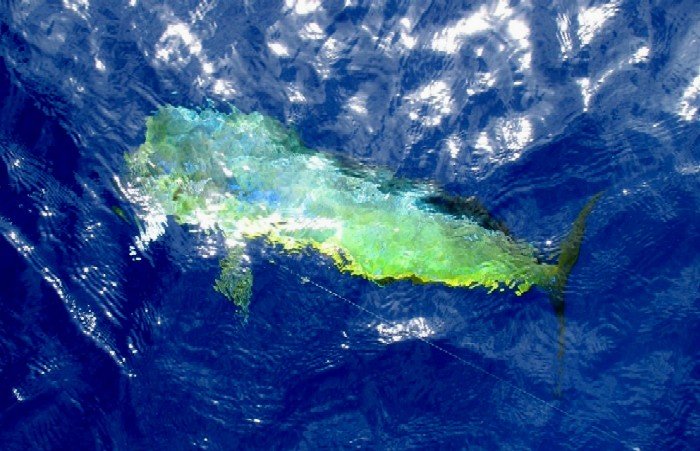
An estimated top speed of around 57 mph, combined with a habit of jumping and running near the surface rather than diving, makes mahi mahi a visually thrilling, physically demanding fight relative to their size. That fight is a big part of the species’ popularity, and it’s worth having tackle matched to it rather than gear that’s either overkill or under-built.
Warm water, floating structure, and a trolled bait or lure, that’s the whole formula. Everything beyond this is refinement: better tackle, sharper technique, and knowing the small details that separate an average trip from a great one.
Frequently Asked Questions
What is the easiest way to catch mahi mahi?
Trolling rigged ballyhoo or skirted lures near a floating weed line or debris field in warm water is the most reliable, beginner-friendly approach.
Do I need specialized tackle to catch mahi mahi?
No. Standard offshore trolling gear works well. Tackle can be refined for better results, but mahi mahi aren’t especially tackle-sensitive compared to more finicky gamefish.
What is the single best sign that mahi mahi are nearby?
Floating sargassum weed lines or debris, especially with diving birds overhead, are the most reliable visual cues that fish are feeding in the area.
Explore the rest of the Mahi Mahi series
Biology & Identification
- Mahi Mahi: Full Species Overview
- Why Male Mahi Mahi Have That Distinctive Flat Forehead
- Bull vs Cow Mahi Mahi: How to Tell the Male and Female Apart
- Why Mahi Mahi Changes Colour: The Blue, Gold, and Green Explained
- Why Is Mahi Mahi Called Dolphinfish? The Name Confusion Explained
- Other Names for Mahi Mahi: Dorado, Dolphinfish, and Why It Has So Many
- Mahi Mahi Scientific Name: Coryphaena Hippurus and Its Taxonomy Explained
- What Kind of Fish Is Mahi Mahi? Classification, Family, and Biology
- Mahi Mahi Facts: 10 Things Most People Do Not Know
Habitat & Behavior
- Mahi Mahi Spawning and Reproduction: How They Breed and How Fast They Grow
- How Long Do Mahi Mahi Live? Lifespan, Growth Rate, and Maturity
- What Eats Mahi Mahi? Natural Predators in the Ocean
- How Fast Can Mahi Mahi Swim? Speed, Agility, and Why They Are Hard to Land
- What Do Mahi Mahi Eat? Diet, Prey, and Feeding Habits in the Wild
- Mahi Mahi in the Atlantic vs Pacific: Are They the Same Fish?
- Mahi Mahi Migration: How They Follow Warm Currents Around the World
- Mahi Mahi Habitat: Why They Hang Around Sargassum and Floating Debris
- Where Do Mahi Mahi Live? Ocean, Depth, and Temperature Preferences
- Baby Mahi Mahi: Should You Release Juvenile Mahi and How to Identify Them
Size & Records
- How Big Do Mahi Mahi Get? Size, Weight, and World Record
- Mahi Mahi World Record: Biggest Ever Caught and Where
Food & Health
- Fresh vs Frozen Mahi Mahi: Does It Make a Difference?
- Wild-Caught vs Farmed Mahi Mahi: What Is the Difference?
- Is Mahi Mahi a Sustainable Seafood Choice?
- Fish Similar to Mahi Mahi: What to Buy When It Is Not Available
- Mahi Mahi vs Tuna, Salmon, and Grouper: How Does It Compare?
- Can Dogs Eat Mahi Mahi? What Is Safe and What to Watch Out For
- Is Mahi Mahi Safe to Eat During Pregnancy? Mercury and Safety Explained
- Mahi Mahi Mercury Levels: Is It Safe and How Often Can You Eat It?
- Is Mahi Mahi Good to Eat? What Makes It One of the Most Popular Fish
- Mahi Mahi Nutrition Facts: Protein, Omega-3, Calories, and Vitamins
- Is Mahi Mahi a White Fish? Flesh Colour, Texture, and How It Compares
- What Does Mahi Mahi Taste Like? Flavour, Texture, and Is It Fishy?
- Mahi Mahi Population: Are Numbers Healthy and Is Overfishing a Risk?
- Mahi Mahi and Bycatch: What Gets Caught Alongside It and Why It Matters
Fishing
- Mahi Fishing Tips: Rigs, Trolling Speeds, and What Actually Works
- How to Catch Mahi Mahi: Techniques, Tackle, and Where to Find Them
- Mahi Mahi Fishing in Florida: Season, Hotspots, and How to Catch Them
- Where to Catch Mahi Mahi: Best Locations Around the World
- Mahi Mahi Fishing Charters: What to Expect and How to Choose One
- Mahi Mahi Season: When and Where to Fish for Peak Action
- Best Lures for Mahi Mahi: What They Strike and Why
- Trolling for Mahi Mahi: Speed, Spread, and Setup Explained
- Finding Mahi Mahi on Sargassum Lines: Why Weed Lines Are the Key
- Mahi Mahi Fishing in Hawaii: When to Go and What to Expect