
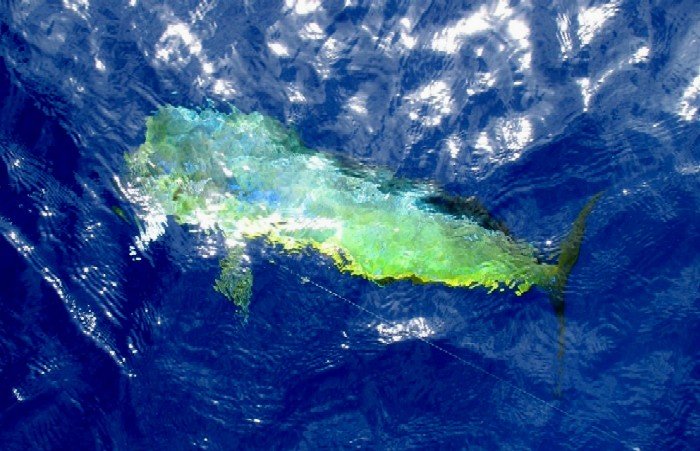
Mahi mahi is leaner and higher in protein than tuna or salmon, milder in flavor than all three comparisons, and shares its closest texture match with grouper. Salmon wins decisively on omega-3 content, tuna wins on richness for seared or raw preparations, and grouper comes closest to matching mahi mahi’s overall profile, mild, firm, and low in fat.
Here’s a direct, side-by-side look at how mahi mahi actually compares to three of the most commonly substituted fish.
| Trait | Mahi Mahi | Tuna | Salmon | Grouper |
|---|---|---|---|---|
| Flavor | Mild, slightly sweet | Meaty, clean | Rich, buttery | Mild, slightly sweet |
| Texture | Firm, large flakes | Dense, meaty | Soft, oily | Firm, flakier |
| Protein (per 100g) | ~18-24g | ~25-30g | ~20-22g | ~19-24g |
| Fat | Very low | Low-moderate | High | Low |
| Omega-3 | Modest | Moderate-high | High | Moderate |
| Mercury | Moderate | Moderate-high | Low | Moderate |
Mahi Mahi vs Tuna
Tuna carries a denser, meatier texture and a cleaner, more assertive flavor than mahi mahi, along with slightly higher protein per serving. Mahi mahi is milder and less intense, easier for people who find tuna’s richness overpowering, especially in seared or raw preparations. Mercury runs comparable or slightly higher in some tuna species, particularly yellowfin and albacore.
Mahi Mahi vs Salmon
This is the biggest contrast on the list. Salmon’s fat content drives a rich, buttery flavor and significantly higher omega-3 levels, while mahi mahi is leaner, lower in calories, and noticeably milder. Anyone prioritizing omega-3 intake specifically should lean toward salmon; anyone prioritizing lean protein with minimal fat tends to prefer mahi mahi.
Mahi Mahi vs Grouper
These two are the closest match on this list. Both are mild, firm-fleshed, and low in fat, though grouper tends to flake into larger, softer pieces with a slightly sweeter edge, while mahi mahi holds its structure a bit more firmly. In most recipes, the two are genuinely interchangeable.
Price and Availability
Mahi mahi typically runs less expensive than fresh tuna or wild salmon, and its wide distribution across the Atlantic, Pacific, and Gulf keeps it consistently available fresh or frozen year-round. Grouper, by contrast, is more regionally limited and often commands a higher price due to tighter catch regulations in some fisheries. For anyone comparing value alongside taste and nutrition, mahi mahi frequently comes out as the more accessible, budget-friendly option of the group.
If the goal is lean protein with minimal fat, mahi mahi and grouper are the closest match. If the goal is maximum omega-3s, salmon wins clearly. If the goal is a denser, meatier bite, tuna is the better direction.
Frequently Asked Questions
Is mahi mahi healthier than tuna?
It depends on the goal. Tuna generally has slightly more protein and omega-3s, while mahi mahi is lower in fat and calories.
Which fish tastes most like mahi mahi?
Grouper is the closest match, both mild, firm-fleshed, and low in fat, making them commonly interchangeable in recipes.
Why does salmon have so much more omega-3 than mahi mahi?
Omega-3 fatty acids are fat-soluble and concentrate in fattier fish. Salmon’s much higher fat content means it carries far more omega-3 than lean mahi mahi.
Explore the rest of the Mahi Mahi series
Biology & Identification
- Mahi Mahi: Full Species Overview
- Why Male Mahi Mahi Have That Distinctive Flat Forehead
- Bull vs Cow Mahi Mahi: How to Tell the Male and Female Apart
- Why Mahi Mahi Changes Colour: The Blue, Gold, and Green Explained
- Why Is Mahi Mahi Called Dolphinfish? The Name Confusion Explained
- Other Names for Mahi Mahi: Dorado, Dolphinfish, and Why It Has So Many
- Mahi Mahi Scientific Name: Coryphaena Hippurus and Its Taxonomy Explained
- What Kind of Fish Is Mahi Mahi? Classification, Family, and Biology
- Mahi Mahi Facts: 10 Things Most People Do Not Know
Habitat & Behavior
- Mahi Mahi Spawning and Reproduction: How They Breed and How Fast They Grow
- How Long Do Mahi Mahi Live? Lifespan, Growth Rate, and Maturity
- What Eats Mahi Mahi? Natural Predators in the Ocean
- How Fast Can Mahi Mahi Swim? Speed, Agility, and Why They Are Hard to Land
- What Do Mahi Mahi Eat? Diet, Prey, and Feeding Habits in the Wild
- Mahi Mahi in the Atlantic vs Pacific: Are They the Same Fish?
- Mahi Mahi Migration: How They Follow Warm Currents Around the World
- Mahi Mahi Habitat: Why They Hang Around Sargassum and Floating Debris
- Where Do Mahi Mahi Live? Ocean, Depth, and Temperature Preferences
- Baby Mahi Mahi: Should You Release Juvenile Mahi and How to Identify Them
Size & Records
- How Big Do Mahi Mahi Get? Size, Weight, and World Record
- Mahi Mahi World Record: Biggest Ever Caught and Where
Food & Health
- Fresh vs Frozen Mahi Mahi: Does It Make a Difference?
- Wild-Caught vs Farmed Mahi Mahi: What Is the Difference?
- Is Mahi Mahi a Sustainable Seafood Choice?
- Fish Similar to Mahi Mahi: What to Buy When It Is Not Available
- Can Dogs Eat Mahi Mahi? What Is Safe and What to Watch Out For
- Is Mahi Mahi Safe to Eat During Pregnancy? Mercury and Safety Explained
- Mahi Mahi Mercury Levels: Is It Safe and How Often Can You Eat It?
- Is Mahi Mahi Good to Eat? What Makes It One of the Most Popular Fish
- Mahi Mahi Nutrition Facts: Protein, Omega-3, Calories, and Vitamins
- Is Mahi Mahi a White Fish? Flesh Colour, Texture, and How It Compares
- What Does Mahi Mahi Taste Like? Flavour, Texture, and Is It Fishy?
- Mahi Mahi Population: Are Numbers Healthy and Is Overfishing a Risk?
- Mahi Mahi and Bycatch: What Gets Caught Alongside It and Why It Matters
Fishing
- Mahi Fishing Tips: Rigs, Trolling Speeds, and What Actually Works
- How to Catch Mahi Mahi: Techniques, Tackle, and Where to Find Them
- Mahi Mahi Fishing: Everything You Need to Know to Find and Catch Them
- Mahi Mahi Fishing in Florida: Season, Hotspots, and How to Catch Them
- Where to Catch Mahi Mahi: Best Locations Around the World
- Mahi Mahi Fishing Charters: What to Expect and How to Choose One
- Mahi Mahi Season: When and Where to Fish for Peak Action
- Best Lures for Mahi Mahi: What They Strike and Why
- Trolling for Mahi Mahi: Speed, Spread, and Setup Explained
- Finding Mahi Mahi on Sargassum Lines: Why Weed Lines Are the Key
- Mahi Mahi Fishing in Hawaii: When to Go and What to Expect