
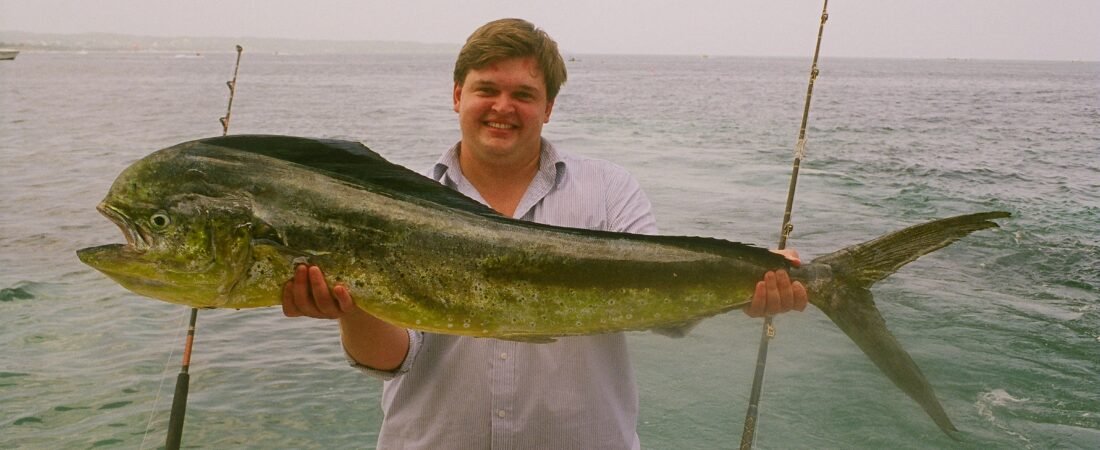
One fish, sold under one scientific name, answers to a different word in nearly every coastal language on Earth. That’s not an exaggeration: mahi mahi is one of the most differently named fish in the seafood trade, and the reasons behind each name tend to say something real about the culture that coined it, whether that’s a description of its color, its fighting ability, or its resemblance to something else entirely.
Here’s a tour through mahi mahi’s names around the world, and the story behind the two that dominate English.
Mahi Mahi: Hawaiian for “Very Strong”
The name most Americans know today comes from Hawaiian, where mahi means “strong,” repeated for emphasis the way Hawaiian often doubles a word to intensify its meaning. It’s a direct nod to how hard the fish fights once hooked, all speed and jumps rather than the slow, grinding pull of a bottom fish. The name spread from Hawaiian fishing culture into broader American use over the 20th century and eventually became the dominant restaurant and market name in the United States.
Dorado: Spanish for “The Golden One”
Across Mexico, Central America, and most of Spanish-speaking Latin America, mahi mahi goes by dorado, meaning “golden” or “gilded.” It’s a straightforward description of the fish’s brilliant yellow-gold flanks, and it’s the name used almost universally by anglers fishing the Pacific coast from Baja California down through Central America. Portuguese-speaking Brazil uses a close cousin of the word, dourado, for the same reason.
Names Across Europe and Asia
The naming pattern holds across most of the world: describe the color, or describe the fight. In France, it’s known as coryphène or dorade coryphène, echoing the scientific genus name directly. Germany calls it Goldmakrele, literally “gold mackerel,” despite mahi mahi not being a mackerel at all. In Italy, it goes by lampuga or corifena. In Japan, sushi and sashimi markets use shiira, a name specific enough that the FDA’s own seafood naming guidance lists it as a recognized vernacular term tied to the U.S. market name.
| Language / Region | Name | Meaning or Origin |
|---|---|---|
| Hawaiian | Mahi mahi | “Very strong,” doubled for emphasis |
| Spanish (Latin America) | Dorado | “The golden one” |
| Portuguese (Brazil) | Dourado | “Golden,” same root as dorado |
| French | Coryphène | Derived from the scientific genus name |
| German | Goldmakrele | “Gold mackerel” |
| Italian | Lampuga / Corifena | Traditional Mediterranean names |
| Maltese | Lampuki | Central to an entire autumn fishing tradition |
| Japanese | Shiira | FDA-recognized market name for sushi labeling |
Malta’s Lampuki: A Name Tied to a Whole Season
Few places have built as much culture around this fish as Malta. There, mahi mahi is called lampuki, and its autumn migration past the islands, roughly mid-August through December, is celebrated with a fishing method called kannizzati that hasn’t changed significantly since Roman rule. Fishermen weave palm fronds into floating rafts towed out by traditional wooden luzzu boats; lampuki gather in the rafts’ shade at midday, and fishermen wait for a school to build before encircling it with a net. Every August 15th, the fishing village of Marsaxlokk opens the season with a centuries-old blessing of the fleet. It’s a rare case of a fish’s regional name being inseparable from an entire cultural calendar.
Why English Ended Up With Two Competing Names
English is unusual in having two names in active use at once: the older dolphinfish and the now-dominant mahi mahi. The full story behind that switch, and the confusion that caused it, is its own article.
Nearly every name for this fish falls into one of two camps: a tribute to its color, like dorado and Goldmakrele, or a tribute to its fight, like mahi mahi itself. Few fish carry that much consistent meaning across so many unrelated languages.
Explore the rest of the Mahi Mahi series
Biology & Identification
- Mahi Mahi: Full Species Overview
- Why Male Mahi Mahi Have That Distinctive Flat Forehead
- Bull vs Cow Mahi Mahi: How to Tell the Male and Female Apart
- Why Mahi Mahi Changes Colour: The Blue, Gold, and Green Explained
- Why Is Mahi Mahi Called Dolphinfish? The Name Confusion Explained
- Mahi Mahi Scientific Name: Coryphaena Hippurus and Its Taxonomy Explained
- What Kind of Fish Is Mahi Mahi? Classification, Family, and Biology
- Mahi Mahi Facts: 10 Things Most People Do Not Know
Habitat & Behavior
- Mahi Mahi Spawning and Reproduction: How They Breed and How Fast They Grow
- How Long Do Mahi Mahi Live? Lifespan, Growth Rate, and Maturity
- What Eats Mahi Mahi? Natural Predators in the Ocean
- How Fast Can Mahi Mahi Swim? Speed, Agility, and Why They Are Hard to Land
- What Do Mahi Mahi Eat? Diet, Prey, and Feeding Habits in the Wild
- Mahi Mahi in the Atlantic vs Pacific: Are They the Same Fish?
- Mahi Mahi Migration: How They Follow Warm Currents Around the World
- Mahi Mahi Habitat: Why They Hang Around Sargassum and Floating Debris
- Where Do Mahi Mahi Live? Ocean, Depth, and Temperature Preferences
- Baby Mahi Mahi: Should You Release Juvenile Mahi and How to Identify Them
Size & Records
- How Big Do Mahi Mahi Get? Size, Weight, and World Record
- Mahi Mahi World Record: Biggest Ever Caught and Where
Food & Health
- Fresh vs Frozen Mahi Mahi: Does It Make a Difference?
- Wild-Caught vs Farmed Mahi Mahi: What Is the Difference?
- Is Mahi Mahi a Sustainable Seafood Choice?
- Fish Similar to Mahi Mahi: What to Buy When It Is Not Available
- Mahi Mahi vs Tuna, Salmon, and Grouper: How Does It Compare?
- Can Dogs Eat Mahi Mahi? What Is Safe and What to Watch Out For
- Is Mahi Mahi Safe to Eat During Pregnancy? Mercury and Safety Explained
- Mahi Mahi Mercury Levels: Is It Safe and How Often Can You Eat It?
- Is Mahi Mahi Good to Eat? What Makes It One of the Most Popular Fish
- Mahi Mahi Nutrition Facts: Protein, Omega-3, Calories, and Vitamins
- Is Mahi Mahi a White Fish? Flesh Colour, Texture, and How It Compares
- What Does Mahi Mahi Taste Like? Flavour, Texture, and Is It Fishy?
- Mahi Mahi Population: Are Numbers Healthy and Is Overfishing a Risk?
- Mahi Mahi and Bycatch: What Gets Caught Alongside It and Why It Matters
Fishing
- Mahi Fishing Tips: Rigs, Trolling Speeds, and What Actually Works
- How to Catch Mahi Mahi: Techniques, Tackle, and Where to Find Them
- Mahi Mahi Fishing: Everything You Need to Know to Find and Catch Them
- Mahi Mahi Fishing in Florida: Season, Hotspots, and How to Catch Them
- Where to Catch Mahi Mahi: Best Locations Around the World
- Mahi Mahi Fishing Charters: What to Expect and How to Choose One
- Mahi Mahi Season: When and Where to Fish for Peak Action
- Best Lures for Mahi Mahi: What They Strike and Why
- Trolling for Mahi Mahi: Speed, Spread, and Setup Explained
- Finding Mahi Mahi on Sargassum Lines: Why Weed Lines Are the Key
- Mahi Mahi Fishing in Hawaii: When to Go and What to Expect