
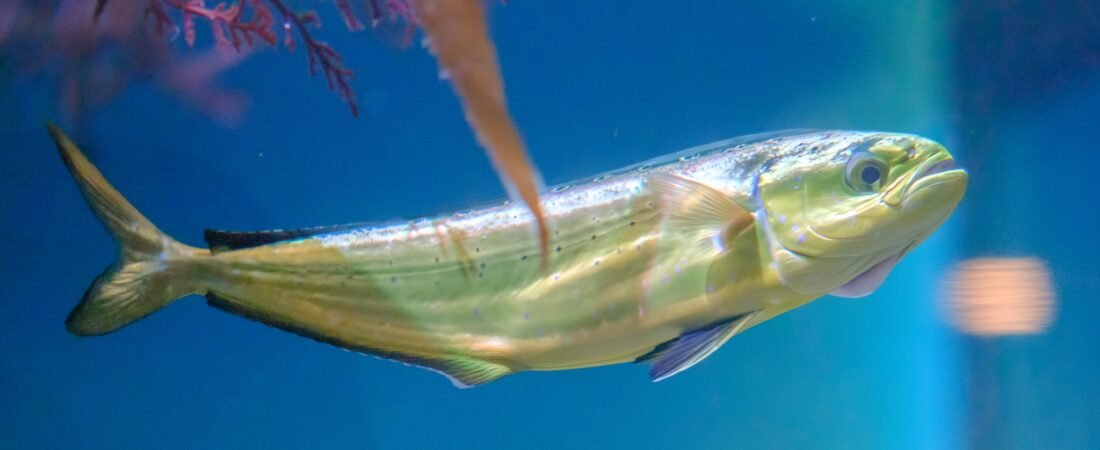
Mahi mahi contains a moderate average mercury level of about 0.178 parts per million (ppm), higher than salmon or tilapia but well below tuna or swordfish. For most healthy adults, that puts it comfortably within the FDA’s safe range for regular consumption, with more conservative limits recommended specifically for pregnant or breastfeeding women and young children.
Here’s exactly where mahi mahi falls on the mercury scale, and what that actually means for how often it’s safe to eat.
Mahi Mahi’s Mercury Level in Context
At roughly 0.178 ppm, mahi mahi sits squarely in the “moderate mercury” tier, meaningfully higher than the lowest-mercury fish but far below the species the FDA advises limiting or avoiding.
| Fish | Average Mercury (ppm) | Tier |
|---|---|---|
| Tilapia | ~0.013 | Low |
| Salmon | ~0.022 | Low |
| Canned light tuna | ~0.126 | Low-Moderate |
| Mahi mahi | ~0.178 | Moderate |
| Albacore/Yellowfin tuna | ~0.35 | Moderate-High |
| Swordfish | ~0.979 | High (avoid) |
What “Moderate” Actually Means in Practice
A 6-ounce serving of mahi mahi carries a fraction of the mercury found in the same portion of swordfish or albacore tuna. For reference, that same serving size of swordfish delivers roughly 170 micrograms of mercury, compared to a small fraction of that for mahi mahi. For a healthy adult without specific dietary restrictions, moderate, regular consumption of mahi mahi doesn’t pose a meaningful health concern.
How Often Is It Safe to Eat?
The FDA groups mahi mahi with fish that can be eaten as part of a normal varied diet without special restriction for the general adult population. The more specific, cautious guidance applies to pregnant women, breastfeeding women, and young children, groups for whom the FDA recommends limiting moderate-mercury fish like mahi mahi to about one serving a week, covered in full detail in a dedicated pregnancy safety guide.
Why Mercury Builds Up at All
Mercury accumulates in fish through a process called bioaccumulation: fish absorb trace mercury from their environment and prey, and predators higher up the food chain accumulate more of it over their lifetime by eating fish that already carry some. Mahi mahi’s short lifespan, just 4 to 5 years, actually works in its favor here, giving it far less time to accumulate mercury than long-lived predators like swordfish or bigeye tuna, which can live for decades.
Mahi mahi’s short lifespan keeps its mercury accumulation moderate rather than high, placing it in a comfortable middle ground: more mercury than salmon, but a fraction of what swordfish or large tuna carry.
Frequently Asked Questions
Is mahi mahi high in mercury?
No, it’s moderate. At roughly 0.178 ppm, it carries more mercury than salmon or tilapia but far less than swordfish or large tuna species.
Can I eat mahi mahi every week?
For most healthy adults, yes, in normal portions. Pregnant or breastfeeding women and young children should follow the more specific FDA guidance limiting it to about one serving a week.
Why does mahi mahi have less mercury than tuna or swordfish?
Its short 4-to-5-year lifespan gives it far less time to accumulate mercury compared to longer-lived predators like swordfish, which can live for decades.
Explore the rest of the Mahi Mahi series
Biology & Identification
- Mahi Mahi: Full Species Overview
- Why Male Mahi Mahi Have That Distinctive Flat Forehead
- Bull vs Cow Mahi Mahi: How to Tell the Male and Female Apart
- Why Mahi Mahi Changes Colour: The Blue, Gold, and Green Explained
- Why Is Mahi Mahi Called Dolphinfish? The Name Confusion Explained
- Other Names for Mahi Mahi: Dorado, Dolphinfish, and Why It Has So Many
- Mahi Mahi Scientific Name: Coryphaena Hippurus and Its Taxonomy Explained
- What Kind of Fish Is Mahi Mahi? Classification, Family, and Biology
- Mahi Mahi Facts: 10 Things Most People Do Not Know
Habitat & Behavior
- Mahi Mahi Spawning and Reproduction: How They Breed and How Fast They Grow
- How Long Do Mahi Mahi Live? Lifespan, Growth Rate, and Maturity
- What Eats Mahi Mahi? Natural Predators in the Ocean
- How Fast Can Mahi Mahi Swim? Speed, Agility, and Why They Are Hard to Land
- What Do Mahi Mahi Eat? Diet, Prey, and Feeding Habits in the Wild
- Mahi Mahi in the Atlantic vs Pacific: Are They the Same Fish?
- Mahi Mahi Migration: How They Follow Warm Currents Around the World
- Mahi Mahi Habitat: Why They Hang Around Sargassum and Floating Debris
- Where Do Mahi Mahi Live? Ocean, Depth, and Temperature Preferences
- Baby Mahi Mahi: Should You Release Juvenile Mahi and How to Identify Them
Size & Records
- How Big Do Mahi Mahi Get? Size, Weight, and World Record
- Mahi Mahi World Record: Biggest Ever Caught and Where
Food & Health
- Fresh vs Frozen Mahi Mahi: Does It Make a Difference?
- Wild-Caught vs Farmed Mahi Mahi: What Is the Difference?
- Is Mahi Mahi a Sustainable Seafood Choice?
- Fish Similar to Mahi Mahi: What to Buy When It Is Not Available
- Mahi Mahi vs Tuna, Salmon, and Grouper: How Does It Compare?
- Can Dogs Eat Mahi Mahi? What Is Safe and What to Watch Out For
- Is Mahi Mahi Safe to Eat During Pregnancy? Mercury and Safety Explained
- Is Mahi Mahi Good to Eat? What Makes It One of the Most Popular Fish
- Mahi Mahi Nutrition Facts: Protein, Omega-3, Calories, and Vitamins
- Is Mahi Mahi a White Fish? Flesh Colour, Texture, and How It Compares
- What Does Mahi Mahi Taste Like? Flavour, Texture, and Is It Fishy?
- Mahi Mahi Population: Are Numbers Healthy and Is Overfishing a Risk?
- Mahi Mahi and Bycatch: What Gets Caught Alongside It and Why It Matters
Fishing
- Mahi Fishing Tips: Rigs, Trolling Speeds, and What Actually Works
- How to Catch Mahi Mahi: Techniques, Tackle, and Where to Find Them
- Mahi Mahi Fishing: Everything You Need to Know to Find and Catch Them
- Mahi Mahi Fishing in Florida: Season, Hotspots, and How to Catch Them
- Where to Catch Mahi Mahi: Best Locations Around the World
- Mahi Mahi Fishing Charters: What to Expect and How to Choose One
- Mahi Mahi Season: When and Where to Fish for Peak Action
- Best Lures for Mahi Mahi: What They Strike and Why
- Trolling for Mahi Mahi: Speed, Spread, and Setup Explained
- Finding Mahi Mahi on Sargassum Lines: Why Weed Lines Are the Key
- Mahi Mahi Fishing in Hawaii: When to Go and What to Expect