
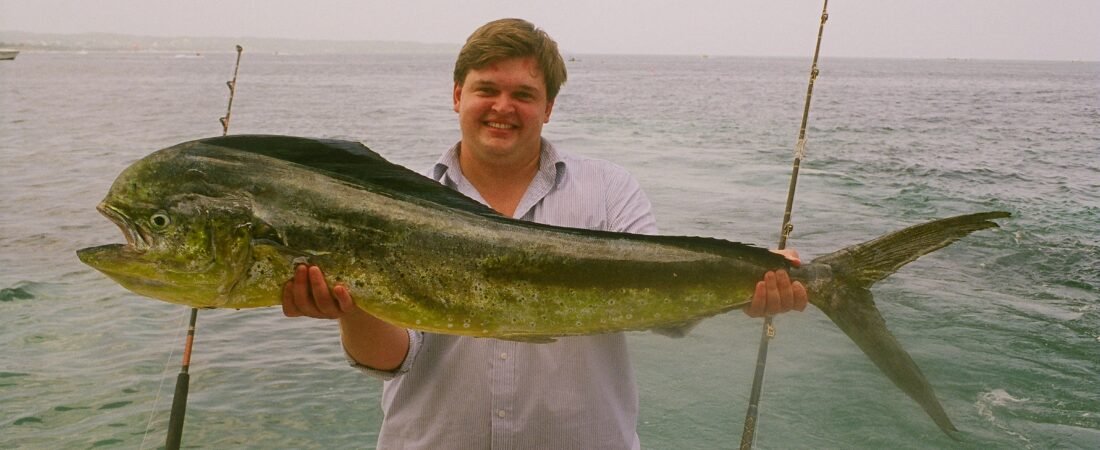
Florida is one of the most reliable places in the country to catch mahi mahi, and the reason comes down to geography. The Gulf Stream runs close to shore along the state’s Atlantic side, especially in the Keys and Southeast Florida, which means anglers can reach blue water and floating weed lines without the long runs required almost everywhere else. On the Gulf side, the water is different, the run is longer, and the regulations aren’t even the same fish.
Here’s what actually matters if you’re planning a Florida mahi mahi trip: when to go, where to go, how the fish are caught, and what the state’s rules require before you keep one.
When to Go: Florida’s Mahi Mahi Season
Mahi mahi show up in Florida waters whenever surface temperatures sit in the 75°F to 85°F range they favor, which on the Atlantic side means a season that runs from roughly April through October. Early spring fish tend to be scattered around bait and current edges, May and June bring the season’s most consistent numbers, and July through September often produces the biggest fish of the year before the run tapers off in the fall.
Season At A Glance
Southeast Florida and the Keys: The Short Run
From Palm Beach down through Fort Lauderdale, Miami, and into Islamorada and Key Largo, the Gulf Stream runs close enough to shore that mahi mahi are often within 3 to 15 miles of the inlet. That proximity is what makes this stretch of coast so popular: boats don’t need to burn hours of fuel to reach fishable water.
The single best-known spot in the region is the Islamorada Hump, a seamount roughly 15 to 20 miles south of Islamorada where the bottom rises from over 600 feet to around 400 feet. That rise pushes nutrients and baitfish toward the surface, which draws mahi mahi, tuna, wahoo, and sailfish to the same stretch of water. It’s one of the most consistently productive pieces of structure in the Keys.
The Panhandle: A Longer Run for Big Fish
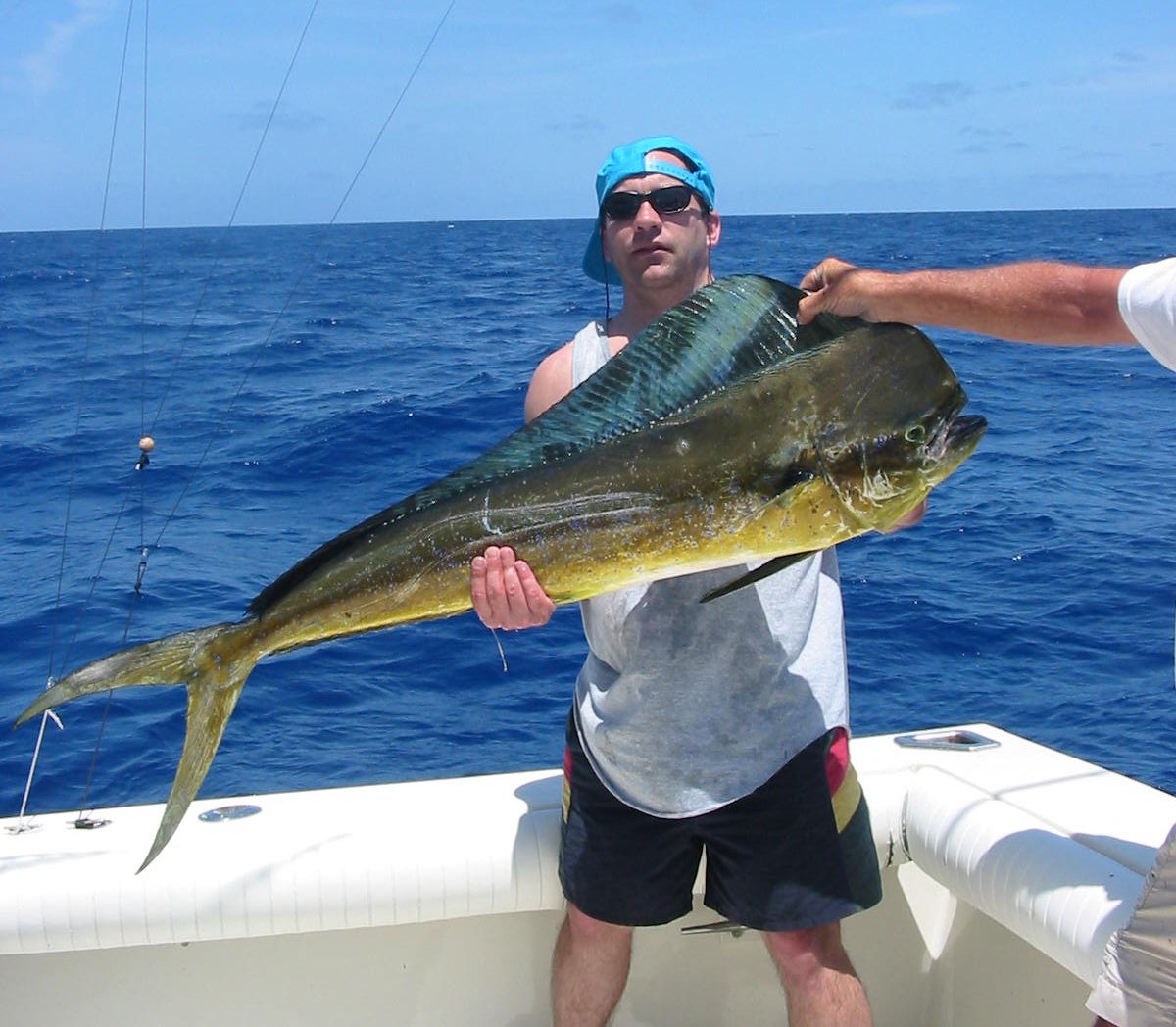
Fishing out of Destin and the rest of the Panhandle looks different. The continental shelf is much wider on the Gulf side, so boats often need to run 80 to 100 miles or more to reach the deep blue water and floating debris mahi mahi prefer. It’s a bigger commitment than a Keys trip, but the payoff is real: summer months regularly produce quality fish around weed lines and floating structure once boats reach the right depth.
How to Find Them: Weed Lines, Birds, and Temperature Breaks
Regardless of which coast you’re fishing, the search process is the same. Mahi mahi congregate around floating sargassum weed lines, debris, and current edges where baitfish concentrate, and frigate birds circling and diving are one of the most reliable visual cues that fish are feeding below. A sudden shift in water color or a sharp temperature break, where cooler green water meets warmer blue water, is another sign worth running down.
Trolling Tactics That Work
Trolling is the standard approach once fish are located. A typical spread runs two rigged ballyhoo on the short riggers, 50 to 75 feet back, with additional baits or skirted lures further out on the long riggers, trolled at roughly 5 to 7 knots. Blue and white or orange and green skirt colors are longtime favorites. Once a weed line or a school is found, many captains switch to pitching live baits or small bucktail jigs on spinning gear directly into the weeds, which often draws out the largest fish holding in the cover.
Kite Fishing: A South Florida Specialty
South Florida anglers, particularly around Miami, have refined kite fishing into a dedicated mahi mahi tactic. A single kite suspends live or rigged ballyhoo above the surface and skips them across weed patches, keeping the bait in the strike zone without dragging it through the sargassum where it would foul. It’s a technique that took shape specifically for these waters and remains one of the more effective ways to work a weed line thoroughly.
Florida’s Mahi Mahi Regulations
Florida manages dolphinfish differently depending on which coast you’re fishing, and the rules changed on the Atlantic side in recent years, so it’s worth checking before keeping fish.
| Rule | Gulf State Waters | Atlantic State Waters |
|---|---|---|
| Minimum size | None | 20 inches fork length |
| Private vessel bag limit | 10 per person or 60 per vessel, whichever is less | 5 per person or 30 per vessel, whichever is less |
| For-hire bag limit | 10 per person or 60 per vessel, whichever is less | 5 per person; vessel limit is customers multiplied by 5 |
The Atlantic-side limits are meaningfully stricter than the Gulf’s, a change driven by concerns over dolphinfish stocks along Florida’s east coast. Rules like these are revisited periodically, so confirming current numbers directly with the Florida Fish and Wildlife Conservation Commission before a trip is always worth the two minutes it takes.
Florida’s mahi mahi fishery rewards flexibility more than any single spot or tactic. The short runs off the Keys and Southeast Florida make it possible to fish weed lines on a half-day trip, while the Panhandle’s longer runs favor anglers willing to commit a full day for a shot at bigger fish. Either way, the fish, the weed lines, and the birds working overhead tell the same story wherever you find them.
Explore the rest of the Mahi Mahi series
Biology & Identification
- Mahi Mahi: Full Species Overview
- Why Male Mahi Mahi Have That Distinctive Flat Forehead
- Bull vs Cow Mahi Mahi: How to Tell the Male and Female Apart
- Why Mahi Mahi Changes Colour: The Blue, Gold, and Green Explained
- Why Is Mahi Mahi Called Dolphinfish? The Name Confusion Explained
- Other Names for Mahi Mahi: Dorado, Dolphinfish, and Why It Has So Many
- Mahi Mahi Scientific Name: Coryphaena Hippurus and Its Taxonomy Explained
- What Kind of Fish Is Mahi Mahi? Classification, Family, and Biology
- Mahi Mahi Facts: 10 Things Most People Do Not Know
Habitat & Behavior
- Mahi Mahi Spawning and Reproduction: How They Breed and How Fast They Grow
- How Long Do Mahi Mahi Live? Lifespan, Growth Rate, and Maturity
- What Eats Mahi Mahi? Natural Predators in the Ocean
- How Fast Can Mahi Mahi Swim? Speed, Agility, and Why They Are Hard to Land
- What Do Mahi Mahi Eat? Diet, Prey, and Feeding Habits in the Wild
- Mahi Mahi in the Atlantic vs Pacific: Are They the Same Fish?
- Mahi Mahi Migration: How They Follow Warm Currents Around the World
- Mahi Mahi Habitat: Why They Hang Around Sargassum and Floating Debris
- Where Do Mahi Mahi Live? Ocean, Depth, and Temperature Preferences
- Baby Mahi Mahi: Should You Release Juvenile Mahi and How to Identify Them
Size & Records
- How Big Do Mahi Mahi Get? Size, Weight, and World Record
- Mahi Mahi World Record: Biggest Ever Caught and Where
Food & Health
- Fresh vs Frozen Mahi Mahi: Does It Make a Difference?
- Wild-Caught vs Farmed Mahi Mahi: What Is the Difference?
- Is Mahi Mahi a Sustainable Seafood Choice?
- Fish Similar to Mahi Mahi: What to Buy When It Is Not Available
- Mahi Mahi vs Tuna, Salmon, and Grouper: How Does It Compare?
- Can Dogs Eat Mahi Mahi? What Is Safe and What to Watch Out For
- Is Mahi Mahi Safe to Eat During Pregnancy? Mercury and Safety Explained
- Mahi Mahi Mercury Levels: Is It Safe and How Often Can You Eat It?
- Is Mahi Mahi Good to Eat? What Makes It One of the Most Popular Fish
- Mahi Mahi Nutrition Facts: Protein, Omega-3, Calories, and Vitamins
- Is Mahi Mahi a White Fish? Flesh Colour, Texture, and How It Compares
- What Does Mahi Mahi Taste Like? Flavour, Texture, and Is It Fishy?
- Mahi Mahi Population: Are Numbers Healthy and Is Overfishing a Risk?
- Mahi Mahi and Bycatch: What Gets Caught Alongside It and Why It Matters
Fishing
- Mahi Fishing Tips: Rigs, Trolling Speeds, and What Actually Works
- How to Catch Mahi Mahi: Techniques, Tackle, and Where to Find Them
- Mahi Mahi Fishing: Everything You Need to Know to Find and Catch Them
- Where to Catch Mahi Mahi: Best Locations Around the World
- Mahi Mahi Fishing Charters: What to Expect and How to Choose One
- Mahi Mahi Season: When and Where to Fish for Peak Action
- Best Lures for Mahi Mahi: What They Strike and Why
- Trolling for Mahi Mahi: Speed, Spread, and Setup Explained
- Finding Mahi Mahi on Sargassum Lines: Why Weed Lines Are the Key
- Mahi Mahi Fishing in Hawaii: When to Go and What to Expect