
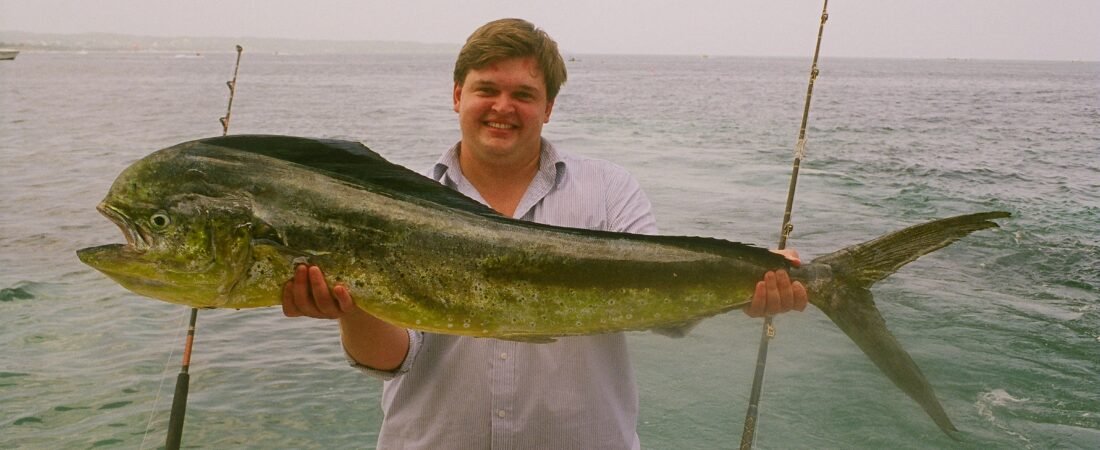
Quick answer: Mahi mahi have an estimated top swimming speed of around 50 knots (57.5 mph), making them one of the fastest fish in the ocean, though several billfish and tuna species can still outpace them. That combination of speed, sharp direction changes, and repeated jumping is exactly why they’re considered such a difficult, exciting fight on rod and reel.
Mahi mahi’s speed isn’t just an impressive number, it’s the reason the fight feels the way it does at the end of a line. Understanding how that speed is built, and how it compares to the ocean’s other fast fish, explains a lot about why anglers rate mahi mahi so highly as a sport fish.
How Fast Is 50 Knots, Really?
An estimated top speed of 50 knots works out to roughly 57.5 mph, a burst speed rather than something mahi mahi sustain for long. For comparison, that’s faster than most powerboats cruise, achieved by an animal generating all of its own propulsion through muscle alone.
The Body Built for It
Mahi mahi’s entire physique is shaped around sustained, fast swimming rather than maneuverability or camouflage. A deep, narrow, blade-shaped body reduces drag, a large forked tail generates powerful thrust, and the fish carries almost no wasted mass, no bulky fins or heavy armor plating slowing it down. Research on their swimming performance has also found that temperature plays a real role in how efficiently they swim, with performance measured through metrics like critical swimming speed and cost of transport shifting depending on water temperature, another reason mahi mahi are so tightly tied to the 70-85°F range they prefer.
How Mahi Mahi Compare to Other Fast Fish
| Species | Estimated Top Speed |
|---|---|
| Black marlin | ~80 mph |
| Mahi mahi | ~57.5 mph |
| Tuna (various species) | Up to ~43 mph |
Mahi mahi aren’t the single fastest fish in the ocean, marlin and some tuna can outpace them in a straight line, but they’re squarely in the same performance class, and few fish combine that raw speed with the acrobatics mahi mahi bring to a fight.
Why Speed Makes Them Hard to Land
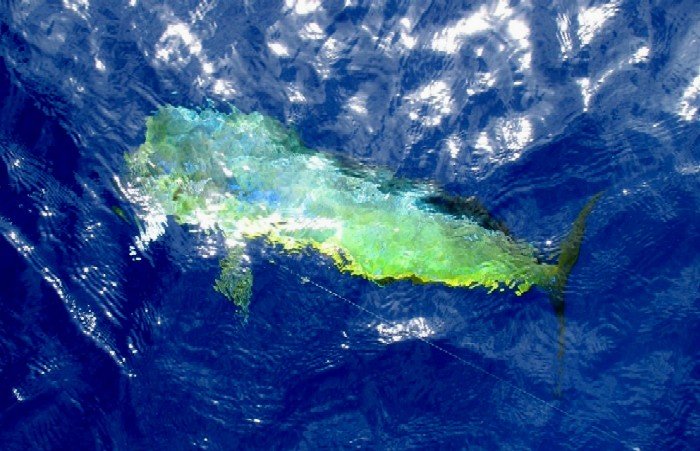
Speed changes everything about fighting a mahi mahi compared to a slower bottom fish. Instead of a steady, grinding pull, anglers get long, fast runs, sudden direction changes, and repeated jumps, all of which mahi mahi execute at or near the surface where every move is visible. That combination puts real strain on light or improperly set drag systems, since a fish capable of near-60 mph bursts can strip line fast enough to cause an overrun or a snapped leader if the gear isn’t matched to it. It’s also why hooked mahi mahi so often bring a second fish along: their speed and jumping keep a school agitated and following, rather than scattering the way slower-moving fish often do.
An estimated 50-knot top speed puts mahi mahi among the fastest fish in the ocean, and it’s that speed, combined with acrobatic jumps and sudden direction changes, that makes them one of the most demanding fights in sport fishing relative to their size.
How fast can a mahi mahi swim in mph?
An estimated top burst speed of around 57.5 mph (50 knots), among the fastest of any fish in the ocean.
Is a mahi mahi faster than a marlin?
No. Black marlin are estimated to reach around 80 mph, faster than mahi mahi’s roughly 57.5 mph top speed.
Why are mahi mahi so hard to reel in despite their size?
Their speed, combined with sharp direction changes and repeated jumping near the surface, puts unusual strain on tackle and drag systems relative to a fish of similar weight.
Explore the rest of the Mahi Mahi series
Biology & Identification
- Mahi Mahi: Full Species Overview
- Why Male Mahi Mahi Have That Distinctive Flat Forehead
- Bull vs Cow Mahi Mahi: How to Tell the Male and Female Apart
- Why Mahi Mahi Changes Colour: The Blue, Gold, and Green Explained
- Why Is Mahi Mahi Called Dolphinfish? The Name Confusion Explained
- Other Names for Mahi Mahi: Dorado, Dolphinfish, and Why It Has So Many
- Mahi Mahi Scientific Name: Coryphaena Hippurus and Its Taxonomy Explained
- What Kind of Fish Is Mahi Mahi? Classification, Family, and Biology
- Mahi Mahi Facts: 10 Things Most People Do Not Know
Habitat & Behavior
- Mahi Mahi Spawning and Reproduction: How They Breed and How Fast They Grow
- How Long Do Mahi Mahi Live? Lifespan, Growth Rate, and Maturity
- What Eats Mahi Mahi? Natural Predators in the Ocean
- What Do Mahi Mahi Eat? Diet, Prey, and Feeding Habits in the Wild
- Mahi Mahi in the Atlantic vs Pacific: Are They the Same Fish?
- Mahi Mahi Migration: How They Follow Warm Currents Around the World
- Mahi Mahi Habitat: Why They Hang Around Sargassum and Floating Debris
- Where Do Mahi Mahi Live? Ocean, Depth, and Temperature Preferences
- Baby Mahi Mahi: Should You Release Juvenile Mahi and How to Identify Them
Size & Records
- How Big Do Mahi Mahi Get? Size, Weight, and World Record
- Mahi Mahi World Record: Biggest Ever Caught and Where
Food & Health
- Fresh vs Frozen Mahi Mahi: Does It Make a Difference?
- Wild-Caught vs Farmed Mahi Mahi: What Is the Difference?
- Is Mahi Mahi a Sustainable Seafood Choice?
- Fish Similar to Mahi Mahi: What to Buy When It Is Not Available
- Mahi Mahi vs Tuna, Salmon, and Grouper: How Does It Compare?
- Can Dogs Eat Mahi Mahi? What Is Safe and What to Watch Out For
- Is Mahi Mahi Safe to Eat During Pregnancy? Mercury and Safety Explained
- Mahi Mahi Mercury Levels: Is It Safe and How Often Can You Eat It?
- Is Mahi Mahi Good to Eat? What Makes It One of the Most Popular Fish
- Mahi Mahi Nutrition Facts: Protein, Omega-3, Calories, and Vitamins
- Is Mahi Mahi a White Fish? Flesh Colour, Texture, and How It Compares
- What Does Mahi Mahi Taste Like? Flavour, Texture, and Is It Fishy?
- Mahi Mahi Population: Are Numbers Healthy and Is Overfishing a Risk?
- Mahi Mahi and Bycatch: What Gets Caught Alongside It and Why It Matters
Fishing
- Mahi Fishing Tips: Rigs, Trolling Speeds, and What Actually Works
- How to Catch Mahi Mahi: Techniques, Tackle, and Where to Find Them
- Mahi Mahi Fishing: Everything You Need to Know to Find and Catch Them
- Mahi Mahi Fishing in Florida: Season, Hotspots, and How to Catch Them
- Where to Catch Mahi Mahi: Best Locations Around the World
- Mahi Mahi Fishing Charters: What to Expect and How to Choose One
- Mahi Mahi Season: When and Where to Fish for Peak Action
- Best Lures for Mahi Mahi: What They Strike and Why
- Trolling for Mahi Mahi: Speed, Spread, and Setup Explained
- Finding Mahi Mahi on Sargassum Lines: Why Weed Lines Are the Key
- Mahi Mahi Fishing in Hawaii: When to Go and What to Expect