Mahi mahi season peaks when Gulf Stream and other warm currents push closest to shore and sargassum coverage is heaviest: roughly April through August in Florida and the Gulf of Mexico, May through November off Baja California, December through April in Costa Rica and Panama, and September through May in Hawaii, with a spring peak. Timing shifts by hemisphere and current, not by a single global calendar.
Here’s why the season falls where it does in each region, and how to read local conditions to time a trip within that window.
There’s a second factor that compounds the current effect: mahi mahi spawn repeatedly through warm-water months rather than in a single short window, with females capable of releasing eggs every two to three days once conditions are right. That means numbers on the water don’t just depend on migration timing, they also build through a season as successive spawning events add fish to the local population. A region several weeks into its warm-water window often holds noticeably more fish than the same region in its first week of season, even if water temperature alone looks similar on paper.
Why Mahi Mahi Season Isn’t the Same Everywhere
Mahi mahi are highly migratory and follow warm water rather than a fixed calendar, so “season” really means whenever a particular region’s current system pushes water above roughly 68 degrees Fahrenheit close enough to shore to reach by boat. That’s why the same species peaks in June off Florida, in April off Hawaii, and in December off Costa Rica: each of those dates marks when the local current happens to be warmest and most structured, not some shared biological trigger tied to the calendar itself.
Season At A Glance
Florida and the Atlantic Seaboard
Florida’s season runs roughly March through October, with the true peak from June through August, when Gulf Stream water is warmest and sargassum lines push in tight to the reef edge. Spring brings a secondary advantage: strong northeast winds push the Gulf Stream within one to three miles of shore, creating a sharply visible color edge where surface-feeding mahi mahi are often spotted tailing right at the boundary between clean blue water and greener coastal water. As summer progresses, the same seasonal push of fish tends to move north, extending a productive window into the Carolinas that runs into early fall.
The Gulf of Mexico
The northern Gulf’s season is more compressed than Florida’s Atlantic side, concentrated mainly in the summer months when warm surface water and sargassum drift across the open Gulf. Because the continental shelf slopes more gradually here, warm blue water takes longer to establish close to shore each year than it does off the sharply dropping Atlantic shelf, which is part of why the Gulf’s productive window tends to run a bit later and shorter than Florida’s Atlantic coast.
Hawaii’s Extended, Spring-Peaking Season
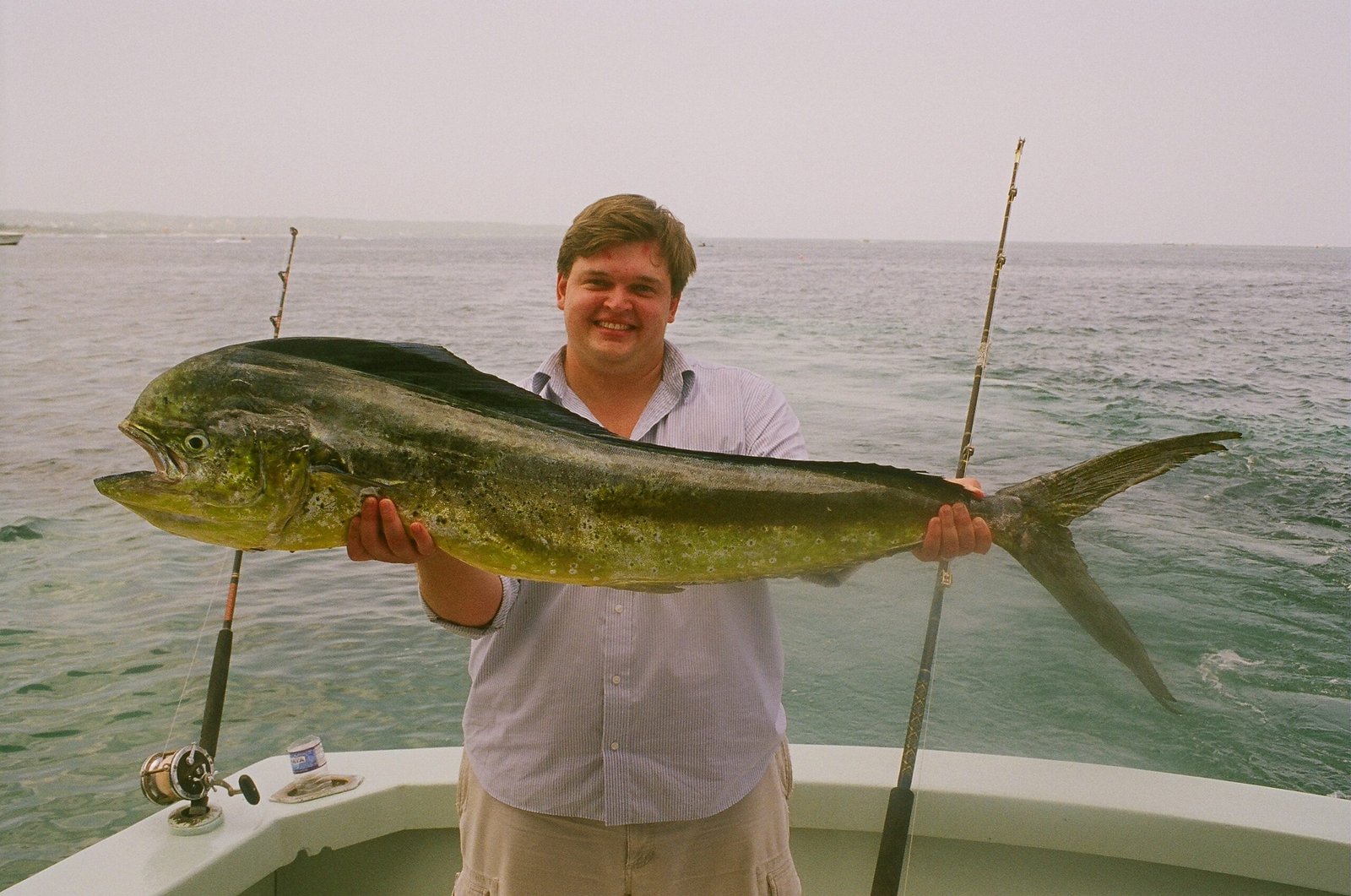
Hawaii’s mahi mahi season runs longer than most mainland fisheries, roughly September through May, because the islands sit in consistently warm Pacific water for most of the year. Numbers build steadily and peak in spring, with average size climbing alongside fish count, fish average 10 to 15 pounds in March but can push toward 40 to 50 pounds by April and May as the season matures. Winter still produces fish, just in somewhat lower numbers than the spring run.
Central America: Costa Rica and Panama
Costa Rica and Panama’s Pacific coasts run opposite the typical Northern Hemisphere summer pattern, with the strongest bite from December through April, when the water runs cleanest and current lines are most sharply defined. This makes the region a useful counter-seasonal option for anglers looking to fish mahi mahi during months when Florida and the Gulf are in their off-season.
Baja California and the Sea of Cortez
Baja’s season runs roughly May through November as warm current pushes up the peninsula and into the Sea of Cortez, peaking through summer as the convergence zone between the Pacific and the Cortez concentrates bait heavily. This is also the stretch of coast where some of the largest dorado on record have been landed, including a 102-pound fish in 2015 that came close to breaking the all-tackle world record.
| Region | Season Window | Peak |
|---|---|---|
| Florida / Atlantic Gulf Stream | March-October | June-August |
| Gulf of Mexico | Late spring-early fall | Summer |
| Hawaii | September-May | Spring (Mar-May) |
| Costa Rica / Panama | Year-round, strongest Dec-Apr | December-April |
| Baja / Sea of Cortez | May-November | Summer |
| Bahamas / Caribbean | Nearly year-round | Spring-early summer |
Why Season Windows Shift From Year to Year
The season windows above are useful averages, but they are not fixed dates, and broader ocean cycles can shift them meaningfully from one year to the next. El Nino and La Nina cycles change water temperature patterns across large stretches of the Pacific and, to a lesser extent, the Atlantic, which can push a region’s warm-water arrival earlier or later than the typical range by several weeks. Anglers planning a trip a year or more in advance should treat the listed windows as a starting point for booking rather than a guarantee, and build in enough flexibility to shift dates if conditions that particular year run early or late.
The Bahamas and Wider Caribbean
The Bahamas, Puerto Rico, Dominican Republic, and Jamaica don’t hinge on a single dominant current the way Florida hinges on the Gulf Stream, so their season is broader and less sharply peaked. Spring through early summer generally produces the strongest numbers, but because deep blue water sits close to shore across most of the island chain, a trip booked in almost any month has a reasonable shot at fish, just with more month-to-month variability than the tightly current-driven fisheries elsewhere on this list.
Booking Strategy Within a Season Window
Once a region and rough season are chosen, timing within that window still matters. Early in a season, fish tend to be smaller and more scattered as the migration is still building. Mid-season typically offers the best balance of numbers and size once spawning has had time to add fish to the population. Late season can still fish well but carries more risk of an early cold front or current shift cutting the action short, particularly in Florida and the Gulf. Anglers with flexible travel dates generally do best booking for the middle third of a region’s listed season window rather than the very first or last weeks of it.
How to Read Conditions Within Any Season Window
Knowing the broad seasonal window for a region is only the first layer. Within that window, water temperature and sargassum coverage still swing week to week, and both are worth checking before committing to a trip date. Satellite sea-surface-temperature charts, widely available through NOAA and several private services, show where the 68-degree-plus water sits relative to shore in near-real time, and local captains and tackle shops typically track sargassum coverage closely enough to give an accurate read on current conditions days in advance of a trip.
A slow week inside peak season isn’t unusual
Even in the heart of a region’s peak months, a cold front, a wind shift, or a temporary retreat of warm water offshore can produce a genuinely slow few days. Checking recent local reports is more reliable than relying on the calendar month alone.
Mahi mahi season is really a story about warm current meeting structure at a specific time of year in each region, not a single universal calendar. Matching a trip to the right regional window, then double-checking current conditions closer to the date, is the most reliable way to plan around it.
Is It Worth Fishing Outside the Peak Window
Shoulder and off-season trips are not automatically a waste of time. Florida and the Gulf still produce fish in March and October, just in lower numbers and generally smaller average size than the June-through-August peak. Hawaii’s winter months still fish, again with a somewhat lower average size than the spring run. The trade-off is usually more about reliability than total absence of fish: an off-season trip has a wider range of possible outcomes, from a genuinely productive day to a slow one, while a peak-season trip in a strong region compresses that range toward the productive end. Anglers with rigid travel dates who can only visit during a region’s off-season should still expect a real chance at fish, just with less certainty than a trip timed to the peak window.
Signs the Season Is About to Turn
Every regional season eventually ends, and there are usually warning signs before catch rates drop off sharply. A sustained shift in wind direction that pushes warm current farther offshore is typically the first indicator, followed by a visible retreat of sargassum coverage from nearshore waters as the weed drifts with the retreating current. Water temperature readings that hold steady or trend downward over a week or more, rather than fluctuating day to day, are a more reliable signal than a single cold morning. Captains who fish a region year-round tend to notice these shifts before they show up in official season guides, which is part of why a call to a local tackle shop or charter operator a few days before a trip is worth more than relying on a generic calendar date alone.
Frequently Asked Questions
What month is best for mahi mahi fishing?
It depends on the region. June through August is peak in Florida and the Gulf, spring is peak in Hawaii, and December through April is peak in Costa Rica and Panama.
Can mahi mahi be caught year-round anywhere?
Some regions, including Hawaii, the Bahamas, and parts of the Caribbean, produce fish nearly year-round, though numbers and average size still swing with seasonal peaks.
Why does mahi mahi season differ so much by location?
Mahi mahi follow warm current rather than a fixed calendar. Season timing in any region is really a reflection of when that region’s local current system runs warmest and closest to shore.
Does El Nino or La Nina affect mahi mahi season timing?
Yes. These broader ocean cycles shift regional water temperature patterns and can push a season’s arrival earlier or later than the typical window by several weeks in a given year.
Explore the rest of the Mahi Mahi series
Biology & Identification
- Mahi Mahi: Full Species Overview
- Why Male Mahi Mahi Have That Distinctive Flat Forehead
- Bull vs Cow Mahi Mahi: How to Tell the Male and Female Apart
- Why Mahi Mahi Changes Colour: The Blue, Gold, and Green Explained
- Why Is Mahi Mahi Called Dolphinfish? The Name Confusion Explained
- Other Names for Mahi Mahi: Dorado, Dolphinfish, and Why It Has So Many
- Mahi Mahi Scientific Name: Coryphaena Hippurus and Its Taxonomy Explained
- What Kind of Fish Is Mahi Mahi? Classification, Family, and Biology
- Mahi Mahi Facts: 10 Things Most People Do Not Know
Habitat & Behavior
- Mahi Mahi Spawning and Reproduction: How They Breed and How Fast They Grow
- How Long Do Mahi Mahi Live? Lifespan, Growth Rate, and Maturity
- What Eats Mahi Mahi? Natural Predators in the Ocean
- How Fast Can Mahi Mahi Swim? Speed, Agility, and Why They Are Hard to Land
- What Do Mahi Mahi Eat? Diet, Prey, and Feeding Habits in the Wild
- Mahi Mahi in the Atlantic vs Pacific: Are They the Same Fish?
- Mahi Mahi Migration: How They Follow Warm Currents Around the World
- Mahi Mahi Habitat: Why They Hang Around Sargassum and Floating Debris
- Where Do Mahi Mahi Live? Ocean, Depth, and Temperature Preferences
- Baby Mahi Mahi: Should You Release Juvenile Mahi and How to Identify Them
Size & Records
- How Big Do Mahi Mahi Get? Size, Weight, and World Record
- Mahi Mahi World Record: Biggest Ever Caught and Where
Food & Health
- Fresh vs Frozen Mahi Mahi: Does It Make a Difference?
- Wild-Caught vs Farmed Mahi Mahi: What Is the Difference?
- Is Mahi Mahi a Sustainable Seafood Choice?
- Fish Similar to Mahi Mahi: What to Buy When It Is Not Available
- Mahi Mahi vs Tuna, Salmon, and Grouper: How Does It Compare?
- Can Dogs Eat Mahi Mahi? What Is Safe and What to Watch Out For
- Is Mahi Mahi Safe to Eat During Pregnancy? Mercury and Safety Explained
- Mahi Mahi Mercury Levels: Is It Safe and How Often Can You Eat It?
- Is Mahi Mahi Good to Eat? What Makes It One of the Most Popular Fish
- Mahi Mahi Nutrition Facts: Protein, Omega-3, Calories, and Vitamins
- Is Mahi Mahi a White Fish? Flesh Colour, Texture, and How It Compares
- What Does Mahi Mahi Taste Like? Flavour, Texture, and Is It Fishy?
- Mahi Mahi Population: Are Numbers Healthy and Is Overfishing a Risk?
- Mahi Mahi and Bycatch: What Gets Caught Alongside It and Why It Matters
Fishing
- Mahi Fishing Tips: Rigs, Trolling Speeds, and What Actually Works
- How to Catch Mahi Mahi: Techniques, Tackle, and Where to Find Them
- Mahi Mahi Fishing: Everything You Need to Know to Find and Catch Them
- Mahi Mahi Fishing in Florida: Season, Hotspots, and How to Catch Them
- Where to Catch Mahi Mahi: Best Locations Around the World
- Mahi Mahi Fishing Charters: What to Expect and How to Choose One
- Best Lures for Mahi Mahi: What They Strike and Why
- Trolling for Mahi Mahi: Speed, Spread, and Setup Explained
- Finding Mahi Mahi on Sargassum Lines: Why Weed Lines Are the Key
- Mahi Mahi Fishing in Hawaii: When to Go and What to Expect