
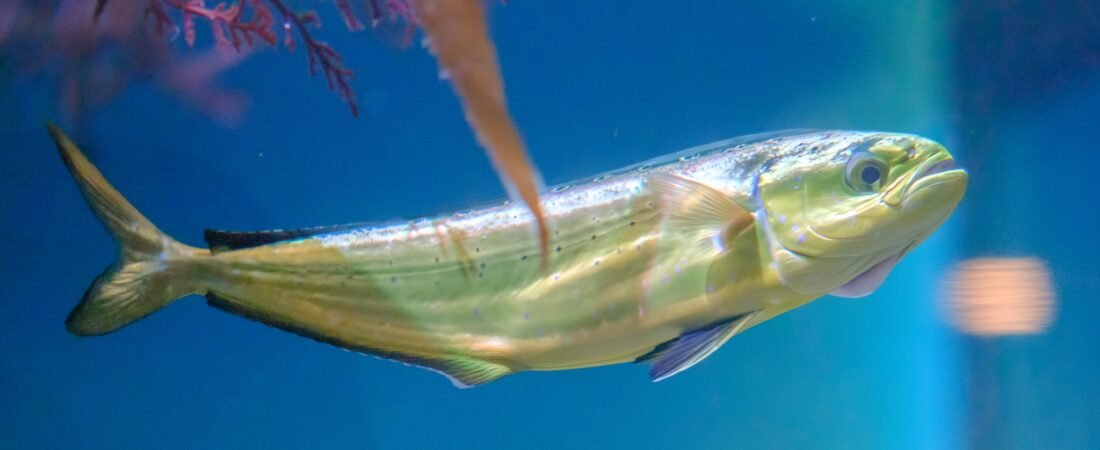
Yes, dogs can eat mahi mahi, but only when it’s fully cooked, plain, and boneless. Raw fish carries bacteria and parasite risks, bones are a genuine choking and internal injury hazard, and seasoning, butter, garlic, or onion commonly used in human preparations can all be harmful to dogs even when the fish itself is safe.
Here’s what actually makes mahi mahi safe or unsafe for a dog, and how to serve it if you do.
Always cook it fully
Cooked fish is far easier for dogs to digest and eliminates the bacteria and parasite risks raw fish can carry. Grilling, steaming, or boiling until the flesh reaches an internal temperature of about 145°F and flakes easily is the safest approach.
Remove every bone
Fish bones pose a real choking hazard and can cause internal damage if swallowed. Even small, fine bones should be carefully removed before offering any fish to a dog.
Skip the seasoning entirely
Plain, unseasoned fish is the only safe version. Garlic, onion, excess salt, and butter, all common in human mahi mahi preparations, can range from mildly harmful to genuinely toxic for dogs.
Keep portions small and occasional
Mahi mahi carries moderate mercury levels for a fish its size. An occasional treat-sized portion isn’t a concern, but regular, large servings could contribute to mercury exposure over time, especially in smaller dogs.
Watch for These Specific Risks
Beyond bones and seasoning, mahi mahi carries a couple of risks worth knowing specifically. Some dogs can react to elevated histamine levels in certain fish, which may trigger an allergic-type response, and fish more broadly has been associated with a condition called fish bloat in dogs, which can become serious quickly if symptoms appear. If a dog shows vomiting, distress, or unusual bloating after eating fish, it’s worth contacting a veterinarian rather than waiting it out.
How Much Is Too Much?
There’s no need to make mahi mahi a regular part of a dog’s diet. Treated as an occasional, small addition, a few bites of plain cooked fish rather than a full meal, the mercury and histamine risks stay minimal. Dogs with existing kidney issues, food allergies, or other health conditions should only be given new proteins like mahi mahi after checking with a veterinarian first.
Cooked, boneless, and unseasoned, in small, occasional portions, mahi mahi can be a safe treat for most dogs. The real risks come from bones, seasoning, and overdoing the portion size, not the fish itself.
Frequently Asked Questions
Can dogs eat raw mahi mahi?
No. Raw fish carries bacteria and parasite risks. Mahi mahi should always be fully cooked before being given to a dog.
Is mahi mahi toxic to dogs?
The fish itself isn’t toxic when properly prepared, but bones, seasoning, garlic, onion, and butter commonly used in human recipes can all be harmful.
How much mahi mahi can a dog safely eat?
Small, occasional portions as a treat are fine for most healthy dogs. It shouldn’t become a regular, large part of a dog’s diet due to mercury and histamine considerations.
Explore the rest of the Mahi Mahi series
Biology & Identification
- Mahi Mahi: Full Species Overview
- Why Male Mahi Mahi Have That Distinctive Flat Forehead
- Bull vs Cow Mahi Mahi: How to Tell the Male and Female Apart
- Why Mahi Mahi Changes Colour: The Blue, Gold, and Green Explained
- Why Is Mahi Mahi Called Dolphinfish? The Name Confusion Explained
- Other Names for Mahi Mahi: Dorado, Dolphinfish, and Why It Has So Many
- Mahi Mahi Scientific Name: Coryphaena Hippurus and Its Taxonomy Explained
- What Kind of Fish Is Mahi Mahi? Classification, Family, and Biology
- Mahi Mahi Facts: 10 Things Most People Do Not Know
Habitat & Behavior
- Mahi Mahi Spawning and Reproduction: How They Breed and How Fast They Grow
- How Long Do Mahi Mahi Live? Lifespan, Growth Rate, and Maturity
- What Eats Mahi Mahi? Natural Predators in the Ocean
- How Fast Can Mahi Mahi Swim? Speed, Agility, and Why They Are Hard to Land
- What Do Mahi Mahi Eat? Diet, Prey, and Feeding Habits in the Wild
- Mahi Mahi in the Atlantic vs Pacific: Are They the Same Fish?
- Mahi Mahi Migration: How They Follow Warm Currents Around the World
- Mahi Mahi Habitat: Why They Hang Around Sargassum and Floating Debris
- Where Do Mahi Mahi Live? Ocean, Depth, and Temperature Preferences
- Baby Mahi Mahi: Should You Release Juvenile Mahi and How to Identify Them
Size & Records
- How Big Do Mahi Mahi Get? Size, Weight, and World Record
- Mahi Mahi World Record: Biggest Ever Caught and Where
Food & Health
- Fresh vs Frozen Mahi Mahi: Does It Make a Difference?
- Wild-Caught vs Farmed Mahi Mahi: What Is the Difference?
- Is Mahi Mahi a Sustainable Seafood Choice?
- Fish Similar to Mahi Mahi: What to Buy When It Is Not Available
- Mahi Mahi vs Tuna, Salmon, and Grouper: How Does It Compare?
- Is Mahi Mahi Safe to Eat During Pregnancy? Mercury and Safety Explained
- Mahi Mahi Mercury Levels: Is It Safe and How Often Can You Eat It?
- Is Mahi Mahi Good to Eat? What Makes It One of the Most Popular Fish
- Mahi Mahi Nutrition Facts: Protein, Omega-3, Calories, and Vitamins
- Is Mahi Mahi a White Fish? Flesh Colour, Texture, and How It Compares
- What Does Mahi Mahi Taste Like? Flavour, Texture, and Is It Fishy?
- Mahi Mahi Population: Are Numbers Healthy and Is Overfishing a Risk?
- Mahi Mahi and Bycatch: What Gets Caught Alongside It and Why It Matters
Fishing
- Mahi Fishing Tips: Rigs, Trolling Speeds, and What Actually Works
- How to Catch Mahi Mahi: Techniques, Tackle, and Where to Find Them
- Mahi Mahi Fishing: Everything You Need to Know to Find and Catch Them
- Mahi Mahi Fishing in Florida: Season, Hotspots, and How to Catch Them
- Where to Catch Mahi Mahi: Best Locations Around the World
- Mahi Mahi Fishing Charters: What to Expect and How to Choose One
- Mahi Mahi Season: When and Where to Fish for Peak Action
- Best Lures for Mahi Mahi: What They Strike and Why
- Trolling for Mahi Mahi: Speed, Spread, and Setup Explained
- Finding Mahi Mahi on Sargassum Lines: Why Weed Lines Are the Key
- Mahi Mahi Fishing in Hawaii: When to Go and What to Expect