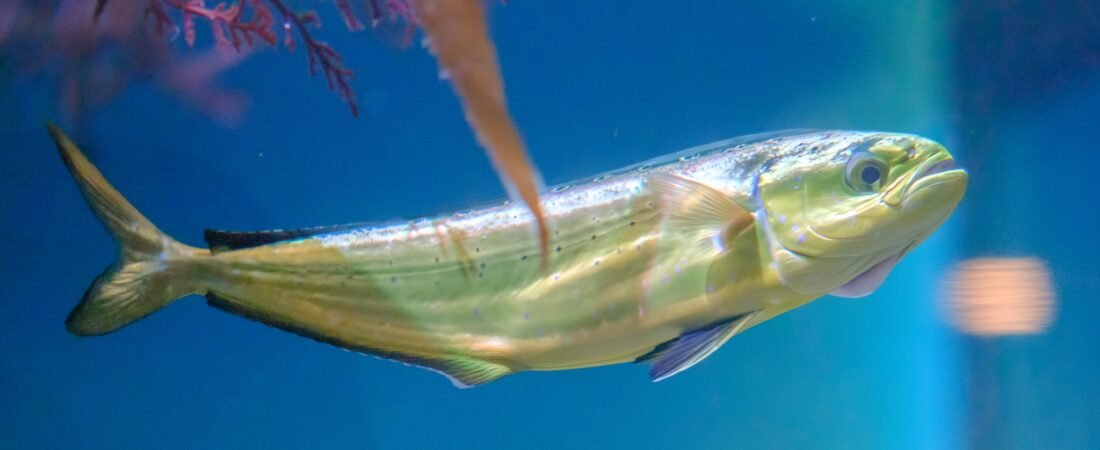
Anglers who spend real time chasing mahi mahi learn to sex a fish before it’s even boatside, often from nothing more than a silhouette breaking the surface. The terms are “bull” for a mature male and “cow” for a mature female, and the differences between them go well beyond the head shape most people already know about.
Here’s the full picture: what actually separates a bull from a cow, and why the distinction matters more than most casual anglers realize.
The Forehead: Still the Fastest Tell
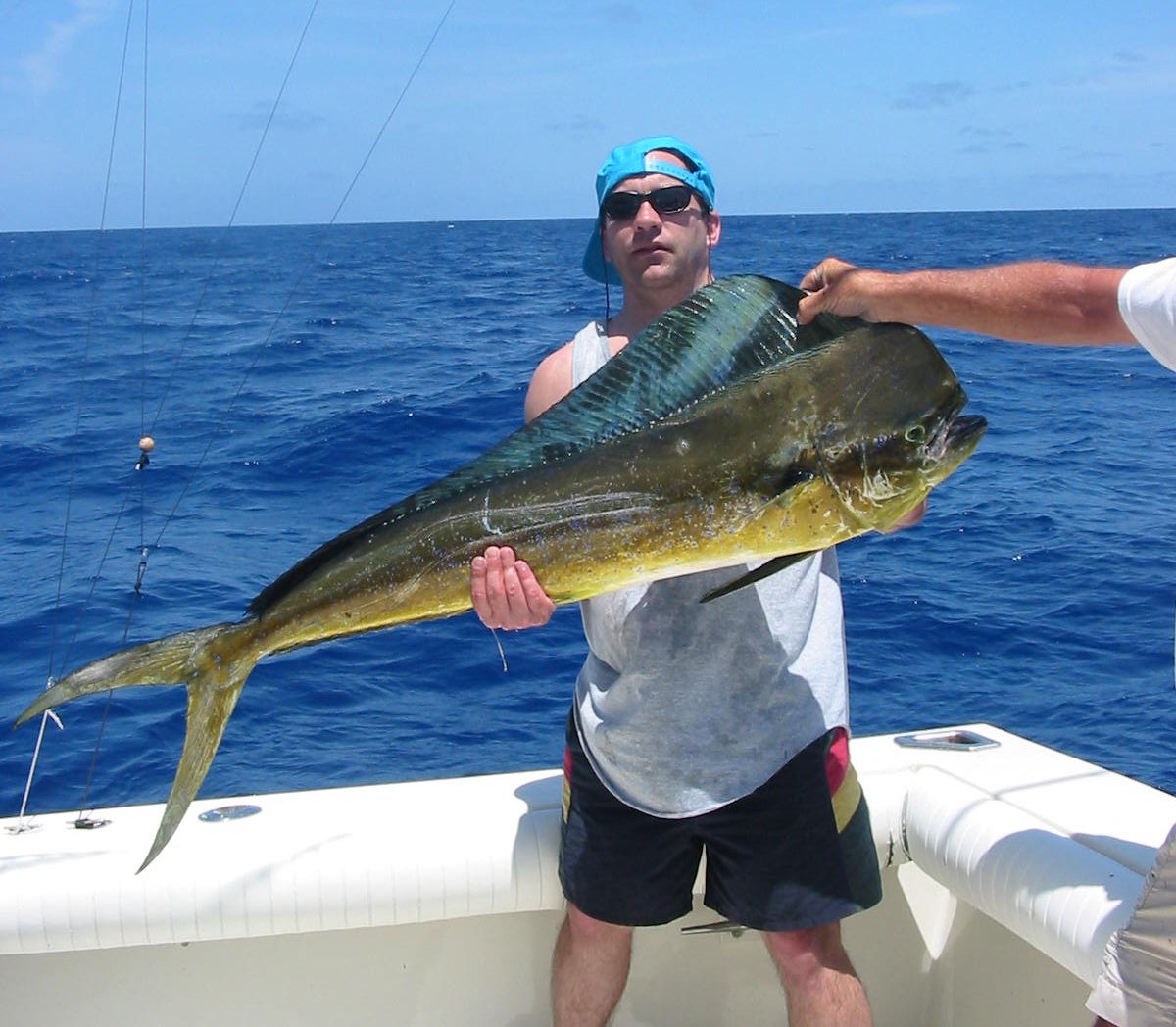
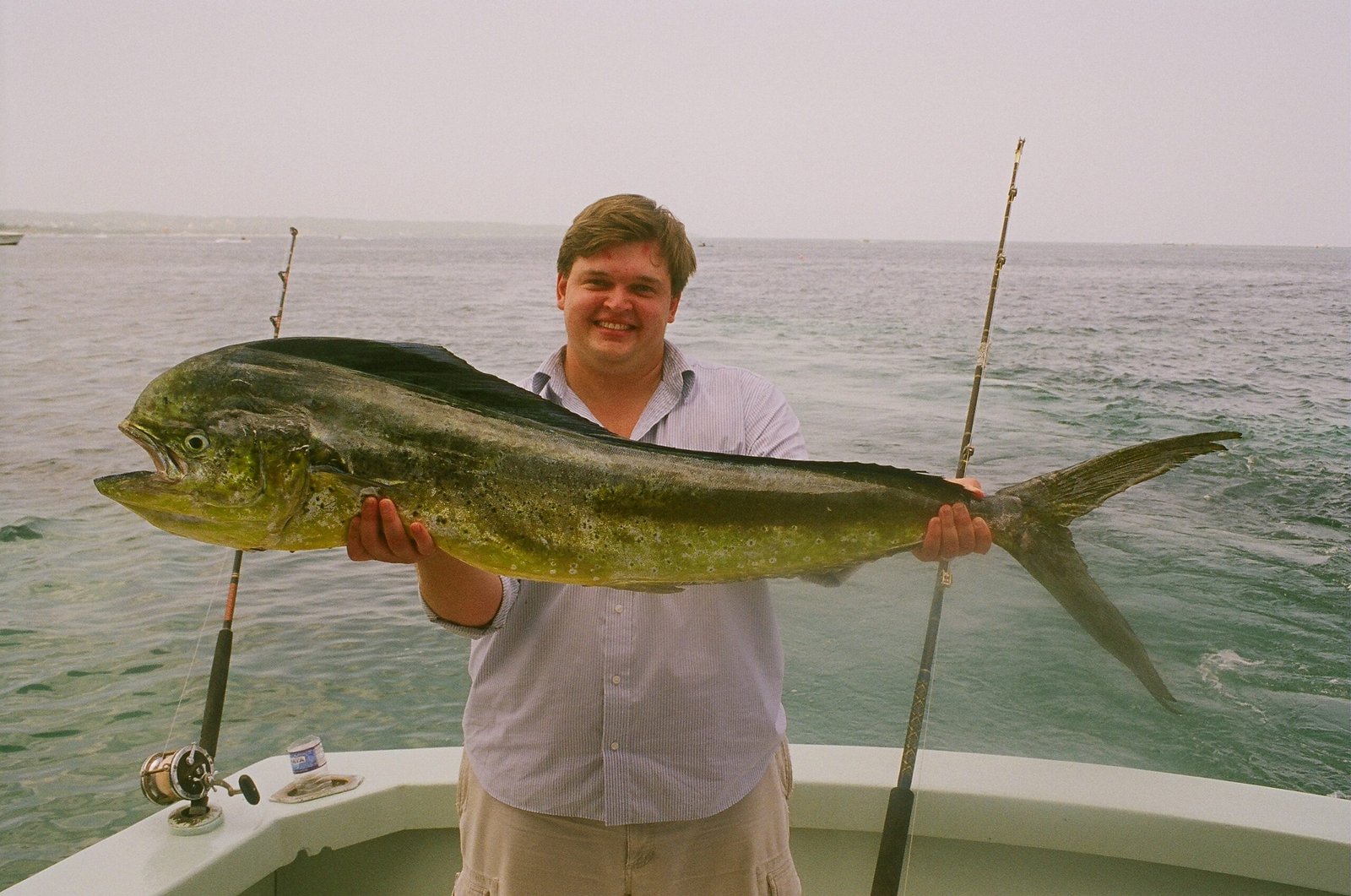
As male mahi mahi mature, they develop a pronounced, nearly vertical, flat-fronted forehead, a feature that becomes more exaggerated with age and size. Females keep a smoothly rounded, tapered head shape their entire lives, never developing that squared-off profile no matter how large they grow. It’s the single fastest way to sex a mahi mahi at a glance, visible from a distance and even underwater as a fish approaches a boat.
Size: Bulls Usually Win
Beyond head shape, size is the next most reliable indicator. Bulls tend to grow larger than cows on average, and the size gap becomes more pronounced in bigger, older fish. It’s not a coincidence that the current all-tackle world record, an 87-pound fish caught off Costa Rica in 1976, was a bull. Most of the largest mahi mahi ever officially weighed have been males, though large cows well into the 60- and 70-pound range aren’t unheard of.
| Trait | Bull (Male) | Cow (Female) |
|---|---|---|
| Forehead | Steep, near-vertical, squared | Smoothly rounded, tapered |
| Typical size | Larger on average | Smaller on average |
| Behavior (large fish) | More solitary, territorial | More often schooling |
| Record-class fish | Most large records are bulls | Large cows are less common but do occur |
Behavior Differences Once They’re Grown
Small to average mahi mahi of both sexes tend to travel in loose schools, but that pattern shifts as fish mature and grow larger. Bigger bulls are more often found alone or paired with a single cow rather than in groups, and many experienced captains describe large males as noticeably more territorial, especially around a weed line or piece of floating structure that’s holding bait. Cows, even at larger sizes, tend to stay more social. It’s a big part of why a lone, oversized fish cruising a weed line by itself is more often than not a bull.
The Pairing Behavior Anglers Notice
It’s common to spot a bull and a cow cruising together just under the surface, close enough that they’re clearly traveling as a pair rather than coincidentally in the same spot. Whether this reflects genuine pair bonding or simply two fish responding to the same feeding cues is still debated among researchers, but the pattern shows up often enough on the water that most captains treat “there’s a second fish nearby” as a reasonable assumption once one mahi mahi is hooked.
Does It Actually Matter for Anglers?
Practically, no regulation anywhere treats bulls and cows differently. Bag limits and size limits apply the same way regardless of sex. The distinction matters more for reading behavior on the water, a lone big fish near structure is worth a longer look, a hooked fish’s partner is worth a follow-up cast, than it does for any rule that changes what an angler is allowed to keep.
The forehead is the fastest identifier, but size, behavior, and the tendency to travel in pairs all layer on top of it. Once you know what to look for, sexing a mahi mahi from the boat becomes almost automatic.
Explore the rest of the Mahi Mahi series
Biology & Identification
- Mahi Mahi: Full Species Overview
- Why Male Mahi Mahi Have That Distinctive Flat Forehead
- Why Mahi Mahi Changes Colour: The Blue, Gold, and Green Explained
- Why Is Mahi Mahi Called Dolphinfish? The Name Confusion Explained
- Other Names for Mahi Mahi: Dorado, Dolphinfish, and Why It Has So Many
- Mahi Mahi Scientific Name: Coryphaena Hippurus and Its Taxonomy Explained
- What Kind of Fish Is Mahi Mahi? Classification, Family, and Biology
- Mahi Mahi Facts: 10 Things Most People Do Not Know
Habitat & Behavior
- Mahi Mahi Spawning and Reproduction: How They Breed and How Fast They Grow
- How Long Do Mahi Mahi Live? Lifespan, Growth Rate, and Maturity
- What Eats Mahi Mahi? Natural Predators in the Ocean
- How Fast Can Mahi Mahi Swim? Speed, Agility, and Why They Are Hard to Land
- What Do Mahi Mahi Eat? Diet, Prey, and Feeding Habits in the Wild
- Mahi Mahi in the Atlantic vs Pacific: Are They the Same Fish?
- Mahi Mahi Migration: How They Follow Warm Currents Around the World
- Mahi Mahi Habitat: Why They Hang Around Sargassum and Floating Debris
- Where Do Mahi Mahi Live? Ocean, Depth, and Temperature Preferences
- Baby Mahi Mahi: Should You Release Juvenile Mahi and How to Identify Them
Size & Records
- How Big Do Mahi Mahi Get? Size, Weight, and World Record
- Mahi Mahi World Record: Biggest Ever Caught and Where
Food & Health
- Fresh vs Frozen Mahi Mahi: Does It Make a Difference?
- Wild-Caught vs Farmed Mahi Mahi: What Is the Difference?
- Is Mahi Mahi a Sustainable Seafood Choice?
- Fish Similar to Mahi Mahi: What to Buy When It Is Not Available
- Mahi Mahi vs Tuna, Salmon, and Grouper: How Does It Compare?
- Can Dogs Eat Mahi Mahi? What Is Safe and What to Watch Out For
- Is Mahi Mahi Safe to Eat During Pregnancy? Mercury and Safety Explained
- Mahi Mahi Mercury Levels: Is It Safe and How Often Can You Eat It?
- Is Mahi Mahi Good to Eat? What Makes It One of the Most Popular Fish
- Mahi Mahi Nutrition Facts: Protein, Omega-3, Calories, and Vitamins
- Is Mahi Mahi a White Fish? Flesh Colour, Texture, and How It Compares
- What Does Mahi Mahi Taste Like? Flavour, Texture, and Is It Fishy?
- Mahi Mahi Population: Are Numbers Healthy and Is Overfishing a Risk?
- Mahi Mahi and Bycatch: What Gets Caught Alongside It and Why It Matters
Fishing
- Mahi Fishing Tips: Rigs, Trolling Speeds, and What Actually Works
- How to Catch Mahi Mahi: Techniques, Tackle, and Where to Find Them
- Mahi Mahi Fishing: Everything You Need to Know to Find and Catch Them
- Mahi Mahi Fishing in Florida: Season, Hotspots, and How to Catch Them
- Where to Catch Mahi Mahi: Best Locations Around the World
- Mahi Mahi Fishing Charters: What to Expect and How to Choose One
- Mahi Mahi Season: When and Where to Fish for Peak Action
- Best Lures for Mahi Mahi: What They Strike and Why
- Trolling for Mahi Mahi: Speed, Spread, and Setup Explained
- Finding Mahi Mahi on Sargassum Lines: Why Weed Lines Are the Key
- Mahi Mahi Fishing in Hawaii: When to Go and What to Expect