
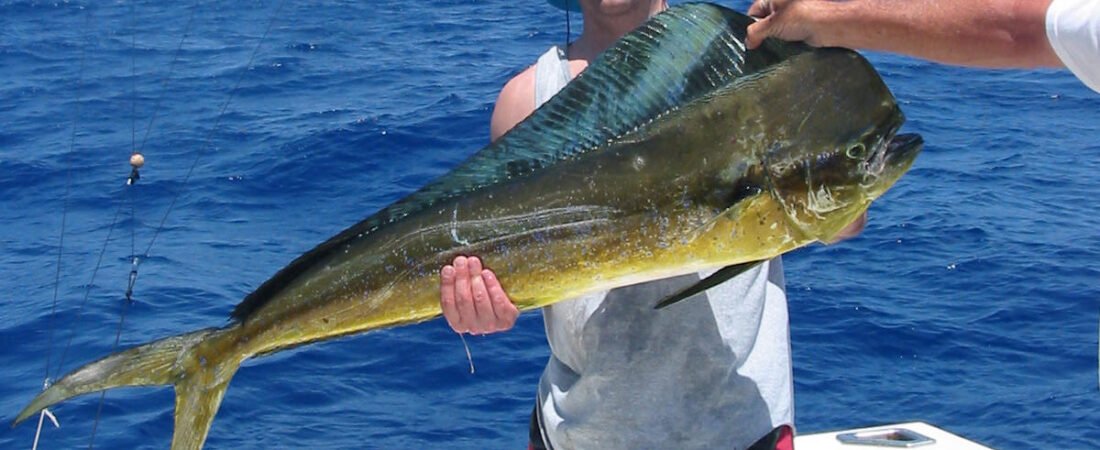
A mahi mahi swimming free can shift from a muted olive-green to an electric, almost glowing blue in less time than it takes to read this sentence. It’s not a trick of the light. The fish is actively controlling that change, in real time, using cellular machinery built directly into its skin.
Here’s what’s actually happening, biologically, every time a mahi mahi “lights up,” and why that same color disappears almost the moment the fish dies.
The Cells Behind the Color
Mahi mahi’s skin contains several types of specialized pigment cells called chromatophores, and each type handles a different part of the color spectrum.
| Cell Type | Pigment / Structure | Color Produced |
|---|---|---|
| Xanthophores | Carotenoids | Yellow, orange, gold |
| Iridophores | Reflective crystal platelets | Blue, green, silver (structural, not pigment-based) |
| Melanophores | Melanin | Black, brown, dark tones |
The blues and greens are the most interesting of the three, because they aren’t produced by pigment at all. Iridophores contain microscopic crystal platelets that reflect light the way a soap bubble or a butterfly wing does, bending wavelengths structurally rather than absorbing and re-emitting them chemically. That’s why a mahi mahi’s blue can look almost electric or metallic in a way a simple pigment rarely achieves.
How the Color Actually Changes
Unlike a chameleon, which shifts color relatively slowly over seconds to minutes, mahi mahi have direct neural control over their chromatophores, meaning the fish’s nervous system can trigger a shift almost instantly. When the brain sends a signal, pigment inside each chromatophore either spreads outward through the cell, making that color more visible and intense, or concentrates into a tight central point, letting the color fade and other layers show through instead. Because iridophores and xanthophores sit in different layers of the skin, the combination of what’s expanded and what’s contracted at any given moment determines whether the fish reads as gold, green, blue, or somewhere in between.
What Triggers a Color Shift
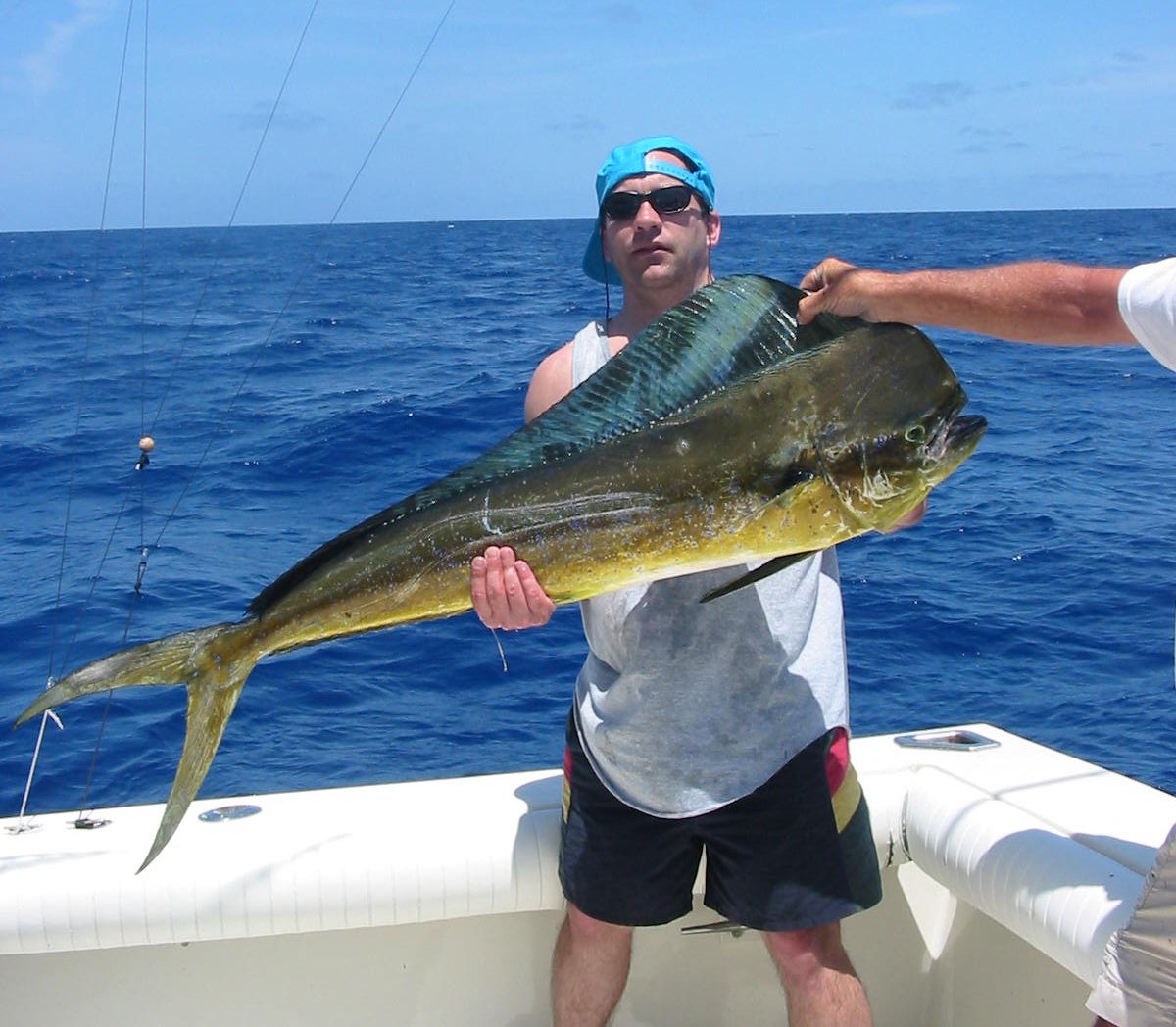
Researchers and experienced anglers both point to the same pattern: color intensity tracks closely with a mahi mahi’s behavioral state. A calm, cruising fish tends to run duller and more uniform. A fish that’s actively hunting, excited, or aggressive, particularly the instant it commits to striking a bait, will often flare into a much brighter, more saturated version of itself. Many captains treat a sudden burst of color near the boat as a reliable sign that a fish is fully committed to feeding rather than just investigating.
Why the Color Disappears After Death
The same neural control that makes the color change so vivid in life is exactly why it vanishes so completely after death. Once the fish dies, the nervous system stops sending signals, and the chromatophores lose the active control that kept pigment dispersed and iridophores aligned. Within minutes, the cells default to a contracted, inactive state, and the vivid blue-gold fish fades to the flat grey-brown most people associate with mahi mahi at the dock, a completely different animal from the one that came out of the water.
The color isn’t decoration. It’s an active, nervous-system-controlled display built from two entirely different mechanisms working together, structural light reflection and true pigment, and it only exists while the fish is alive to run it.
Explore the rest of the Mahi Mahi series
Biology & Identification
- Mahi Mahi: Full Species Overview
- Why Male Mahi Mahi Have That Distinctive Flat Forehead
- Bull vs Cow Mahi Mahi: How to Tell the Male and Female Apart
- Why Is Mahi Mahi Called Dolphinfish? The Name Confusion Explained
- Other Names for Mahi Mahi: Dorado, Dolphinfish, and Why It Has So Many
- Mahi Mahi Scientific Name: Coryphaena Hippurus and Its Taxonomy Explained
- What Kind of Fish Is Mahi Mahi? Classification, Family, and Biology
- Mahi Mahi Facts: 10 Things Most People Do Not Know
Habitat & Behavior
- Mahi Mahi Spawning and Reproduction: How They Breed and How Fast They Grow
- How Long Do Mahi Mahi Live? Lifespan, Growth Rate, and Maturity
- What Eats Mahi Mahi? Natural Predators in the Ocean
- How Fast Can Mahi Mahi Swim? Speed, Agility, and Why They Are Hard to Land
- What Do Mahi Mahi Eat? Diet, Prey, and Feeding Habits in the Wild
- Mahi Mahi in the Atlantic vs Pacific: Are They the Same Fish?
- Mahi Mahi Migration: How They Follow Warm Currents Around the World
- Mahi Mahi Habitat: Why They Hang Around Sargassum and Floating Debris
- Where Do Mahi Mahi Live? Ocean, Depth, and Temperature Preferences
- Baby Mahi Mahi: Should You Release Juvenile Mahi and How to Identify Them
Size & Records
- How Big Do Mahi Mahi Get? Size, Weight, and World Record
- Mahi Mahi World Record: Biggest Ever Caught and Where
Food & Health
- Fresh vs Frozen Mahi Mahi: Does It Make a Difference?
- Wild-Caught vs Farmed Mahi Mahi: What Is the Difference?
- Is Mahi Mahi a Sustainable Seafood Choice?
- Fish Similar to Mahi Mahi: What to Buy When It Is Not Available
- Mahi Mahi vs Tuna, Salmon, and Grouper: How Does It Compare?
- Can Dogs Eat Mahi Mahi? What Is Safe and What to Watch Out For
- Is Mahi Mahi Safe to Eat During Pregnancy? Mercury and Safety Explained
- Mahi Mahi Mercury Levels: Is It Safe and How Often Can You Eat It?
- Is Mahi Mahi Good to Eat? What Makes It One of the Most Popular Fish
- Mahi Mahi Nutrition Facts: Protein, Omega-3, Calories, and Vitamins
- Is Mahi Mahi a White Fish? Flesh Colour, Texture, and How It Compares
- What Does Mahi Mahi Taste Like? Flavour, Texture, and Is It Fishy?
- Mahi Mahi Population: Are Numbers Healthy and Is Overfishing a Risk?
- Mahi Mahi and Bycatch: What Gets Caught Alongside It and Why It Matters
Fishing
- Mahi Fishing Tips: Rigs, Trolling Speeds, and What Actually Works
- How to Catch Mahi Mahi: Techniques, Tackle, and Where to Find Them
- Mahi Mahi Fishing: Everything You Need to Know to Find and Catch Them
- Mahi Mahi Fishing in Florida: Season, Hotspots, and How to Catch Them
- Where to Catch Mahi Mahi: Best Locations Around the World
- Mahi Mahi Fishing Charters: What to Expect and How to Choose One
- Mahi Mahi Season: When and Where to Fish for Peak Action
- Best Lures for Mahi Mahi: What They Strike and Why
- Trolling for Mahi Mahi: Speed, Spread, and Setup Explained
- Finding Mahi Mahi on Sargassum Lines: Why Weed Lines Are the Key
- Mahi Mahi Fishing in Hawaii: When to Go and What to Expect