The current world record mahi mahi weighed 87 pounds. That number has stood since 1976, which makes it one of the longest-running records in saltwater fishing. It’s also a number that came close to falling in 2015, when an angler in Cabo San Lucas boated a fish that would have shattered it by 15 pounds, only to lose the record before it could ever be confirmed.
Here’s the full story of the biggest mahi mahi ever caught, the record that got away, and why so many of the sport’s biggest dolphinfish keep turning up along the same stretch of Mexican coastline.
The Official World Record
The IGFA All-Tackle World Record for mahi mahi belongs to Manuel Salazar, who landed an 87-pound fish on September 25, 1976, in the Gulf of Papagayo off the Pacific coast of Costa Rica. The fish measured 69.5 inches and struck a trolled plastic squid. Nearly fifty years later, it’s still the standard every angler chasing a record mahi mahi is measured against.
Record Snapshot
Only a handful of documented mahi mahi have ever come close to that weight. Records organizations recognize very few dolphinfish over 80 pounds, which is part of why the 1976 catch has held on for so long even as fishing pressure, tackle, and boat technology have all improved dramatically since.
The 102-Pound Fish That Didn’t Count
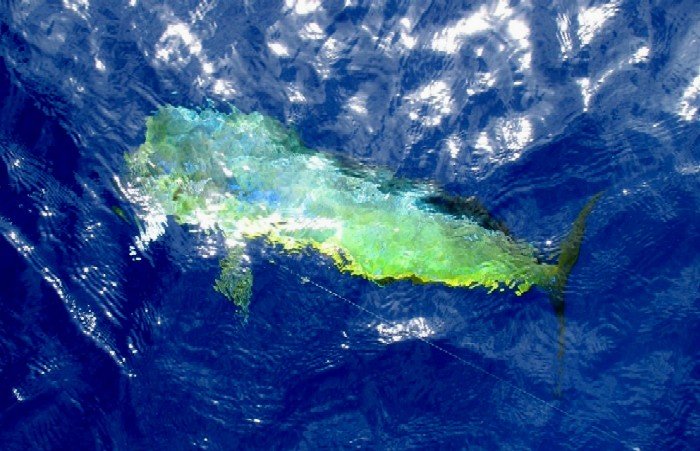
In July 2015, a Mississippi physician named Brian Lindsey was fishing out of Cabo San Lucas when he hooked a dorado that tipped a hand spring scale at 102 pounds, a full 15 pounds heavier than the standing world record. For a few hours, it looked like fishing had a new champion.
Then the record fell apart. The fish had only been weighed on a hand scale rather than a certified one, and back at the dock the crew filleted it before anyone arranged an official weigh-in, worried the meat would spoil in the heat. Under IGFA rules, a fish can’t be certified as a record once it’s been cut up, no matter how reliable the reported weight sounds. The 102-pound dorado remains one of fishing’s great “almost” stories: a fish that was very likely bigger than any mahi mahi ever officially recorded, lost to a few practical decisions made on a hot dock in Baja California Sur.
Records by Category
The all-tackle record only tells part of the story. Fishing records are also tracked by line class, tippet class, gender, and age group, and several of the most impressive dolphinfish records in the book were set well below record weight, on tackle light enough to make the catch itself the real achievement.
| Category | Weight | Angler | Location | Year |
|---|---|---|---|---|
| Women’s 80-lb line class | 82 lb 2 oz | Tera Allegri | Cabo San Lucas, Mexico | 1993 |
| Women’s 50-lb line class | 75 lb | Betty Ann Mehl | Cabo San Lucas, Mexico | 1997 |
| Men’s 20-lb tippet (fly) | 57 lb 8 oz | Donald Childress | Loreto, Mexico | 1997 |
| Men’s 12-lb line class | 77 lb 2 oz | Monte Green | Islamorada, Florida | 1982 |
| Women’s 4-lb tippet (fly) | 32 lb 8 oz | Jodie Johnson | Abaco, Bahamas | 2006 |
| Male Junior | 65 lb | Hunter James Keel, age 12 | Washington Canyon, Maryland | 2020 |
The tippet-class records are worth pausing on. Landing a 57-pound mahi mahi on 20-pound fly tippet, or a 32-pound fish on a 4-pound tippet, takes far more skill than boating a bigger fish on standard trolling gear. A mahi mahi’s speed and jumping ability make it a brutal test for fly anglers in particular, which is why those records tend to stand for years once they’re set.
Why So Many Records Come From Baja California Sur
Look closely at the location column above and a pattern shows up fast: Cabo San Lucas twice, Loreto once, both in Baja California Sur, plus the near-record 102-pound fish from Cabo in 2015. That’s not a coincidence. This stretch of the eastern Pacific sits right where warm currents, deep drop-offs, and heavy baitfish activity overlap, conditions mahi mahi key in on directly. La Paz sits in the same waters as Cabo and Loreto, on the same warm-current corridor that has produced some of the heaviest dolphinfish ever weighed.
How Record Mahi Mahi Are Caught
Nearly every record on this list came the same way: trolling near a weed line or floating structure, on a bait or lure a big mahi mahi couldn’t resist. Fish of record size are almost always older bulls that have survived years of being hunted by marlin, sharks, and other big pelagics, which makes them wary and far less common than the 15 to 30 pound fish anglers catch on a typical trip. Finding one usually comes down to time on the water, reading structure carefully, and being ready when a genuinely oversized fish finally shows up on the line.
The current record has stood for nearly fifty years, longer than most saltwater world records survive. Whether it’s broken by a fish from Costa Rica, Baja California Sur, or somewhere else entirely, the eastern Pacific’s track record makes it one of the more likely places in the world for it to happen.
Explore the rest of the Mahi Mahi series
Biology & Identification
- Mahi Mahi: Full Species Overview
- Why Male Mahi Mahi Have That Distinctive Flat Forehead
- Bull vs Cow Mahi Mahi: How to Tell the Male and Female Apart
- Why Mahi Mahi Changes Colour: The Blue, Gold, and Green Explained
- Why Is Mahi Mahi Called Dolphinfish? The Name Confusion Explained
- Other Names for Mahi Mahi: Dorado, Dolphinfish, and Why It Has So Many
- Mahi Mahi Scientific Name: Coryphaena Hippurus and Its Taxonomy Explained
- What Kind of Fish Is Mahi Mahi? Classification, Family, and Biology
- Mahi Mahi Facts: 10 Things Most People Do Not Know
Habitat & Behavior
- Mahi Mahi Spawning and Reproduction: How They Breed and How Fast They Grow
- How Long Do Mahi Mahi Live? Lifespan, Growth Rate, and Maturity
- What Eats Mahi Mahi? Natural Predators in the Ocean
- How Fast Can Mahi Mahi Swim? Speed, Agility, and Why They Are Hard to Land
- What Do Mahi Mahi Eat? Diet, Prey, and Feeding Habits in the Wild
- Mahi Mahi in the Atlantic vs Pacific: Are They the Same Fish?
- Mahi Mahi Migration: How They Follow Warm Currents Around the World
- Mahi Mahi Habitat: Why They Hang Around Sargassum and Floating Debris
- Where Do Mahi Mahi Live? Ocean, Depth, and Temperature Preferences
- Baby Mahi Mahi: Should You Release Juvenile Mahi and How to Identify Them
Size & Records
Food & Health
- Fresh vs Frozen Mahi Mahi: Does It Make a Difference?
- Wild-Caught vs Farmed Mahi Mahi: What Is the Difference?
- Is Mahi Mahi a Sustainable Seafood Choice?
- Fish Similar to Mahi Mahi: What to Buy When It Is Not Available
- Mahi Mahi vs Tuna, Salmon, and Grouper: How Does It Compare?
- Can Dogs Eat Mahi Mahi? What Is Safe and What to Watch Out For
- Is Mahi Mahi Safe to Eat During Pregnancy? Mercury and Safety Explained
- Mahi Mahi Mercury Levels: Is It Safe and How Often Can You Eat It?
- Is Mahi Mahi Good to Eat? What Makes It One of the Most Popular Fish
- Mahi Mahi Nutrition Facts: Protein, Omega-3, Calories, and Vitamins
- Is Mahi Mahi a White Fish? Flesh Colour, Texture, and How It Compares
- What Does Mahi Mahi Taste Like? Flavour, Texture, and Is It Fishy?
- Mahi Mahi Population: Are Numbers Healthy and Is Overfishing a Risk?
- Mahi Mahi and Bycatch: What Gets Caught Alongside It and Why It Matters
Fishing
- Mahi Fishing Tips: Rigs, Trolling Speeds, and What Actually Works
- How to Catch Mahi Mahi: Techniques, Tackle, and Where to Find Them
- Mahi Mahi Fishing: Everything You Need to Know to Find and Catch Them
- Mahi Mahi Fishing in Florida: Season, Hotspots, and How to Catch Them
- Where to Catch Mahi Mahi: Best Locations Around the World
- Mahi Mahi Fishing Charters: What to Expect and How to Choose One
- Mahi Mahi Season: When and Where to Fish for Peak Action
- Best Lures for Mahi Mahi: What They Strike and Why
- Trolling for Mahi Mahi: Speed, Spread, and Setup Explained
- Finding Mahi Mahi on Sargassum Lines: Why Weed Lines Are the Key
- Mahi Mahi Fishing in Hawaii: When to Go and What to Expect