
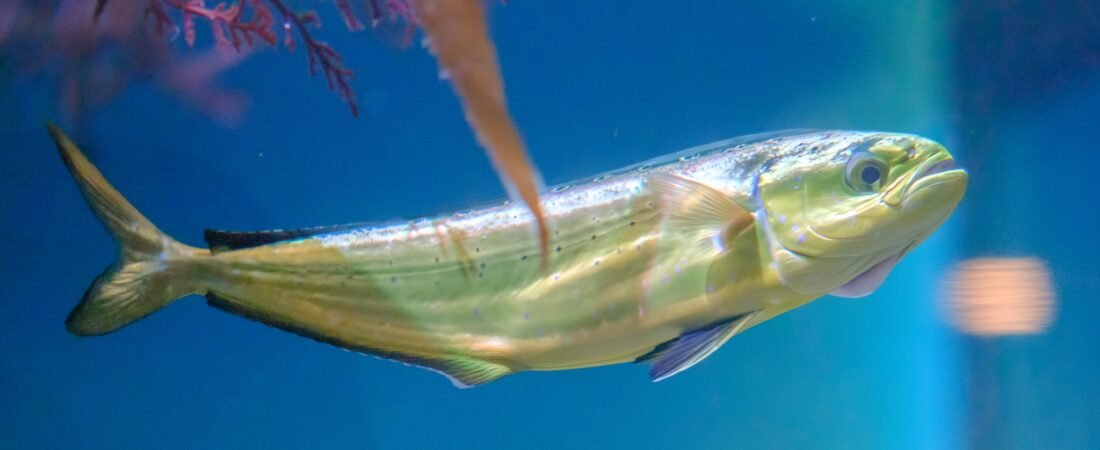
Mahi mahi shows up on menus, tackle shop walls, and offshore leaderboards constantly, which makes it easy to assume there’s not much left to learn about it. That assumption doesn’t hold up. Underneath the familiar name is a fish with one of the strangest biological profiles in the ocean: it grows faster than almost anything else that swims, spawns in numbers that are hard to picture, and lives a life measured in months rather than decades.
Here are ten facts about mahi mahi that go beyond the basics, covering biology, records, and a few genuine surprises.
Jump to a fact
It’s the fastest-growing fish in the ocean
Mahi mahi can put on as much as 2.7 inches of length in a single week and reach full adult size within about a year of hatching. That growth rate is unmatched among wild fish, which is why some biologists half-jokingly call it “the rabbit of the sea.” A fish that hatches in spring can realistically be a legal, keeper-sized catch by the following fall, which is an unusually short timeline compared to almost any other species targeted offshore.
It’s sexually mature before its first birthday
Most mahi mahi reach sexual maturity at just 4 to 6 months old, well before they’ve finished growing. Combined with a lifespan of only 4 to 5 years, that early maturity means generations turn over fast, which is part of why the species holds up so well under fishing pressure.
A single female can release up to a million eggs at once
Mahi mahi are batch spawners, meaning females release eggs in separate events rather than all at once. Each spawning event can produce anywhere from 80,000 to roughly a million eggs, and a female may spawn several times a year in warm water. Few fish reproduce at that scale.
The benchmark world record catch is 87 pounds
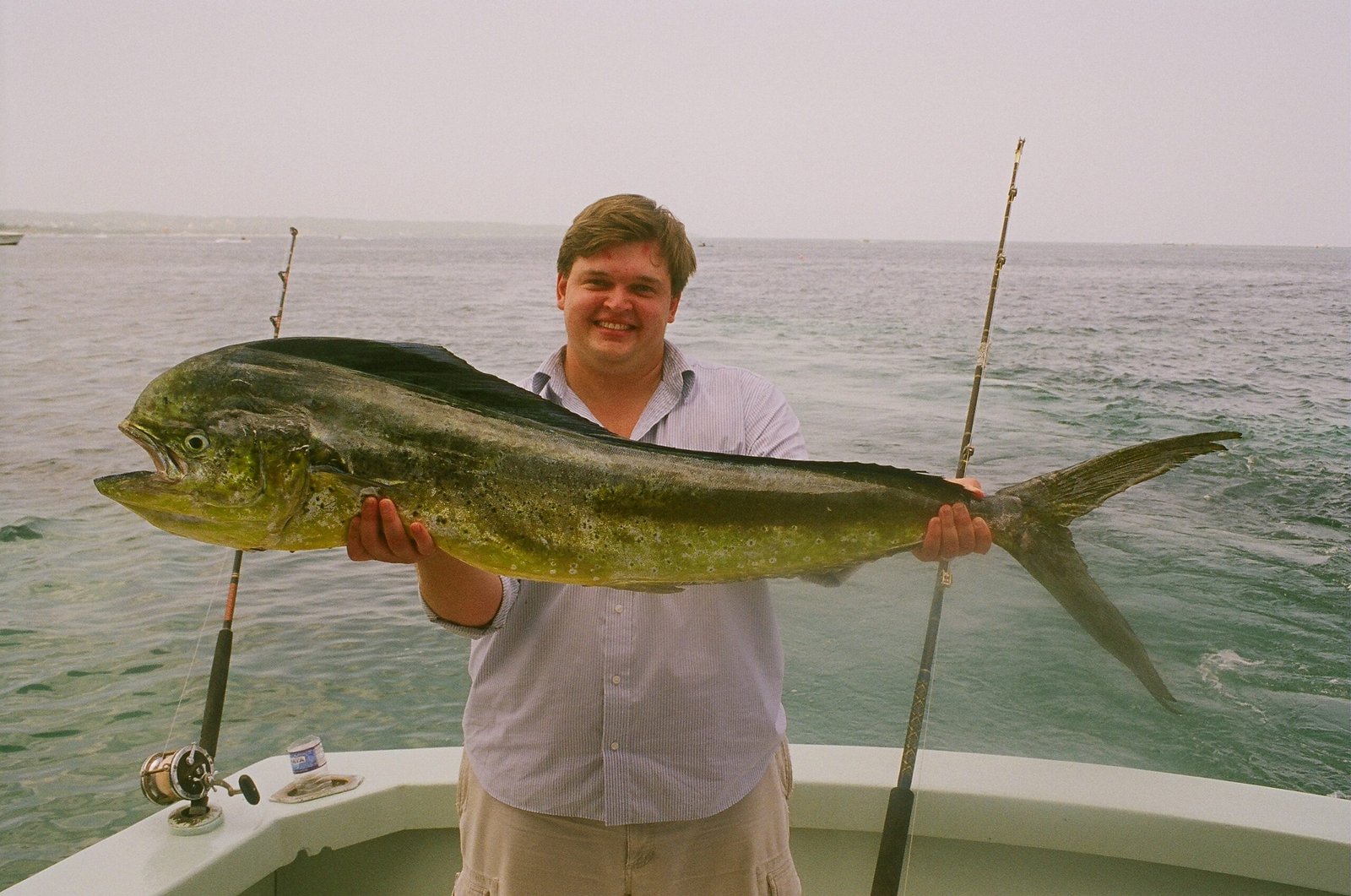
The long-standing all-tackle world record recognized by the International Game Fish Association was landed off Papagayo, Costa Rica, in 1976, on a trolled plastic squid. At 87 pounds, it dwarfs the typical 15 to 30 pound fish anglers bring to the dock.
A fast predator that’s also a favorite prey
Mahi mahi hunt with real speed and aggression, but they’re far from the top of the food chain. Blue and black marlin, sailfish, large tuna, and pelagic sharks like mako and blue sharks all feed on mahi mahi regularly, especially juveniles. That predation pressure is constant enough that some researchers see it as another reason the species evolved to grow and reproduce so quickly: a short life spent racing to reach adulthood before something bigger catches up.
They rarely feed once the light fades
Mahi mahi hunt almost entirely by sight in bright surface water, which makes them daytime feeders by nature. Once the light drops off, their feeding activity drops sharply too, which is part of why experienced captains plan trips around daylight hours rather than fishing around the clock.
Japan has its own name for it, and the FDA recognizes it
In Japan, mahi mahi is known as “shiira,” a name common enough in sushi and sashimi markets that the FDA’s official seafood naming guidance lists it as an accepted vernacular term tied directly to the U.S. market name “mahi-mahi.” Few fish carry a naming bridge that formal between two very different food cultures.
Anglers often see them swimming in pairs, though scientists still debate why
Mahi mahi are sometimes seen swimming in tight male-female pairs, cruising just under the surface together. Whether that reflects real pair bonding is still debated among researchers. Some studies point to genuine paired behavior, while others argue it’s just two fish responding to the same feeding cues rather than staying together on purpose.
Peru alone has landed over 60,000 tonnes in a single year
Commercial mahi mahi fishing is a serious global industry, and Peru has historically been the largest producer, landing more than 60,000 tonnes in some years. Most of the world’s catch comes from the southeast Pacific, with Ecuador, Panama, and Taiwan also among the top producers. That scale is easy to miss for anyone who only encounters mahi mahi on a charter boat or a dinner plate, but it’s a major piece of the global whitefish trade.
Live mahi mahi can shift color in seconds, not just after death
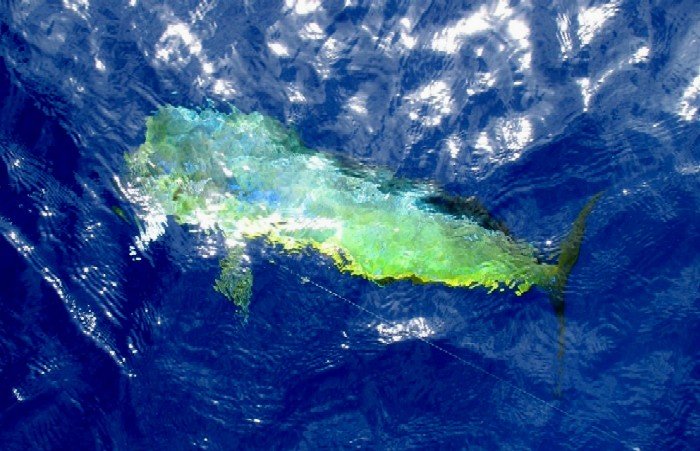
Everyone who’s caught one knows the color fades to grey after death, but fewer people realize the reverse is also true while the fish is alive. Mahi mahi can intensify or dial back their blue, green, and gold coloring within seconds, likely as a signal tied to excitement, aggression, or feeding, controlled by pigment cells called chromatophores that sit under nervous system control.
Why These Facts Matter
Taken together, these details paint a picture of a fish built for speed on every level: fast growth, fast maturity, fast reproduction, and a fight that lives up to its Hawaiian name. It’s also a reminder that a species this familiar on a menu can still hold real surprises once you look past the fillet.
Explore the rest of the Mahi Mahi series
Biology & Identification
- Mahi Mahi: Full Species Overview
- Why Male Mahi Mahi Have That Distinctive Flat Forehead
- Bull vs Cow Mahi Mahi: How to Tell the Male and Female Apart
- Why Mahi Mahi Changes Colour: The Blue, Gold, and Green Explained
- Why Is Mahi Mahi Called Dolphinfish? The Name Confusion Explained
- Other Names for Mahi Mahi: Dorado, Dolphinfish, and Why It Has So Many
- Mahi Mahi Scientific Name: Coryphaena Hippurus and Its Taxonomy Explained
- What Kind of Fish Is Mahi Mahi? Classification, Family, and Biology
Habitat & Behavior
- Mahi Mahi Spawning and Reproduction: How They Breed and How Fast They Grow
- How Long Do Mahi Mahi Live? Lifespan, Growth Rate, and Maturity
- What Eats Mahi Mahi? Natural Predators in the Ocean
- How Fast Can Mahi Mahi Swim? Speed, Agility, and Why They Are Hard to Land
- What Do Mahi Mahi Eat? Diet, Prey, and Feeding Habits in the Wild
- Mahi Mahi in the Atlantic vs Pacific: Are They the Same Fish?
- Mahi Mahi Migration: How They Follow Warm Currents Around the World
- Mahi Mahi Habitat: Why They Hang Around Sargassum and Floating Debris
- Where Do Mahi Mahi Live? Ocean, Depth, and Temperature Preferences
- Baby Mahi Mahi: Should You Release Juvenile Mahi and How to Identify Them
Size & Records
- How Big Do Mahi Mahi Get? Size, Weight, and World Record
- Mahi Mahi World Record: Biggest Ever Caught and Where
Food & Health
- Fresh vs Frozen Mahi Mahi: Does It Make a Difference?
- Wild-Caught vs Farmed Mahi Mahi: What Is the Difference?
- Is Mahi Mahi a Sustainable Seafood Choice?
- Fish Similar to Mahi Mahi: What to Buy When It Is Not Available
- Mahi Mahi vs Tuna, Salmon, and Grouper: How Does It Compare?
- Can Dogs Eat Mahi Mahi? What Is Safe and What to Watch Out For
- Is Mahi Mahi Safe to Eat During Pregnancy? Mercury and Safety Explained
- Mahi Mahi Mercury Levels: Is It Safe and How Often Can You Eat It?
- Is Mahi Mahi Good to Eat? What Makes It One of the Most Popular Fish
- Mahi Mahi Nutrition Facts: Protein, Omega-3, Calories, and Vitamins
- Is Mahi Mahi a White Fish? Flesh Colour, Texture, and How It Compares
- What Does Mahi Mahi Taste Like? Flavour, Texture, and Is It Fishy?
- Mahi Mahi Population: Are Numbers Healthy and Is Overfishing a Risk?
- Mahi Mahi and Bycatch: What Gets Caught Alongside It and Why It Matters
Fishing
- Mahi Fishing Tips: Rigs, Trolling Speeds, and What Actually Works
- How to Catch Mahi Mahi: Techniques, Tackle, and Where to Find Them
- Mahi Mahi Fishing: Everything You Need to Know to Find and Catch Them
- Mahi Mahi Fishing in Florida: Season, Hotspots, and How to Catch Them
- Where to Catch Mahi Mahi: Best Locations Around the World
- Mahi Mahi Fishing Charters: What to Expect and How to Choose One
- Mahi Mahi Season: When and Where to Fish for Peak Action
- Best Lures for Mahi Mahi: What They Strike and Why
- Trolling for Mahi Mahi: Speed, Spread, and Setup Explained
- Finding Mahi Mahi on Sargassum Lines: Why Weed Lines Are the Key
- Mahi Mahi Fishing in Hawaii: When to Go and What to Expect