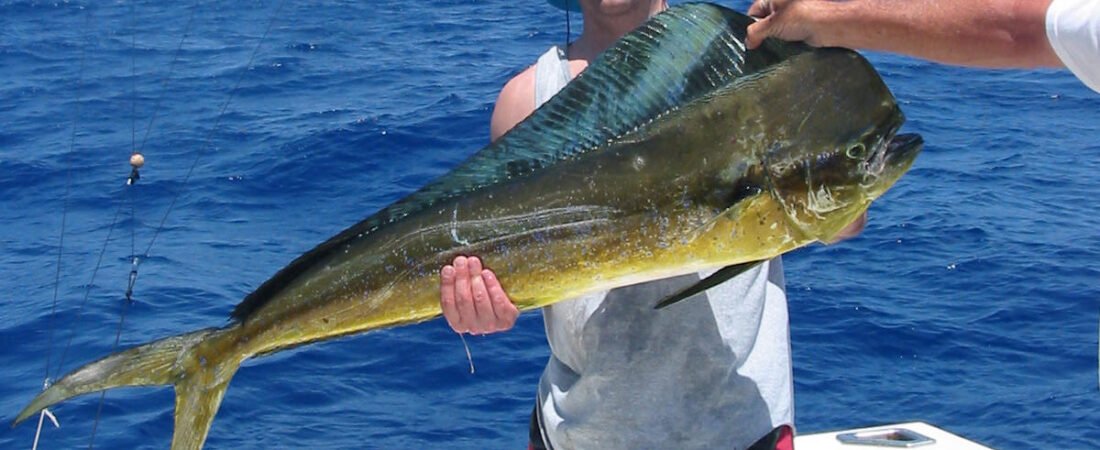
Most people have eaten mahi mahi without ever seeing what it looks like alive. It’s a fast, brilliantly colored fish that patrols the open ocean in warm water around the world, flashing electric blue, green, and gold as it hunts near the surface. It’s one of the most recognizable fish on a restaurant menu and one of the least recognizable in the water, because almost nobody encounters it outside a fillet or a fight at the end of a fishing line.
That gap matters. Mahi mahi is one of the most popular sport fish in the world, prized for its speed and acrobatics on the line, and one of the most widely eaten whitefish in American restaurants. It also plays a real ecological role as a fast-growing predator that keeps baitfish populations in check across tropical and subtropical seas.
Here’s the part that surprises most people: the vivid coloring that makes mahi mahi so photogenic starts to fade within minutes of the fish coming out of the water, draining to a dull grey as it dies. The fish on the dock rarely looks anything like the fish that was just swimming. Here’s everything worth knowing about it: what it is, where it lives, and why it’s become such a fixture of both sport fishing and the seafood counter.
What Is Mahi Mahi?
Mahi mahi’s scientific name is Coryphaena hippurus, first classified by Carl Linnaeus in 1758. It belongs to the family Coryphaenidae, which has only two members in the entire world: mahi mahi and its smaller relative, the pompano dolphinfish.
It’s a pelagic, ray-finned fish, meaning it lives in the open water column rather than around reefs or the seafloor, and it spends most of its life cruising near the surface rather than diving deep. Physically, mahi mahi has a distinctive laterally compressed body and a single long dorsal fin that runs almost the entire length of its back, giving it a streamlined, almost sail-like profile built for speed. That body shape is no accident: everything about mahi mahi’s anatomy is built for fast, sustained swimming in open water rather than the slower, more maneuverable builds typical of reef-dwelling species.
Why Does Mahi Mahi Have So Many Names?
Few fish carry as many names as this one, and each name tells part of its story. Mahi mahi comes from Hawaiian, roughly translating to “very strong,” a nod to how hard the fish fights once hooked. Dolphinfish, the older English name, refers to its habit of swimming alongside boats the way dolphins do; it has no relation to actual dolphins, but the name still confuses first-time diners. Dorado, the Spanish name used widely across Latin America, means “the golden one,” describing the fish’s brilliant coloring.
In the United States, “mahi mahi” became the standard restaurant name in the 1980s, when menus quietly dropped “dolphinfish” because diners assumed they were being served an actual dolphin. The name change stuck, and it’s now the dominant term in English almost everywhere except among anglers and Spanish-speaking countries, where “dorado” is still common.
What Does Mahi Mahi Look Like?
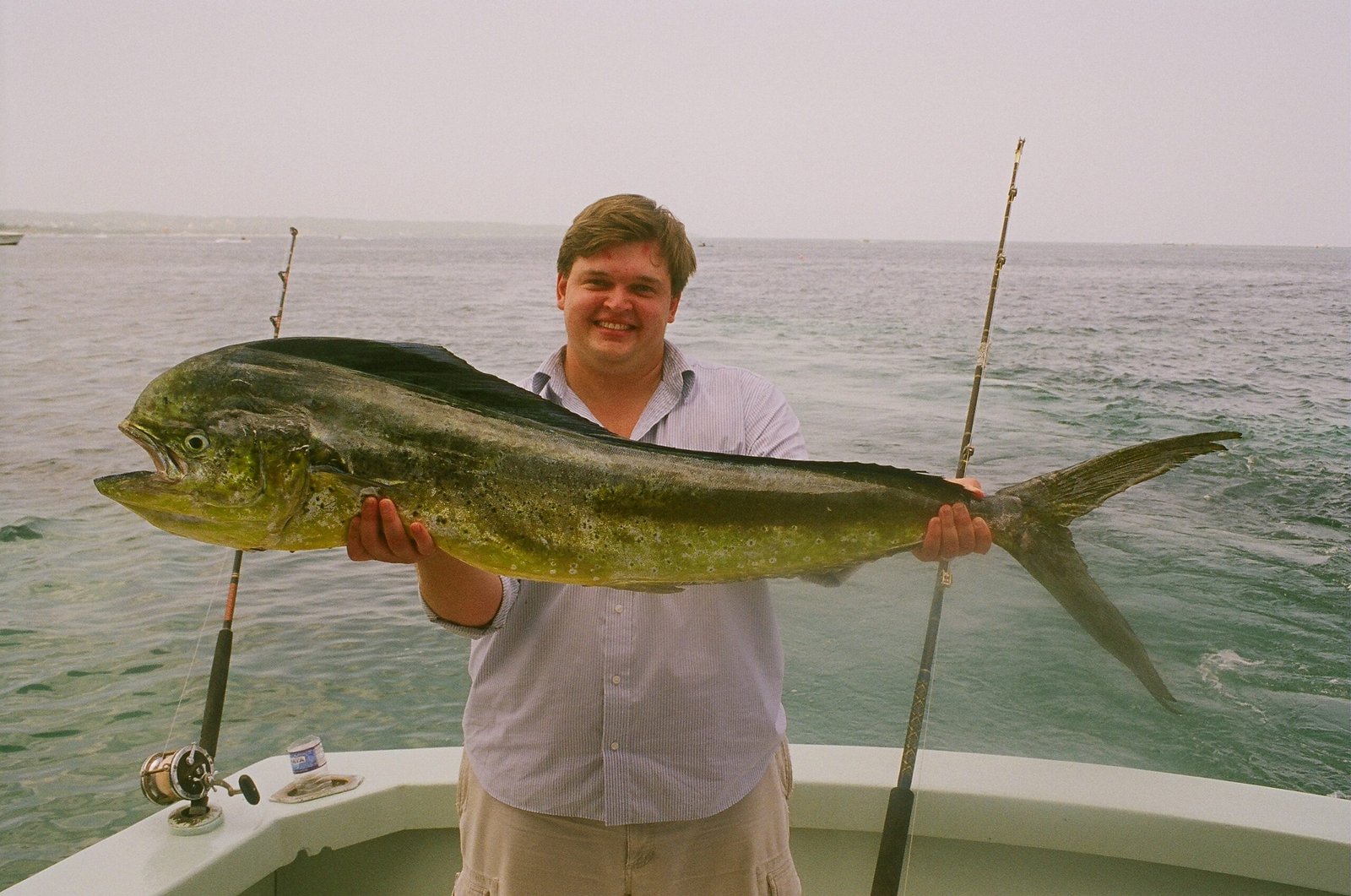
A live mahi mahi is genuinely one of the most colorful fish in the ocean: vivid blue and green along the back, fading into gold and yellow along the sides. That coloring isn’t just for show; anglers watch for it, because a mahi mahi lit up with intense color is typically an excited, actively feeding fish, which makes it easier to spot and target near the boat.
The color doesn’t last past death. Mahi mahi’s skin cells, called chromatophores, lose their ability to hold pigment within minutes once the fish is out of the water, and the vivid blue-gold fish fades to a flat grey. It’s one of the fastest and most dramatic color changes of any commonly caught fish.
Most mahi mahi run 15 to 30 pounds, though fish up to 88 pounds have been recorded. As males mature, they develop a pronounced, nearly vertical flat forehead, earning them the nickname “bull.” Females, or “cows,” keep a smoothly rounded head their entire lives. It’s the fastest way to tell the sexes apart at a glance, even from a distance.
Where Do Mahi Mahi Live?
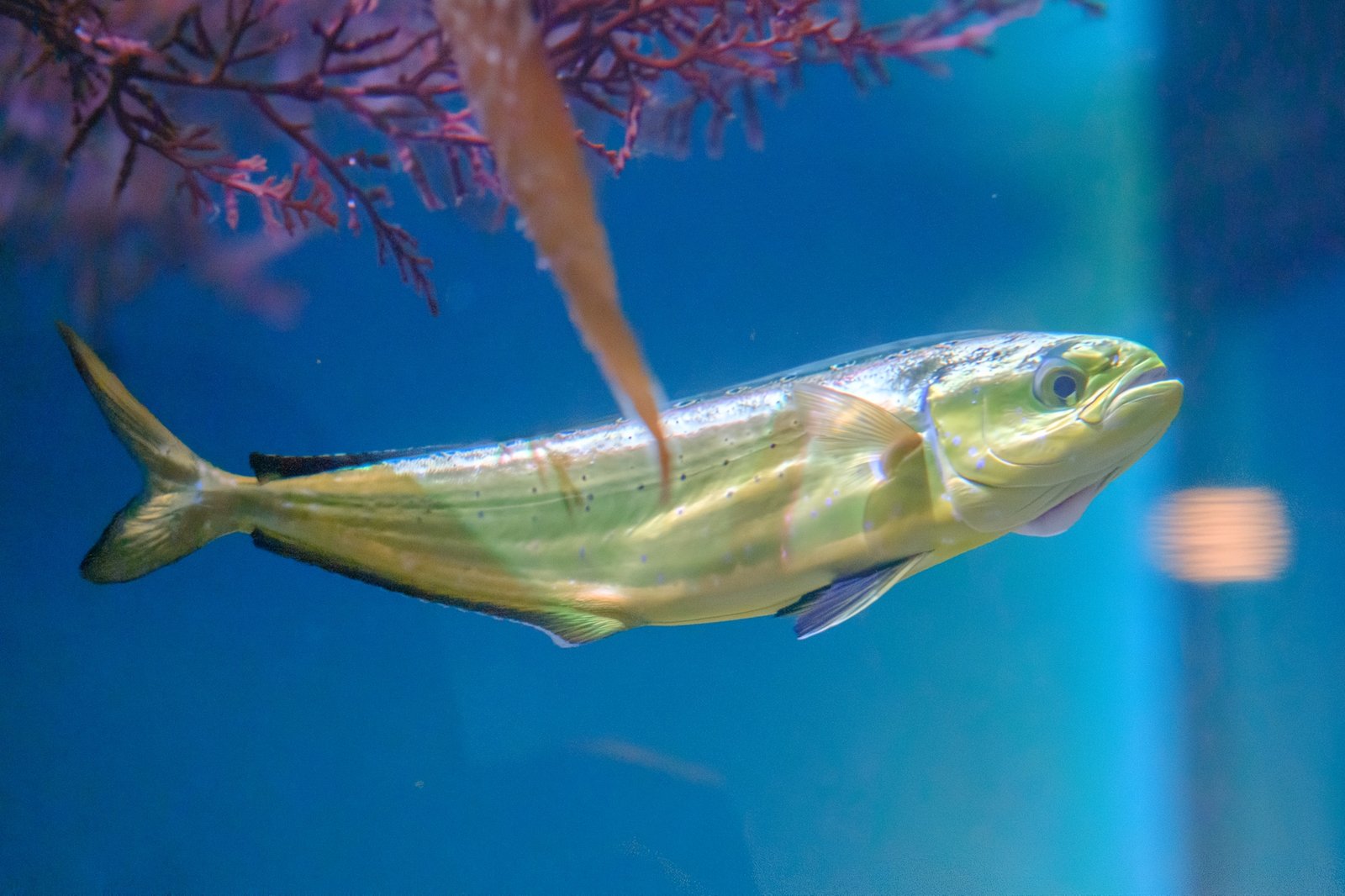
Mahi mahi are strictly open-ocean fish. They don’t associate with reefs and don’t hold near the bottom the way grouper or snapper do. They live and hunt in the water column, often near the surface. Their range is driven almost entirely by water temperature: they favor surface water between 70°F and 85°F, which puts them across the Atlantic, Pacific, and Indian Oceans in tropical and subtropical zones worldwide.
One behavior matters more than any other for both anglers and researchers: mahi mahi congregate heavily around floating sargassum weed lines, drifting debris, and man-made FADs (fish aggregating devices). Small baitfish shelter under this floating cover, and mahi mahi follow the food. Find the weed line, and you’ve usually found the fish.
They’re also seasonal travelers. As water temperatures shift, mahi mahi follow warm currents north in the summer months and retreat south again in winter, which is why the best fishing months shift by region rather than staying fixed on a calendar. Off the U.S. East Coast, that migration pushes fish as far north as the Carolinas and even New England by mid-summer. In the eastern Pacific, including the waters off Baja California Sur, warm currents keep mahi mahi accessible for a longer stretch of the year, which is a big part of why the species is such a reliable target for offshore charters in that region.
What Do Mahi Mahi Eat?
Mahi mahi are opportunistic surface hunters that feed almost entirely by sight in well-lit water. Flying fish are a favorite target, along with squid, mackerel, sardines, and crabs, and pretty much anything smaller that crosses their path near the surface.
Their hunting is built around raw speed: mahi mahi can swim up to an estimated 50 knots, or roughly 57 miles per hour, making them one of the fastest fish in the ocean. That speed translates directly into how they fight when hooked, with explosive runs and aggressive strikes, which is exactly why lures imitating flying fish or squid are so effective for anglers targeting them.
What Does Mahi Mahi Taste Like?
Mahi mahi has a mild, slightly sweet flavor and firm, white flesh. Nothing about it reads as “fishy,” which is a big part of why it’s become a go-to choice even for people who normally avoid seafood. It’s often compared to grouper or snapper for its firm texture and clean taste.
One practical note: mahi mahi is best eaten fresh. Its quality drops noticeably faster than many other whitefish once caught, which is part of why it’s prized so highly straight off a charter boat rather than after days in transit.
Is Mahi Mahi Healthy?
Mahi mahi is a lean, high-protein fish, with roughly 20 grams of protein per 100-gram serving, low fat, and low calories. It’s also a solid source of B vitamins, selenium, and potassium.
| Per 4 oz serving | Amount |
|---|---|
| Calories | ~93 |
| Protein | ~20g |
| Fat | ~1g |
| Mercury | ~0.18 ppm (moderate) |
On mercury, mahi mahi sits in the moderate range, lower than tuna or swordfish, but not as low as fish like salmon or tilapia. The FDA classifies mahi mahi as a “Good Choice” for those who are pregnant or breastfeeding, recommending it in moderation, about one serving a week, rather than the two to three servings allowed for lower-mercury “Best Choice” fish.
Is Mahi Mahi Sustainable?
NOAA rates U.S. wild-caught mahi mahi as a smart seafood choice. The fishing gear typically used to catch it, trolling lines and longlines, rarely contacts the ocean floor, which keeps habitat impact to a minimum. Biologically, mahi mahi are built to bounce back from fishing pressure: they live only 4 to 5 years and reproduce quickly, which makes populations naturally resilient.
In U.S. waters, there are four recognized stocks: South Atlantic, St. Croix, St. Thomas/St. John, and Puerto Rico. Worth noting honestly: because mahi mahi are so migratory and widely distributed, a full formal stock assessment has never been completed. NOAA’s read on the population is based on an exploratory assessment and the species’ inherent productivity, not a complete count. That’s not a red flag on its own. Fast-growing, short-lived, highly fecund species like mahi mahi are exactly the kind that tend to hold up well under fishing pressure, which is why regulators and conservation groups alike have consistently rated it as a low-concern choice even without a wall-to-wall population census.
How Do You Catch Mahi Mahi?
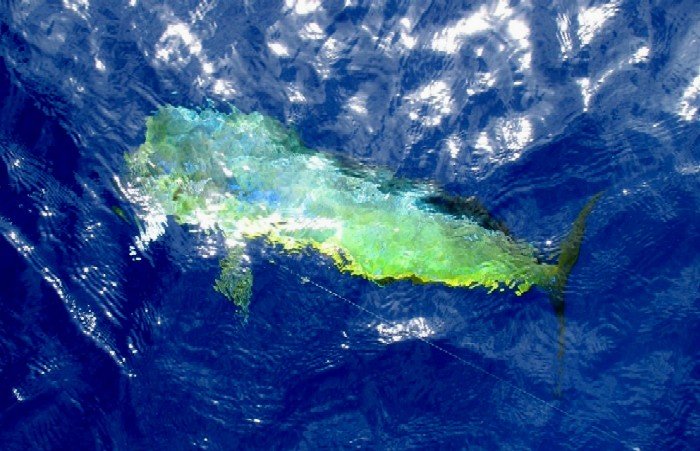
Trolling is the primary method for targeting mahi mahi: running lures or rigged baits behind a moving boat until fish strike. Because they concentrate around weed lines and floating debris, experienced captains spend as much time scanning the surface for structure as they do watching the lines.
Once hooked, mahi mahi are known for aggressive, acrobatic fights, with long runs, repeated jumps, and a habit of staying near the surface the entire time, which makes the fight as visual as it is physical. Season varies by location: Florida’s mahi mahi fishing typically peaks in spring and summer, Hawaii sees strong action from spring through fall, and in Baja California Sur the fish are a consistent target across the warmer months as they follow bait and current temperature along the coast. Mahi mahi are usually found well offshore in open water, often miles beyond where a private boat can comfortably run, so charter fishing is the most common and practical way anglers get access to them, especially first-timers who want an experienced crew reading the weed lines rather than guessing.
The Bottom Line
Mahi mahi earns its reputation from every angle: one of the fastest fish in the ocean, one of the most vividly colored, and one of the more sustainable choices on both the charter deck and the seafood counter. It’s a fish built for speed and short-lived abundance, spread across nearly every warm ocean on Earth, at home equally on a fighting line and a dinner plate. Few species bridge the gap between recreational fishing and the global seafood market as cleanly as this one does, and few reward a closer look as much once you get past the name. There’s more to explore on the species pages that follow: from taxonomy and migration patterns to tackle, technique, and the finer points of telling a bull from a cow.
Explore the rest of the Mahi Mahi series
Biology & Identification
- Why Male Mahi Mahi Have That Distinctive Flat Forehead
- Bull vs Cow Mahi Mahi: How to Tell the Male and Female Apart
- Why Mahi Mahi Changes Colour: The Blue, Gold, and Green Explained
- Why Is Mahi Mahi Called Dolphinfish? The Name Confusion Explained
- Other Names for Mahi Mahi: Dorado, Dolphinfish, and Why It Has So Many
- Mahi Mahi Scientific Name: Coryphaena Hippurus and Its Taxonomy Explained
- What Kind of Fish Is Mahi Mahi? Classification, Family, and Biology
- Mahi Mahi Facts: 10 Things Most People Do Not Know
Habitat & Behavior
- Mahi Mahi Spawning and Reproduction: How They Breed and How Fast They Grow
- How Long Do Mahi Mahi Live? Lifespan, Growth Rate, and Maturity
- What Eats Mahi Mahi? Natural Predators in the Ocean
- How Fast Can Mahi Mahi Swim? Speed, Agility, and Why They Are Hard to Land
- What Do Mahi Mahi Eat? Diet, Prey, and Feeding Habits in the Wild
- Mahi Mahi in the Atlantic vs Pacific: Are They the Same Fish?
- Mahi Mahi Migration: How They Follow Warm Currents Around the World
- Mahi Mahi Habitat: Why They Hang Around Sargassum and Floating Debris
- Where Do Mahi Mahi Live? Ocean, Depth, and Temperature Preferences
- Baby Mahi Mahi: Should You Release Juvenile Mahi and How to Identify Them
Size & Records
- How Big Do Mahi Mahi Get? Size, Weight, and World Record
- Mahi Mahi World Record: Biggest Ever Caught and Where
Food & Health
- Fresh vs Frozen Mahi Mahi: Does It Make a Difference?
- Wild-Caught vs Farmed Mahi Mahi: What Is the Difference?
- Is Mahi Mahi a Sustainable Seafood Choice?
- Fish Similar to Mahi Mahi: What to Buy When It Is Not Available
- Mahi Mahi vs Tuna, Salmon, and Grouper: How Does It Compare?
- Can Dogs Eat Mahi Mahi? What Is Safe and What to Watch Out For
- Is Mahi Mahi Safe to Eat During Pregnancy? Mercury and Safety Explained
- Mahi Mahi Mercury Levels: Is It Safe and How Often Can You Eat It?
- Is Mahi Mahi Good to Eat? What Makes It One of the Most Popular Fish
- Mahi Mahi Nutrition Facts: Protein, Omega-3, Calories, and Vitamins
- Is Mahi Mahi a White Fish? Flesh Colour, Texture, and How It Compares
- What Does Mahi Mahi Taste Like? Flavour, Texture, and Is It Fishy?
- Mahi Mahi Population: Are Numbers Healthy and Is Overfishing a Risk?
- Mahi Mahi and Bycatch: What Gets Caught Alongside It and Why It Matters
Fishing
- Mahi Fishing Tips: Rigs, Trolling Speeds, and What Actually Works
- How to Catch Mahi Mahi: Techniques, Tackle, and Where to Find Them
- Mahi Mahi Fishing: Everything You Need to Know to Find and Catch Them
- Mahi Mahi Fishing in Florida: Season, Hotspots, and How to Catch Them
- Where to Catch Mahi Mahi: Best Locations Around the World
- Mahi Mahi Fishing Charters: What to Expect and How to Choose One
- Mahi Mahi Season: When and Where to Fish for Peak Action
- Best Lures for Mahi Mahi: What They Strike and Why
- Trolling for Mahi Mahi: Speed, Spread, and Setup Explained
- Finding Mahi Mahi on Sargassum Lines: Why Weed Lines Are the Key
- Mahi Mahi Fishing in Hawaii: When to Go and What to Expect