
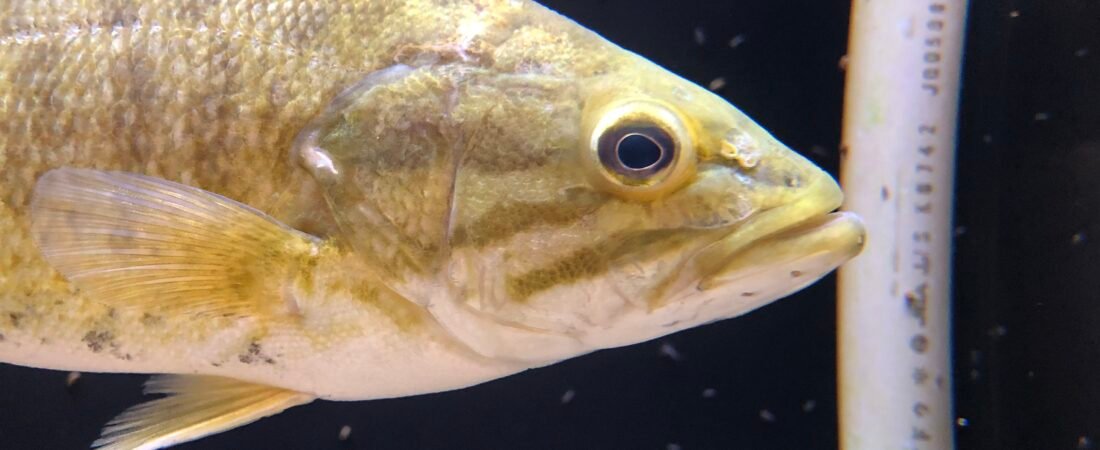
“Bass” gets applied loosely to a lot of unrelated fish, but the true black bass genus, Micropterus, is a specific, closely related group of species that anglers rarely compare in detail beyond smallmouth, largemouth, and spotted bass. This guide stays inside that genus and goes narrower and deeper than a general “what counts as a bass” overview, comparing smallmouth bass against its close and distant Micropterus relatives, including several regional species most anglers have never targeted on purpose.
What Makes a Fish a True “Black Bass” Species?
A true black bass is any member of the genus Micropterus, a group within the sunfish family, Centrarchidae, that currently includes more than a dozen recognized species and continues to be actively revised as genetic research uncovers new distinctions. Every species in the genus shares a broadly similar body plan, a spiny-rayed dorsal fin, and a preference for ambush predation, but ranges, maximum size, and habitat needs vary enormously from one species to the next.
Taxonomy inside this genus keeps shifting. Largemouth bass were split into two species in 2022, largemouth bass and Florida bass, and the Neosho smallmouth bass is currently being evaluated as its own species separate from the widespread Micropterus dolomieu, both covered in more detail elsewhere on this site. The species below reflects currently accepted, broadly recognized black bass species rather than every proposed subspecies under debate.
How Do Smallmouth, Largemouth, and Spotted Bass Compare?
Smallmouth, largemouth, and spotted bass are the three black bass species most anglers actually encounter, and they’re separated mainly by jaw length, body markings, and water preference rather than by size alone. Smallmouth bass have a jaw that stops at or before the eye and favor cool, rocky rivers and lakes. Largemouth bass have a jaw that extends well past the eye and tolerate warm, weedy, murky water that smallmouth avoid. Spotted bass sit in between physically, sharing the smallmouth’s shorter jaw but showing the largemouth’s lateral stripe, broken into rows of small dark spots below a solid dark band, plus a rough tooth patch on the tongue that largemouth bass typically lack.
Range tells a similar story of overlap without true equivalence. Largemouth bass now swim in all 50 states thanks to a century of stocking, making them the default “bass” most American anglers picture first. Smallmouth bass occupy a narrower, cooler-water footprint centered on the Great Lakes, the Upper Mississippi basin, and rocky northern rivers, though stocking has pushed their range well beyond that native core too. Spotted bass sit closer to a Mississippi basin and Gulf Slope native range and are more tolerant of warm, slightly turbid reservoir water than smallmouth, which is part of why the two species rarely dominate the exact same stretch of river even when both are present.
| Species | Scientific name | Native range | Typical size / notable record | Key ID marker |
|---|---|---|---|---|
| Smallmouth bass | Micropterus dolomieu | Upper Mississippi, Great Lakes, St. Lawrence, Hudson Bay basins; widely stocked | 1 to 4 lbs typical; 11 lb 15 oz IGFA record (1955) | Jaw ends at eye; vertical bars; reddish eyes |
| Largemouth bass | Micropterus salmoides | Eastern and central U.S. natively; now all 50 states | 2 to 5 lbs typical; 22 lb 4 oz record catches | Jaw extends well past eye; broken horizontal stripe |
| Spotted bass | Micropterus punctulatus | Mississippi basin from Ohio to Kansas; Gulf slope drainages to Texas | Up to about 11 lbs; 11 lb 4 oz IGFA record (2014) | Rows of spots below lateral band; rough tooth patch |
| Alabama bass | Micropterus henshalli | Native to Mobile River basin, AL/GA/MS; introduced elsewhere | Similar to spotted bass, up to several pounds | Nearly identical to spotted bass; scale counts needed to confirm |
| Shoal bass | Micropterus cataractae | Apalachicola-Chattahoochee-Flint basin, GA/AL/FL panhandle | Up to 24 in; 8 lb 12 oz record | Olive with dark spots, built for river shoals |
| Guadalupe bass | Micropterus treculii | Edwards Plateau, central Texas only | Rarely over 2 lbs; state record 3.71 lbs (2014) | Smallest black bass species; slender, olive body |
| Redeye bass | Micropterus coosae | Coosa River system, GA/AL upland streams | Typically under 1 lb | Bright red eyes; small upland stream specialist |
| Suwannee bass | Micropterus notius | Suwannee River drainage, northern FL; Ochlockonee River, GA | Rarely over 10 in; 3 lb 14 oz IGFA record (1985) | Smallest range of any black bass; turquoise fin tinge |
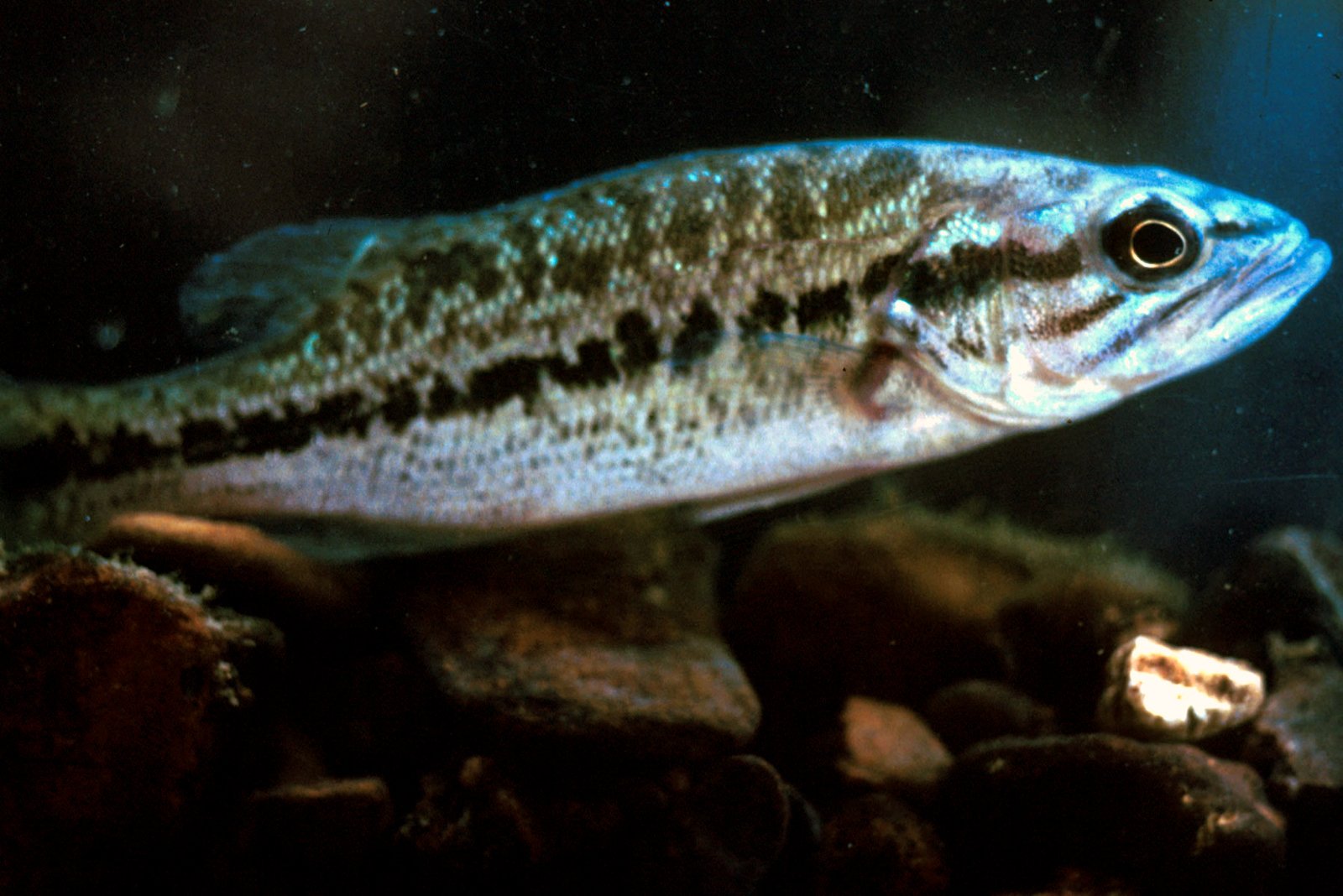
What Are the Lesser-Known Black Bass Species?
Beyond the big three, several regional black bass species exist in small native ranges, mostly rivers in the Southeast, and most anglers outside those specific watersheds will never knowingly catch one. What they share is a pattern: each evolved in isolation in a single river system, which makes them biologically distinctive but also unusually vulnerable once a wider-ranging black bass relative gets introduced into their water.
Shoal Bass: A Georgia-Alabama River Specialist
Shoal bass live almost entirely in the Apalachicola-Chattahoochee-Flint river system spanning western Georgia, eastern Alabama, and the Florida panhandle, where they favor fast, rocky shoal habitat rather than lakes. The species can reach a documented 24 inches and just over 8 pounds, respectable size for such a geographically restricted fish, but populations have declined sharply in Alabama, where hybridization with introduced Alabama bass has made shoal bass functionally extirpated from the state.
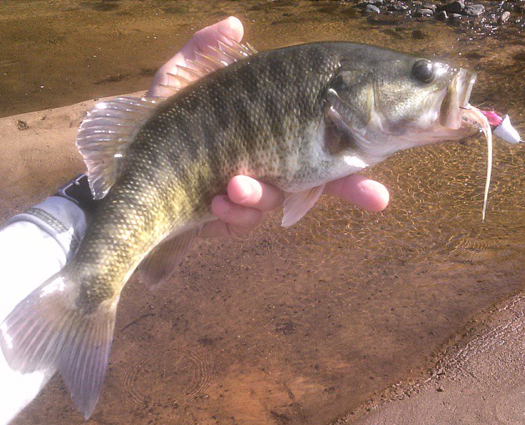
Guadalupe Bass: Texas’s Only Native Black Bass, and Its State Fish
Guadalupe bass are restricted to the spring-fed Hill Country rivers of central Texas, including the Guadalupe, Blanco, San Antonio, and Llano systems, and are the smallest of all black bass species, rarely exceeding 2 pounds. Texas named it the official state fish, but the species nearly lost its genetic identity after state agencies stocked smallmouth bass into its range in the 20th century: hybrid fish reached 34 percent of samples in the Guadalupe River, 46 percent in the San Gabriel River, and left no pure Guadalupe bass at all in the Blanco River. Texas Parks and Wildlife stopped stocking smallmouth in Hill Country waters after 1990 and has since released more than 2.3 million pure Guadalupe bass fingerlings to help the species recover.
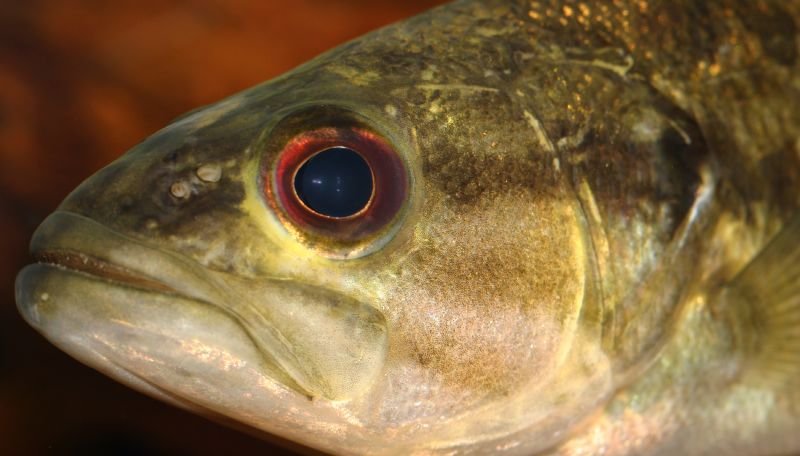
Redeye Bass: The Coosa River’s Small, Feisty Native
Redeye bass live in small upland streams of the Coosa River system in Georgia and Alabama, rarely growing past a pound despite an aggressive strike. As with shoal bass, redeye bass populations, including a closely related form sometimes called Bartram’s bass in the Savannah River basin, have declined where introduced Alabama bass have hybridized with them, a pattern repeating across several of the Southeast’s smaller river-specialist black bass species.
Suwannee Bass: Florida’s Miniature River Bass
Suwannee bass hold the smallest native range of any black bass species, limited to Florida’s Suwannee River drainage and Georgia’s Ochlockonee River. They rarely exceed 10 inches or 12 ounces, though the IGFA all-tackle record stands at 3 pounds, 14 ounces, caught in the Suwannee River in 1985. Their limited range and preference for clear, spring-fed limestone rivers make them one of the more geographically constrained gamefish in North America.
Alabama Bass: A Split From Spotted Bass That Turned Invasive
Alabama bass were reclassified from a spotted bass subspecies into a full species, native to Alabama’s Mobile River basin, but the story that matters most to other black bass is what’s happened since. Once introduced outside their native range, Alabama bass are aggressive enough to outcompete or hybridize with smallmouth and spotted bass populations wherever they establish, a documented concern in reservoirs in California, Georgia, and North Carolina among other states. Genetic testing in the Chattahoochee River basin has even turned up three-way hybrids combining Alabama, shoal, and spotted bass ancestry in a single fish, a level of genetic mixing that would have been hard to imagine before Alabama bass began moving outside their home basin.
Why Does Any of This Matter to a Smallmouth Bass Angler?
Knowing the wider black bass family matters practically, not just academically, because misidentifying a regional species as a smallmouth or spotted bass can mean unknowingly keeping a fish that’s protected, rare, or part of an active restoration program in that specific watershed. An angler fishing central Texas Hill Country rivers who assumes every short-jawed, olive-colored bass is a smallmouth could just as easily be holding a Guadalupe bass, a species state biologists spent decades trying to pull back from the edge of genetic extinction.
It also reframes what makes smallmouth bass worth targeting in the first place. Among roughly a dozen black bass species, only smallmouth combines a genuinely wide native and stocked range with the cold, clear-water habitat and hard-fighting reputation that built its national following, a combination none of the more geographically boxed-in regional species can match.
Several of these regional species face the same underlying threat: hybridization with an introduced black bass relative, sometimes smallmouth bass itself, as in the Guadalupe bass case above. It’s a reminder that “black bass” being one genus works against native species diversity just as often as it works for a tidy regulatory category.
This guide focuses narrowly on true black bass, genus Micropterus. For a broader comparison that also covers unrelated fish anglers call “bass,” including temperate bass like white and striped bass and the sunfish relative rock bass, see this site’s full freshwater bass comparison guide.
Frequently Asked Questions
How many species of black bass are there?
More than a dozen species are currently recognized in the genus Micropterus, and the number continues to shift as genetic research clarifies borderline populations like the Neosho smallmouth bass.
What is the smallest black bass species?
The Guadalupe bass and the Suwannee bass are both contenders for smallest, with Guadalupe bass rarely exceeding 2 pounds and Suwannee bass rarely exceeding 10 inches or 12 ounces.
Are Guadalupe bass related to smallmouth bass?
They’re both black bass species in the genus Micropterus, but they are not the same species. Introduced smallmouth bass have actually threatened Guadalupe bass through hybridization in parts of the Texas Hill Country, a problem Texas Parks and Wildlife has spent decades working to reverse.
Is Alabama bass the same as spotted bass?
No, though they were once classified as the same species. Alabama bass were reclassified out of spotted bass as their own full species and are difficult to tell apart in the field without counting scales.
Which black bass species is easiest to confuse with a smallmouth?
Spotted bass are the most common source of confusion, since both species share a jaw that stops at or before the eye. The clearest tell is the spotted bass’s rows of small dark spots below its lateral band and its rough tongue tooth patch, features smallmouth bass lack.
What’s the difference between this article and your broader freshwater bass guide?
This article stays inside the true black bass genus, Micropterus, comparing smallmouth against its closest and most distant relatives. The broader freshwater bass guide widens the lens to include unrelated fish anglers also call “bass,” such as white bass, striped bass, and rock bass.