
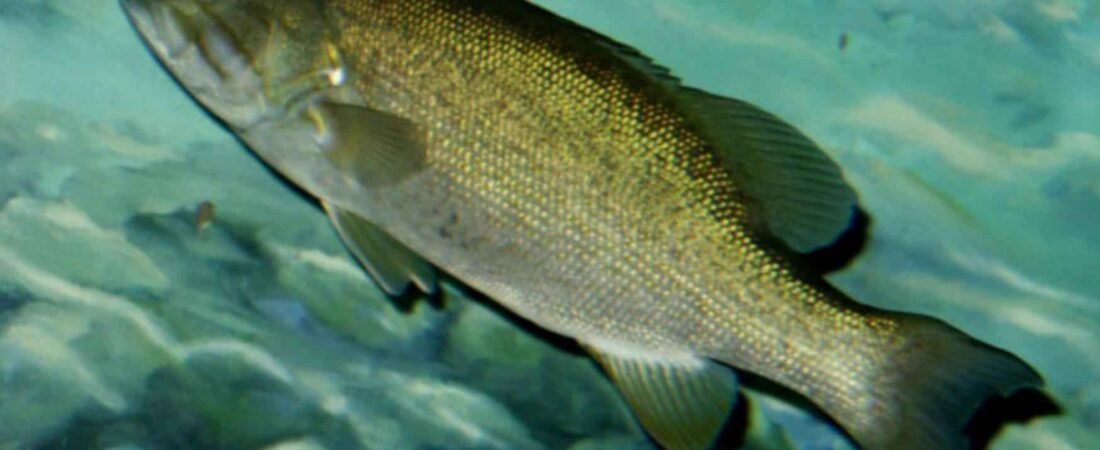
Most smallmouth bass roundups repeat the same handful of facts: the jaw doesn’t reach past the eye, the eyes are reddish, they jump when hooked, and healthy populations signal clean water. All true, and all covered elsewhere on this site. What follows are ten different facts about Micropterus dolomieu, drawn from state agency records, peer-reviewed fisheries research, and documented catches, that go past what most anglers already know.
They Hybridize With Spotted Bass to Produce “Meanmouth” Bass
Smallmouth bass and spotted bass sometimes interbreed in the wild wherever their ranges overlap, producing a fertile hybrid nicknamed the meanmouth bass. Researchers at the Illinois Natural History Survey documented and named the cross in the mid-1960s, and wild meanmouth populations have since turned up at low densities in Missouri, Arkansas, Georgia, and other states, with Missouri’s Table Rock Lake among the better-known sites. The same meanmouth name is sometimes applied to a spotted bass and largemouth bass cross, but the smallmouth pairing is the one most associated with the name among river and reservoir anglers.
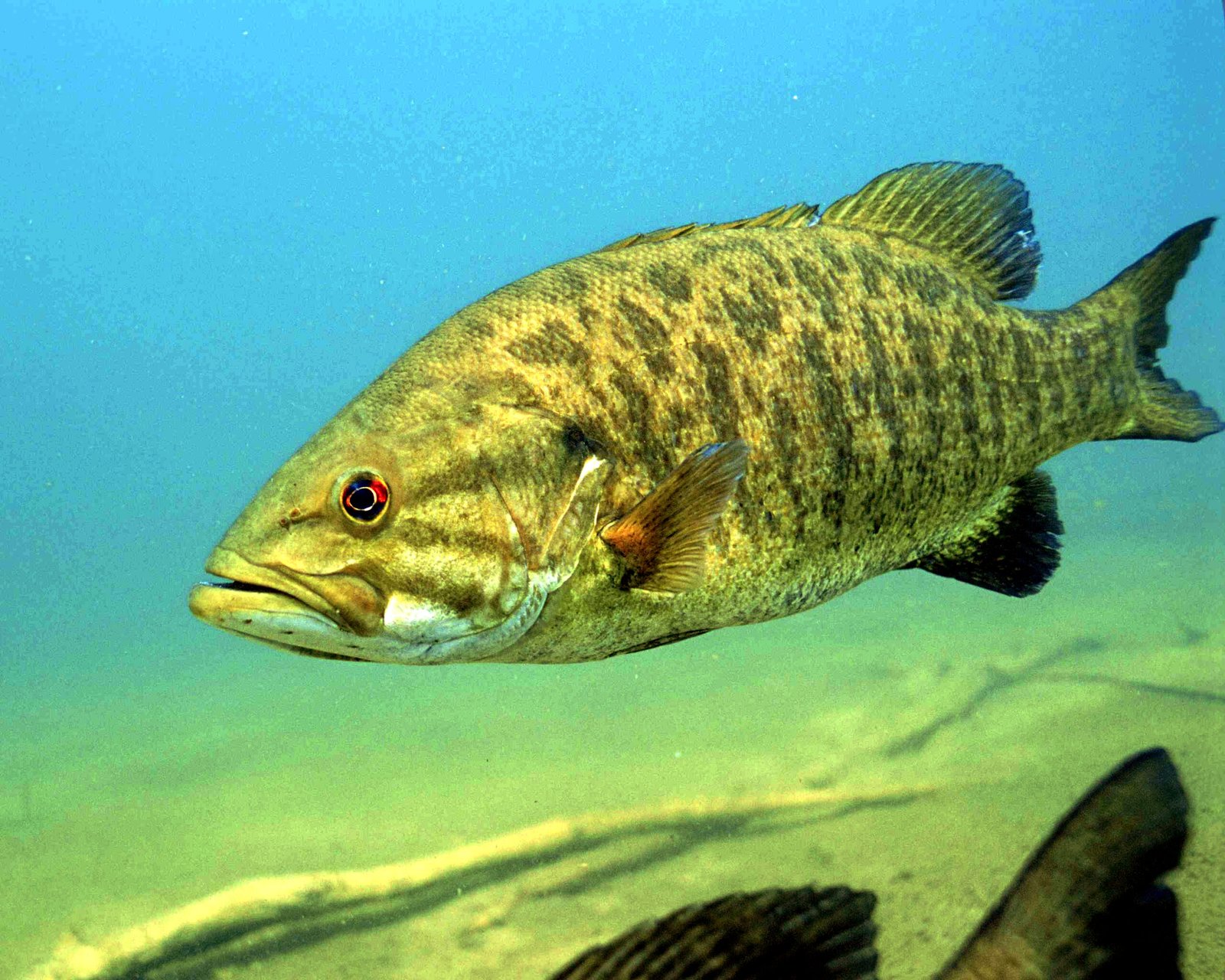
Some Individuals Travel Well Over 100 Miles in a Single Year
Most smallmouth bass stay within a home pool or a stretch of shoreline for life, but telemetry studies keep turning up striking exceptions. Acoustic tracking on Lake Erie recorded fish moving more than 100 miles in a year, and one individual logged nearly 500 miles of movement over an 18 month span, among the longest documented movements ever recorded for the species. River populations show similar extremes: smallmouth bass in some northern Wisconsin rivers have been tracked moving more than 70 miles, and Upper Mississippi River fish make seasonal migrations of up to about 18 miles each way between summer, wintering, and spawning areas. Biologists call this pattern partial migration: most fish in a population stay put while a minority range far beyond what anyone expected.
Some Populations Carry Genetics Found Nowhere Else on Earth
The Ozark Highlands’ Neosho smallmouth bass isn’t the only isolated smallmouth lineage worth knowing about. Genetic surveys of Arkansas’s Ouachita Mountains region have identified additional native smallmouth bass strains, including populations in the Ouachita and Little River systems, that are genetically distinct from both the Neosho form and the widespread northern smallmouth bass found across most of the continent. Decades of stocking with generalist hatchery strains have blurred some of these native lineages elsewhere, which is part of why fisheries geneticists now treat regional genetic mapping as a conservation priority rather than an academic curiosity.
A Guarding Male Can Be the Only Thing Standing Between a Nest and Total Predation
Male smallmouth bass provide all the parental care, fanning, guarding, and defending a nest of eggs and then newly hatched fry for one to two weeks after spawning. Field experiments that temporarily removed guarding males found the results were immediate and severe: nest predators consumed roughly half of a brood within 8 to 10 minutes of the male’s absence, and up to 60 percent of nests suffered some predation within the first minute after the male was taken away. The same research found that males guarding larger broods fought harder to defend them, a pattern that held regardless of the individual male’s own size.
Males Often Return to the Same Nest Site Year After Year
A multi-year study on Ontario’s Lake Opeongo tracked individually marked male smallmouth bass and found strong evidence of nest-site fidelity: many males rebuilt nests within about 20 meters of the previous year’s site, and roughly four in five returning males nested within 200 meters of where they had nested before. Follow-up genetic work found the homing tendency is inherited, strong enough that some males end up nesting season after season with different, unrelated females rather than a repeat partner, since it’s the location that draws them back, not the mate.
A Single Female Can Produce Tens of Thousands of Eggs in One Season
Female smallmouth bass don’t release every egg into one nest at once. A female’s egg output scales heavily with her size, ranging from roughly 2,000 eggs for a small female up to 30,000 or more for a large one. Because eggs mature in batches rather than all at once, a single female may spawn with more than one male across multiple nests in a single season.
Tennessee Made It the Official State Sport Fish in 2005
Smallmouth bass carry an official government title in at least one state. Tennessee designated smallmouth bass as its official state sport fish in 2005, replacing largemouth bass, which had held that title since 1988. The switch reflects the smallmouth’s standing in Tennessee’s cold, clear reservoir and tailwater fisheries, including waters like Dale Hollow Lake, still home to the IGFA all-tackle world record.
The Current New York State Record Was Caught, Weighed, and Released Alive
New York’s state smallmouth bass record changed hands twice in 2024 alone. The current record, a 9 pound fish caught by angler Dante Piraino in the St. Lawrence River near Ogdensburg on September 22, 2024, broke a record that had itself only been set several months earlier from Cayuga Lake, by roughly half a pound. Piraino’s fish was certified, photographed, and released back into the river rather than kept, made possible by New York’s length-weight, catch-and-release record category, which lets anglers set official records without harvesting the fish.
In the Pacific Northwest, Introduced Smallmouth Bass Are a Real Threat to Salmon
Smallmouth bass aren’t native west of the Rockies, and where they’ve been introduced into the Columbia and Snake River systems, they’ve become significant predators of young salmon. Diet studies near Richland, Washington found juvenile salmonids made up well over half of smallmouth bass diet by weight in some reservoirs, with individual bass estimated to eat roughly one young salmon per day during peak outmigration periods. Because several Columbia Basin salmon runs are listed under the Endangered Species Act, smallmouth bass predation there is treated as a genuine fisheries management problem, sitting in sharp contrast to the species’ celebrated status in its native range.
An Invasive Prey Species Made Great Lakes Smallmouth Bass Grow Faster
Not every non-native species interaction goes against smallmouth bass. After round gobies invaded Lake Erie in the 1990s, smallmouth bass diet shifted dramatically toward the new, abundant prey, with gobies eventually making up roughly three-quarters of their diet in some studies, replacing crayfish as the previously dominant prey item. Researchers documented a measurable side effect: young smallmouth bass, ages two through four, grew 11 to 15 percent longer at age following the round goby invasion than fish had before it, one of the clearer documented cases of an invasive species accidentally boosting a native sport fish’s growth rate.
Every claim above ties back to a state agency record, a peer-reviewed fisheries study, or a documented catch. Facts that couldn’t be independently confirmed were left out rather than guessed at.
Frequently Asked Questions
What is a meanmouth bass?
A meanmouth bass is a fertile hybrid produced when a smallmouth bass interbreeds with a spotted bass in the wild. It was first documented and named by researchers at the Illinois Natural History Survey in the mid-1960s and has since been found at low densities in several states.
How far can smallmouth bass travel?
Most stay within a limited home range for life, but telemetry studies have documented some individuals moving well over 100 miles in a year, including one Lake Erie fish tracked moving nearly 500 miles over 18 months. Biologists refer to this as partial migration, since only a minority of any population ranges that far.
Do all smallmouth bass populations have the same genetics?
No. Beyond the well-known Neosho smallmouth bass of the Ozark Highlands, researchers have identified additional genetically distinct native strains in Arkansas’s Ouachita Mountains region, separate from both the Neosho form and the widespread northern smallmouth bass found across most of the continent.
How many eggs does a female smallmouth bass lay?
Egg output scales with body size, ranging from roughly 2,000 eggs for a small female to 30,000 or more for a large one. Because eggs mature in batches, a single female can spawn with more than one male across multiple nests in one season.
Which state has smallmouth bass as its official state fish?
Tennessee designated smallmouth bass as its official state sport fish in 2005, replacing largemouth bass, which had held that title since 1988.
Are smallmouth bass harmful to salmon in the Pacific Northwest?
Where they’ve been introduced into the Columbia and Snake River systems, yes. Diet studies have found juvenile salmon make up a large share of smallmouth bass diet in some reservoirs, which is a significant concern given that several Columbia Basin salmon runs are federally listed as threatened or endangered.