
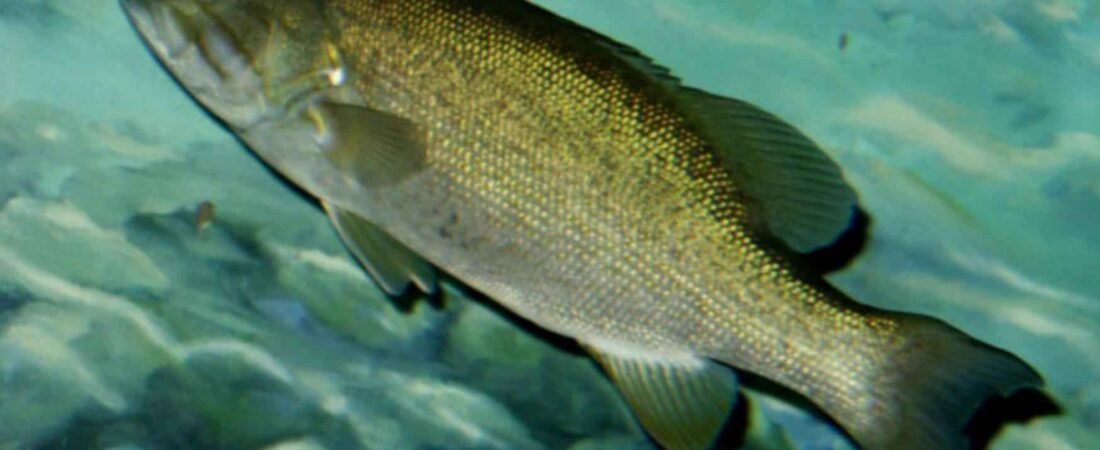
Anglers know the smallmouth bass as a hard-pulling, acrobatic fighter, but the fish itself has a naming history, a taxonomy still being actively revised by geneticists, and a reputation that goes deeper than “fights hard.” This article looks specifically at what a smallmouth bass is scientifically classified as, where that classification is currently in flux, and why the species has earned such an outsized following among freshwater anglers.
What Is a Smallmouth Bass, Scientifically?
A smallmouth bass is a freshwater fish in the sunfish family, Centrarchidae, scientifically named Micropterus dolomieu. It belongs to the “black bass” group within that family, a group that also includes largemouth, spotted, and several regional bass species, all of which are more closely related to sunfish and bluegill than to true bass like striped bass or white bass.
The genus name Micropterus comes from the Greek words for “small” (mikros) and “fin” (pteron). The name is something of a historical accident: when French naturalist Bernard Germain de Lacepede first described the fish in 1802, the specimen he examined had a tear in its second dorsal fin that made it appear to have a third, smaller fin, and he named the genus accordingly. The species name, dolomieu, honors Deodat Gratet de Dolomieu, a French geologist and friend of Lacepede’s who had died the previous year. Dolomieu has no direct connection to fish or fishing; the mineral dolomite is also named after him.
Are There Different Types or Subspecies of Smallmouth Bass?
Yes: fisheries scientists have long recognized two forms of smallmouth bass, and recent genetic research suggests the classification may need to change further. The widespread form, sometimes called the northern smallmouth bass (Micropterus dolomieu dolomieu), occupies the species’ broad native and stocked range. A second, geographically isolated form called the Neosho smallmouth bass (historically classified as Micropterus dolomieu velox) is restricted to a small pocket of clear Ozark Highlands streams, specifically the Spring, Neosho, and Elk River basins of Missouri, Arkansas, Kansas, and Oklahoma.
The Neosho form differs from the widespread northern form in both genetics and physical traits, including proportionally larger head length relative to body size. Genetic studies published in the 2020s found the divergence between the two forms significant enough that some researchers now argue the Neosho population should be classified as its own full species, Micropterus velox, rather than a subspecies of M. dolomieu. That reclassification is not yet universally settled in the scientific literature, but it illustrates something worth knowing: smallmouth bass taxonomy is not a closed book, and the fish you catch in an Ozark tributary may be genetically distinct enough from a Great Lakes smallmouth to eventually carry a different scientific name entirely.
| Form | Historic classification | Range |
|---|---|---|
| Northern smallmouth bass | M. dolomieu dolomieu | Widespread across native and stocked range in the U.S. and Canada |
| Neosho smallmouth bass | M. dolomieu velox (proposed full species: M. velox) | Spring, Neosho, and Elk River basins, Ozark Highlands (MO, AR, KS, OK) |
Why Do Anglers Love Smallmouth Bass So Much?
Anglers gravitate toward smallmouth bass because, size for size, they are widely considered the hardest-fighting freshwater fish in North America, known for long runs and repeated aerial jumps that few other freshwater species can match. Where a largemouth bass tends to fight with dogged, bulldog-style headshakes close to cover, a hooked smallmouth typically bolts hard against the drag and then leaves the water entirely, sometimes multiple times in a single fight, twisting and shaking in the air in an attempt to throw the hook.
That reputation is not just angler folklore; it shows up consistently in fishing literature and outdoor writing as a defining trait of the species, often summarized as a fish that “fights above its weight.” A four-pound smallmouth is routinely described by experienced anglers as pulling harder, and providing a more physically demanding fight, than a largemouth bass twice its size. Several traits combine to produce that fighting style: a more streamlined, muscular body built for holding in current, a strong preference for open water rather than snagging cover, and an instinct to use vertical space (jumping) rather than horizontal cover (diving into brush or weeds) to escape.
Why Do Smallmouth Bass Prefer Cold, Clear Water Over the Warm Water Largemouth Bass Tolerate?
Smallmouth bass evolved in and remain closely tied to cool, oxygen-rich, rocky rivers and lakes, a habitat preference that sets them apart ecologically from the more adaptable largemouth bass. This isn’t simply a matter of taste. Smallmouth bass are less tolerant of low-oxygen, high-silt, high-temperature water than largemouth bass, which is why they thrive in rocky northern lakes and clear Ozark or Appalachian streams but are largely absent from the warm, weedy, murky ponds and sloughs where largemouth bass flourish.
That sensitivity has a practical upside for anglers and ecosystems alike: because smallmouth bass struggle in polluted or degraded water, fisheries biologists often treat a healthy, self-sustaining smallmouth population as a working indicator of good water quality in a river or lake system. For anglers, it also means smallmouth fishing frequently happens in visually striking places, clear rocky rivers, deep glacial lakes, boulder-strewn reservoirs, which is part of the broader appeal beyond the fight itself. Anglers who chase smallmouth bass are, by necessity, chasing clean water.
This article focuses specifically on smallmouth bass classification and identity. For habitat details, diet, sizing, and how to actually target and catch them, see the full smallmouth bass guide.
Frequently Asked Questions
What family of fish is a smallmouth bass?
Smallmouth bass belong to Centrarchidae, the sunfish family, alongside largemouth bass, spotted bass, bluegill, and crappie. Despite the name “bass,” they are not closely related to true basses like striped bass or white bass.
What does the scientific name Micropterus dolomieu mean?
Micropterus is Greek for “small fin,” a name given because the original specimen described in 1802 had a torn dorsal fin that appeared to be a separate, smaller third fin. Dolomieu honors Deodat Gratet de Dolomieu, a French geologist and friend of the naturalist who first described the species.
Is the Neosho smallmouth bass a different species?
Historically it was classified as a subspecies, Micropterus dolomieu velox, restricted to a handful of Ozark Highlands river systems. Genetic research has found the population distinct enough that some scientists now propose classifying it as its own full species, Micropterus velox, though that change is not yet universally adopted in the scientific literature.
Why do smallmouth bass jump when hooked?
Jumping is part of their natural escape response. Rather than diving for cover like a largemouth bass often does, a hooked smallmouth typically uses open water and vertical movement, running hard and then leaping and shaking its head at the surface in an attempt to throw the hook.
Are smallmouth bass considered a true bass?
No. Despite the common name, smallmouth bass are members of the sunfish family, Centrarchidae, not the true bass family, Moronidae, which includes species like striped bass and white bass. “Black bass” is the informal group name used for smallmouth, largemouth, spotted, and related Micropterus species.
Why are smallmouth bass considered an indicator of water quality?
Smallmouth bass are less tolerant of pollution, silt, and low oxygen than largemouth bass, so they tend to disappear from degraded waters before more tolerant species do. Because of that sensitivity, fisheries biologists often use a healthy, reproducing smallmouth population as a practical sign that a river or lake is in good ecological condition.