
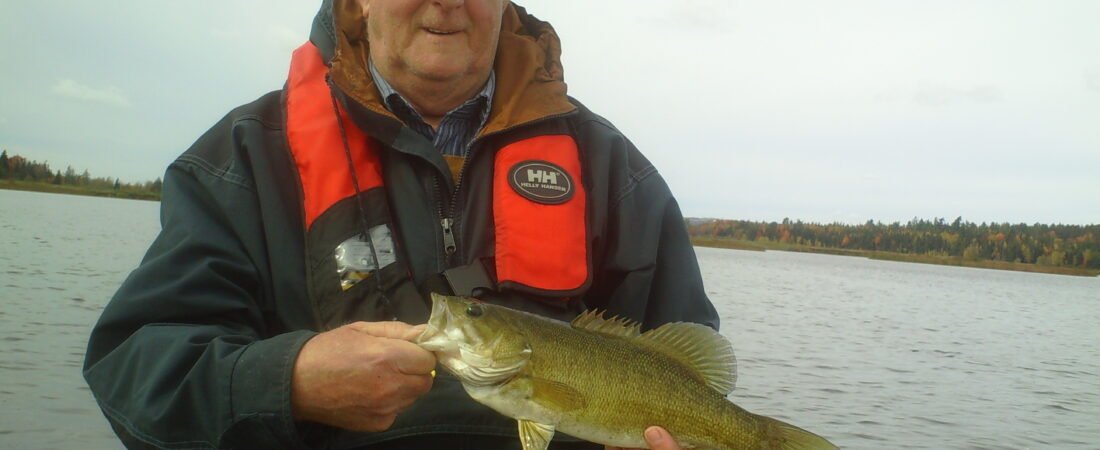
The smallmouth bass (Micropterus dolomieu) is one of North America’s most sought-after freshwater gamefish, prized for a fighting style that regularly punches above its weight class. Found in cool, clear rivers, streams, and rocky lakes from the Great Lakes and Upper Mississippi basin outward through decades of stocking, “smallies” reward anglers who understand their habits with some of the hardest, most acrobatic fights in freshwater fishing. This guide covers everything you need to know: identification, habitat, diet, behavior, size, and how to catch them.
Jump to a section
What Is a Smallmouth Bass?
The smallmouth bass is a freshwater gamefish in the sunfish family, Centrarchidae, native to the Upper and Middle Mississippi River basin, the Saint Lawrence River-Great Lakes system, the Champlain Valley, and the Hudson Bay basin. First described by French naturalist Bernard Germain de Lacepede in 1802, it has since been stocked into cool-water lakes and rivers across most of the United States and southern Canada, and is now found on every continent except Antarctica.
Smallmouth Bass Snapshot
Anglers often call them “smallies,” “bronzebacks,” or “brown bass,” nicknames that reference the bronze to olive-brown coloring that separates them from their green-leaning cousin, the largemouth bass. Unlike largemouth bass, which tolerate warm, murky, weedy water, smallmouth bass are far more particular. They favor clean, oxygen-rich water with rock, gravel, or sand bottoms, which is part of why fisheries biologists treat healthy smallmouth populations as an indicator of good water quality.
How Do You Identify a Smallmouth Bass?
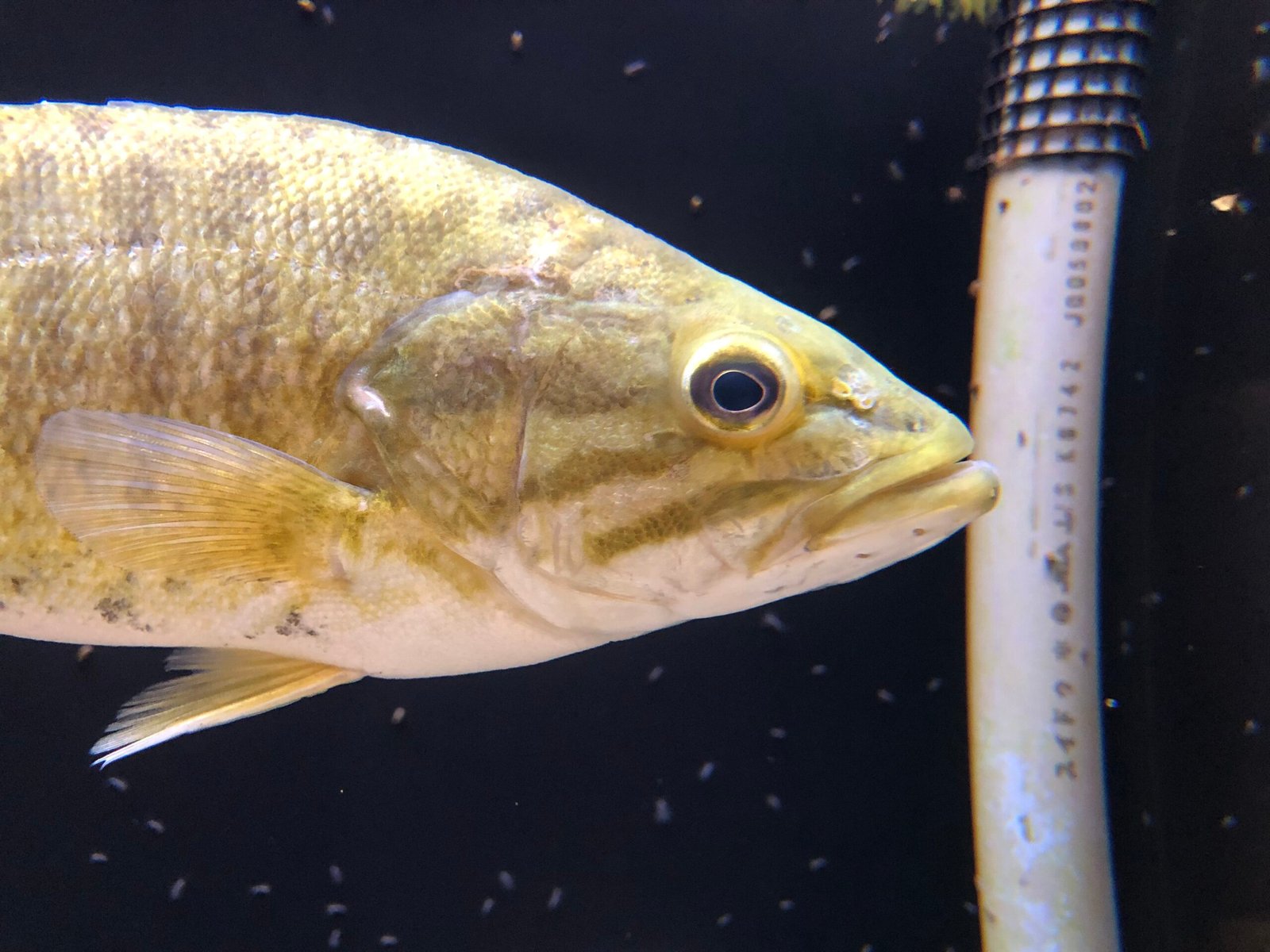
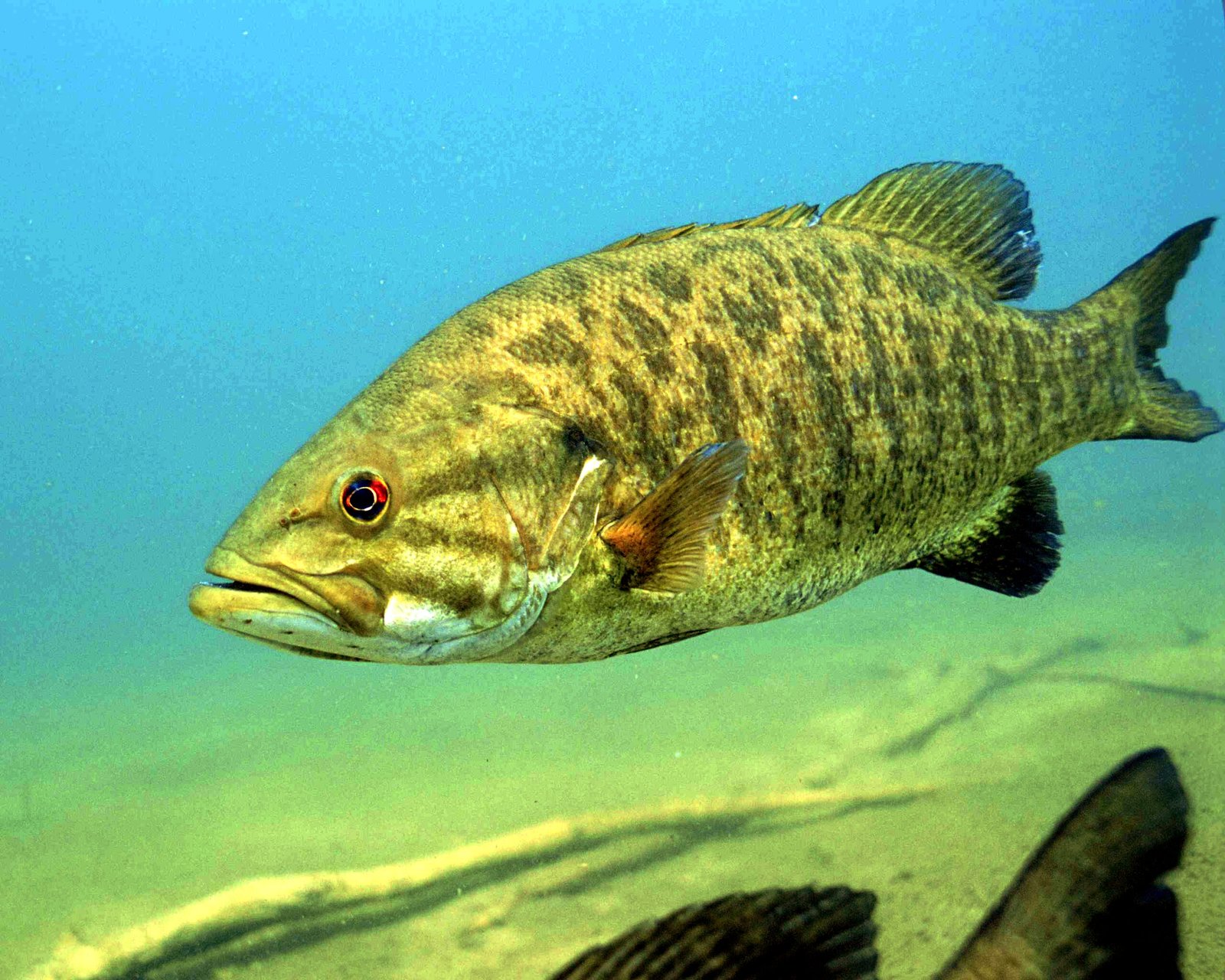
The clearest identifying feature is the jaw: on a smallmouth bass, the upper jaw does not extend past the back edge of the eye when the mouth is closed. On a largemouth bass, it does. Combine that with a smallmouth’s vertical bars (instead of a horizontal stripe) and red or reddish-brown eyes, and misidentification becomes unlikely.
Beyond the jawline, look for these features:
- Coloration: Golden-olive to bronze or brown on the back and sides, fading to a pale yellow-white belly.
- Markings: A series of dark, vertical bars or blotches along the flanks, rather than the continuous horizontal stripe found on largemouth bass.
- Eyes: Reddish or reddish-brown, a trait pronounced enough that some anglers use it as a quick field check.
- Cheek stripes: Three faint dark lines that radiate backward from the eye across the cheek.
- Body shape: A muscular, fusiform (torpedo-shaped) body. River-dwelling smallmouth tend to run longer and leaner, while lake-dwelling fish are typically shorter and deeper-bodied.
- Dorsal fin: A spiny front section connected to the soft rear section by a shallow notch, rather than the deep, almost-separated notch seen on largemouth bass.
Body shape also differs slightly by sex. Female smallmouth bass tend to carry a rounder, deeper-bellied profile, especially heading into the spring spawn when they are full of eggs, while males typically stay leaner and more streamlined year-round. Males also average smaller overall, which is one reason the biggest fish caught from any given nest-guarding population are usually females.
Where Do Smallmouth Bass Live?
Smallmouth bass live in cool, clear rivers, streams, and rocky lakes, avoiding the warm, weedy, silty water that largemouth bass tolerate well. Their native range runs from the Upper and Middle Mississippi basin through the Great Lakes and St. Lawrence River system into the Champlain Valley and Hudson Bay basin, and widespread stocking has since established them across most of the continental U.S. and southern Canada.
Within that range, smallmouth bass gravitate toward specific structure. In rivers, they hold near riffles and current breaks without sitting directly in the fastest water, using boulders, ledges, and gravel bars as ambush points. In lakes and reservoirs, they relate to rocky points, gravel flats, submerged humps, and deep drop-offs, moving shallower in spring and fall and retreating to deeper, cooler water during summer heat. Because they are more sensitive to pollution and siltation than largemouth bass, healthy smallmouth populations are often used by fisheries managers as a proxy for overall stream and lake health.
Water temperature drives much of their seasonal movement. Smallmouth bass become most active in the mid-60s to low-70s Fahrenheit, and in cold northern waters they slow down dramatically once temperatures drop below roughly 60°F, entering a low-activity winter state and sometimes staging in deep river pools or lake basins where they can hold for months with minimal feeding.
What Do Smallmouth Bass Eat?
Smallmouth bass are opportunistic carnivores whose diet centers on crayfish, baitfish, and aquatic insects, shifting toward larger prey as they grow. Juveniles start out feeding on zooplankton and small insect larvae before graduating to crayfish, minnows, and larger insect hatches like mayflies and hellgrammites.
Crayfish are frequently the single most important food source in rocky rivers and lakes, which is why so many effective smallmouth lures (tube jigs, crawfish-pattern crankbaits, ned rigs) imitate them. Baitfish such as shad, shiners, and darters round out the diet, along with the occasional frog, tadpole, or terrestrial insect that lands on the water. Smallmouth bass feed most actively at dawn and dusk, and low-light conditions are consistently productive windows for anglers targeting feeding fish.
How Big Do Smallmouth Bass Get?
Most smallmouth bass that anglers catch run 10 to 20 inches long and weigh between one and four pounds, with fish over five pounds considered a genuine trophy in most waters. Growth rates vary enormously by region and water temperature: southern populations in places like Tennessee and Kentucky grow quickly and can reach four pounds within a handful of years, while far-northern populations in Canadian waters grow much more slowly but can live and keep growing for two decades or more.
The IGFA all-tackle world record stands at 11 pounds, 15 ounces, caught by David Hayes on Dale Hollow Lake along the Kentucky-Tennessee border in 1955, a record that has stood for more than 70 years. Maximum documented length is around 27 inches. Lifespan follows a similar north-south pattern to growth rate: typical lifespans run 6 to 15 years, with some cold-water populations in Canadian lakes documented living past 20 years, a stark contrast to warmer southern waters where fish mature and die younger.
How Do You Catch Smallmouth Bass?
Smallmouth bass are most consistently caught by fishing crayfish and baitfish imitations tight to rock, gravel, and current-breaking structure, adjusting depth and retrieve speed to water temperature and season. A few approaches account for the majority of smallmouth catches nationwide:
- Tube jigs and ned rigs: Soft-plastic staples fished slowly along rocky bottoms and gravel flats, mimicking crayfish and small baitfish. Deadly in both rivers and lakes, especially in clear water where subtlety matters.
- Crankbaits: Crayfish-colored or shad-colored crankbaits worked along rock piles, ledges, and current seams cover water quickly and trigger reaction strikes, particularly in stained or moving water.
- Topwater lures: During low-light periods in warm months, walking baits and poppers fished over shallow rock or near current breaks can produce some of the most explosive strikes in freshwater fishing.
- Live bait: Crayfish and small minnows fished on a light jighead or under a slip float remain effective, particularly in rivers and clear natural lakes.
- Fly fishing: Streamers and crayfish patterns swung or stripped through current seams and rocky pools are a long-standing river smallmouth technique.
Location and timing matter as much as lure choice. In spring, smallmouth bass move shallow to spawn once water temperatures reach roughly 59 to 64°F, with males clearing circular nests on gravel or rock bottoms and guarding both eggs and newly hatched fry. Summer pushes fish to deeper, cooler structure and toward the fast, oxygenated water of riffles in rivers. Fall often triggers a shallow feeding push as fish bulk up before winter, when they retreat to deep pools and slow down significantly. Because they defend nests during the spawn, many state agencies apply specific harvest or catch-and-release rules during that window, so it’s worth checking local regulations before keeping fish in spring.
Tackle choice tends to follow water type. River anglers typically favor lighter spinning gear that lets a jig or crankbait drift naturally through current, while lake and reservoir anglers fishing deeper structure often step up to baitcasting gear for better control on longer casts and hooksets at depth. Because smallmouth bass are known for headshakes and jumps, many anglers deliberately fish slightly lighter line and softer rod actions than they would for largemouth bass, using the rod’s flex rather than brute force to absorb those sudden runs and keep hooks pinned.
Regulations vary significantly by state and province, covering everything from minimum length limits to seasonal closures around the spawn, so checking the current rules for the specific water you’re fishing is always worth the extra few minutes before a trip.
How Are Smallmouth Bass Different From Largemouth Bass?
Smallmouth and largemouth bass are both members of the genus Micropterus and often share the same lakes, but they occupy different niches. Smallmouth bass prefer cooler, clearer water with rock and gravel bottoms, while largemouth bass tolerate warmer, weedier, murkier water and heavier cover. The fastest field check is the jawline: a smallmouth’s upper jaw stops at or before the back of the eye, while a largemouth’s extends well past it.
This is only a quick-reference summary. For a full side-by-side breakdown of physical differences, habitat preferences, and fighting style, see our dedicated smallmouth vs. largemouth bass comparison article.
Frequently Asked Questions
What is the biggest smallmouth bass ever caught?
The IGFA all-tackle world record is 11 pounds, 15 ounces, caught by David Hayes on Dale Hollow Lake on the Kentucky-Tennessee border in 1955. That record has stood for more than 70 years despite intense fishing pressure on trophy smallmouth waters.
How can you tell a smallmouth bass from a largemouth bass?
Check the jaw and the markings. A smallmouth’s upper jaw ends at or before the rear of its eye, while a largemouth’s extends noticeably past it. Smallmouth also show vertical bars along the body and reddish eyes, while largemouth bass typically have a solid horizontal stripe and dark, less reddish eyes.
What is the best bait for smallmouth bass?
Crayfish imitations, such as tube jigs, ned rigs, and crayfish-pattern crankbaits, are consistently effective because crayfish make up a large share of the natural diet in most smallmouth waters. Live crayfish and small minnows also work well, especially in rivers and clear lakes.
Where do smallmouth bass live?
Smallmouth bass live in cool, clear rivers, streams, and rocky lakes, favoring gravel, sand, and rock bottoms over the weedy, silty cover largemouth bass prefer. Their native range covers the Upper and Middle Mississippi basin, the Great Lakes and St. Lawrence system, and the Hudson Bay basin, but decades of stocking have established them across most of the U.S. and southern Canada.
How long do smallmouth bass live?
Typical lifespans run 6 to 15 years, though this varies sharply by region. Warmer southern populations tend to grow fast and live shorter lives, while cold-water populations in far-northern Canadian lakes grow slowly and can live well past 20 years.
Are smallmouth bass good to eat?
They are edible, but most anglers practice catch-and-release with smallmouth bass, both because of their popularity as a sportfish and because many waters carry local fish consumption advisories tied to mercury or other contaminants. Check your state or provincial fish advisory listings before keeping any for the table.